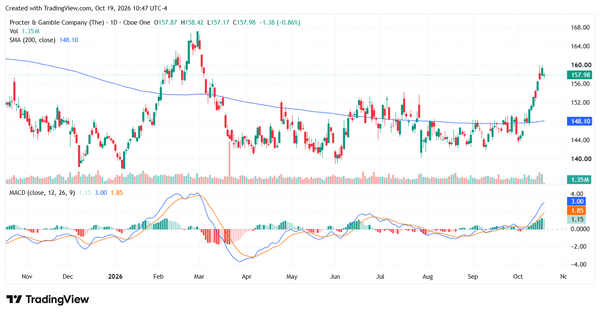
People may put off a vacation or a big purchase when money gets tight, but they still need laundry detergent, diapers, food, and razors. That gives Procter & Gamble (NYSE: PG) a steady source of demand. However, the challenge is keeping shoppers loyal when cheaper alternatives are sitting on the same shelf.
Ahead of its October 22 earnings report, the question is whether Procter & Gamble can keep shoppers coming back while dealing with higher costs and persistent inflationary pressures.
The maker of Tide, Pampers and Gillette is scheduled to report its first quarter of fiscal 2027 before the opening bell. Its results should offer a useful look at household spending and how much consumers are willing to pay for familiar brands. Analysts expect earnings of $1.89 per share, down about 5% from the same quarter last year. Revenue is projected to reach about $22.7 billion, an increase of 1.4%.
A small earnings beat would be welcome. But stronger sales trends and a reassuring outlook could carry more weight than a few extra pennies in quarterly profit.
Are Shoppers Buying More?
One number worth watching is sales volume, which measures how much product Procter & Gamble sells.
For this report, improving volume would help demonstrate that P&G’s products remain attractive at current prices. Weak volume, particularly alongside heavier discounts, would raise questions about how much the company must spend to defend its business. Investors should also look for improvement across several product categories. A strong performance from one division is helpful, but broader growth would make the recovery more convincing.
P&G previously estimated that higher raw material, energy, and transportation costs would reduce fiscal 2027 earnings by approximately $1 billion after taxes. That is a substantial obstacle, even for a company of its size.
The connection is straightforward. Making household products requires ingredients, packaging, factory operations, and transportation. When those expenses rise, P&G must absorb the increase, find savings, or charge customers more.
Each Option Has Limits
Raising prices can push shoppers toward competitors. Cutting expenses too aggressively can weaken product development or marketing. Absorbing higher costs leaves less profit from each sale. That makes profit margins especially important.
Investors will want to see whether productivity improvements are helping offset cost pressures. They should also listen for any change in management’s assumptions about the months ahead.
Even if quarterly earnings meet expectations, a warning that costs are getting worse could overshadow the headline numbers.
P&G entered fiscal 2027 expecting reported and organic sales growth of 1% to 3%, with core earnings between $6.89 and $7.11 per share. Maintaining the outlook would suggest management still believes its plans are achievable. Raising it would provide a stronger signal. A reduction would invite questions about whether weaker demand or higher expenses are becoming more persistent.
Shareholder Payments Remain Part of the Appeal
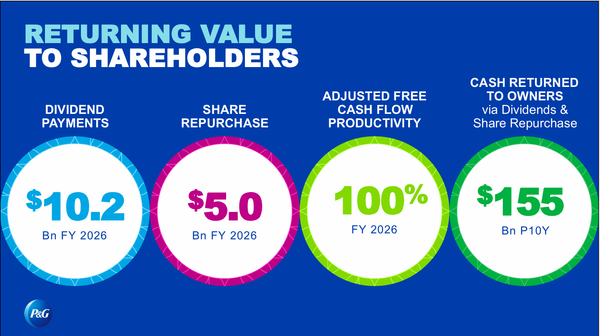
Procter & Gamble has projected roughly $10 billion in dividends and approximately $5 billion in share repurchases for fiscal 2027. Ultimately, Procter & Gamble doesn’t need spectacular growth to deliver a reassuring report. It needs to show that customers still value its products, cost controls are working, and its annual targets remain realistic.
For Procter & Gamble, the challenge is convincing shoppers that its brands are worth the money and keeping enough of each sale to grow profits. If the company shows improving demand while keeping its outlook intact, investors may feel more confident. But if customers are pulling back and costs keep climbing, a modest earnings beat may offer little comfort. On October 22, the most encouraging result would be evidence that P&G can grow without asking already stretched shoppers to pay much more.