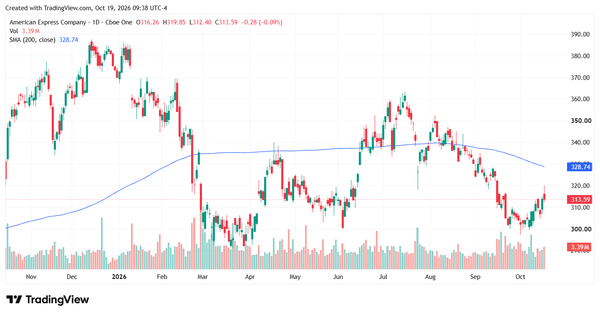
American Express (NYSE: AXP) will release third-quarter results on Friday, October 23, before the market opens, followed by a call at 8:30 a.m. Investors will get a fresh look at consumer spending, borrowing trends, and the cost of keeping premium cardholders happy.
There are reasons for optimism. American Express delivered double-digit revenue growth last quarter. But growing the business also costs money, and investors will want evidence that those investments are paying off.
Analysts estimate earnings of $4.58 per share on revenue of about $20.12 billion. For comparison, American Express reported earnings of $4.14 per share and revenue of $18.43 billion in the third quarter of 2025. That means the forecasts suggest earnings growth of roughly 8% to 11% and revenue growth of about 9%.
Those would be respectable gains. However, beating the earnings estimate alone may not be enough to impress investors. The market will also consider where that growth came from, how much American Express spent to generate it, and whether management sees stronger momentum ahead.
Are Cardholders Still Spending?
One of the most useful numbers to watch is billed business, which measures spending on American Express cards.
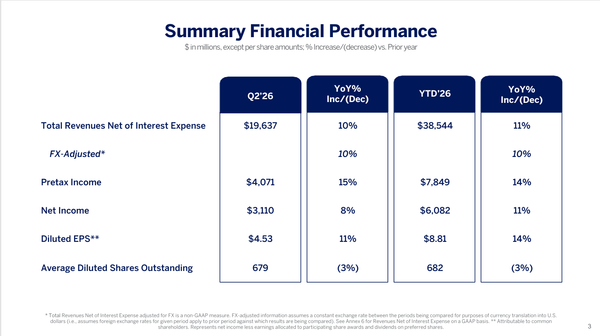
In the second quarter, cardmember spending increased 9%. Management described that as the strongest growth rate in three years. Revenue rose 10% to approximately $19.6 billion, while earnings reached $4.53 per share. The third quarter will show if that momentum continues.
American Express has substantial exposure to higher-income consumers, who generally have more room in their budgets for discretionary purchases. Last quarter, travel and entertainment spending increased 10%, providing another sign that these customers remained active.
Still, investors should look beyond the overall spending figure.
Strength across restaurants, travel, and everyday purchases would suggest broad demand. Growth concentrated in fewer categories would deserve a closer look.
Business spending matters, too. A consumer who keeps booking vacations and a company that reduces employee travel can send very different signals about the economy. Management’s explanation of those trends could be as useful as the headline results.
Premium Cards Bring Opportunity and Costs
American Express wants customers to see its cards as worth paying for year after year. That creates an attractive opportunity: Customers who value the benefits may renew their memberships, use their cards more frequently, and keep the relationship for years.
Last quarter, management said its Platinum portfolio was the fastest-growing part of its U.S. consumer business. It also highlighted continued customer additions among millennials and Generation Z. But benefits and rewards come with a bill.
Second-quarter expenses increased 12% to $14.5 billion, outpacing revenue growth. American Express attributed the increase partly to customer engagement costs, its U.S. Platinum refresh, and greater use of card benefits.
The question is whether those expenses are helping build lasting, profitable relationships. Spending more today can make sense if it attracts customers who generate revenue for years. Investors may become less patient, however, if costs consistently grow faster than the business.
Watch for management’s discussion of marketing spending, customer retention, and the financial returns from its premium offerings.
Guidance Could Decide the Reaction
Investors also need to know whether customers are paying their bills.
American Express reported a second-quarter net write-off rate of 2%, unchanged from a year earlier. This measures loans written off as uncollectible, after recoveries, relative to the relevant balances. For the upcoming report, late payments, write-offs, and provisions for potential credit losses deserve attention. Rising loan balances can support interest income, but that benefit becomes less attractive if repayment problems increase.
Finally, watch the outlook.
In July, American Express raised its full-year revenue growth forecast to 10% while maintaining earnings guidance of $17.30 to $17.90 per share. A stronger forecast could help reassure investors that spending growth is producing meaningful financial benefits.