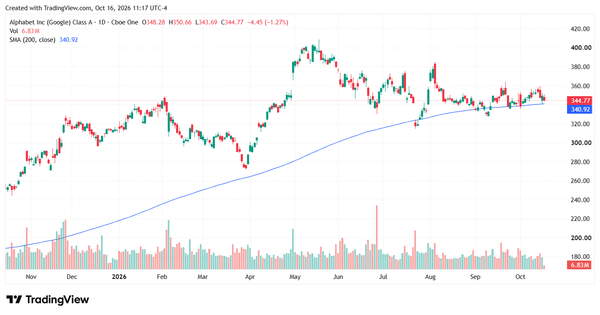
Alphabet (NASDAQ: GOOGL), the parent company of Google, YouTube, and Google Cloud, has scheduled its third-quarter earnings call for October 28 at 4:30 p.m. Eastern. For investors in Alphabet, the report offers another chance to see how its advertising business and expanding AI operations are working together.
There is plenty to watch. Cloud growth has accelerated, but building the infrastructure behind that growth is expensive. Meanwhile, Google still needs to show that its search business can keep attracting users and advertisers as AI changes how people find information.
Estimates call for earnings of $3.02 per share on revenue of $127.67 billion. That compares with earnings of $2.87 per share and revenue of $102.35 billion a year earlier, implying roughly 5% earnings growth and 25% revenue growth.
Google Cloud Has a Lot to Prove
Google Cloud could be the biggest focus of the report. In the second quarter, Cloud revenue climbed 82% to about $24.8 billion. Alphabet also began recognizing revenue from sales of its tensor processing unit systems, or TPUs, which are specialized chips used for AI workloads.
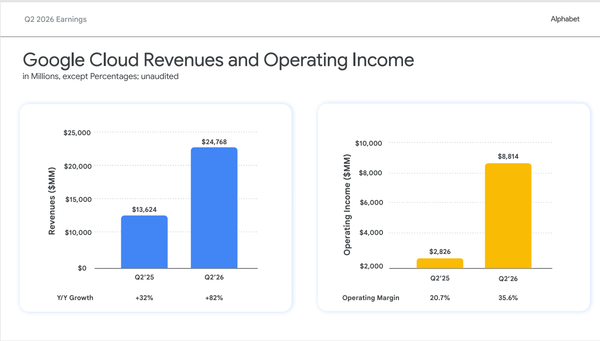
That momentum has some analysts raising their expectations. JPMorgan analyst Doug Anmuth now expects third-quarter Cloud revenue to double from a year earlier, according to Barron’s. He also raised his Alphabet price target to $425 from $420, citing greater contributions from TPU sales.
For investors, the distinction matters. Strong growth can become harder to impress with when expectations are rising just as quickly. The quality of that growth deserves attention, too. Investors should look for management to explain how much comes from ongoing cloud usage, how much comes from hardware sales, and what that mix means for profitability.
Search Still Pays Much of the Bills
Cloud may attract the excitement, but Google Search remains central to Alphabet’s financial health. Second-quarter revenue from Google Search and related activities reached about $63.3 billion, up from $54.2 billion a year earlier. YouTube advertising revenue also increased, reaching about $11.1 billion.
The next report should help investors assess whether that advertising momentum is holding up.
The key question is how effectively Google can turn changing search habits into revenue. AI-generated answers may make the service more useful, but usefulness alone does not tell investors how much advertisers will pay or how profitable those interactions will become.
I would watch for management’s comments on search activity, advertiser demand, and the economics of AI-powered features.
YouTube also deserves attention. Its results can help show whether advertising strength extends beyond Search. Broad growth across both businesses would provide more reassurance than a strong result concentrated in just one area.
The Spending Bill Could Shape the Reaction
Alphabet previously raised its 2026 capital spending outlook to $195 billion to $205 billion. Management also said spending would increase significantly in 2027. Second-quarter free cash flow was negative as infrastructure investment absorbed more than the cash generated by operations.
That creates a practical challenge: Alphabet needs capacity to meet demand, but shareholders also want evidence that the investment will produce attractive returns.
Watch for changes to the spending outlook, progress in cash generation, and commentary on future costs. A revenue beat could lose some shine if it comes with another spending increase and little explanation of the payoff.
Ultimately, this earnings report needs to connect growth with financial discipline. Strong Cloud demand, healthy advertising, and a convincing explanation of infrastructure spending would strengthen Alphabet’s case. Investors do not need every AI investment to pay off immediately. But they do need to see that the company is moving toward durable profits and stronger cash flow. On October 28, that progress may matter more than the headline earnings number.