Walmart (NASDAQ: WMT) heads into earnings on Thursday, November 19, before the opening bell. For investors, the biggest question goes beyond whether Walmart beats quarterly estimates. They also need evidence that its investments in lower prices, delivery, and digital shopping can support stronger earnings ahead.
At the moment, Walmart is expected to report earnings of 64 cents per share on revenue of $186.52 billion. That would represent earnings growth of about 3.2% and revenue growth of 3.9% from a year earlier. Walmart’s own outlook calls for adjusted earnings between 62 cents and 64 cents per share. Management also projected net sales growth of 3% to 3.75%.
Helping, analysts are bullish on WMT ahead of earnings, too. Deutsche Bank, for example, just upgraded WMT to a buy rating, noting that “We believe the current inflationary environment should reinforce Walmart’s value proposition and support accelerated share gains, while we think investors are starting to increasingly look beyond the headline pressure on U.S. comp.,” as quoted by Yahoo Finance. The firm has a price target of $136.
UBS also raised its price target on WMT to $149 from $130, arguing that earnings growth potential is strong. JPMorgan also reiterated its overweight rating on WMT with a price target of $145 from $125 per share ahead of WMT’s earnings release.
WMT Stock Is Testing Its Recent Rally
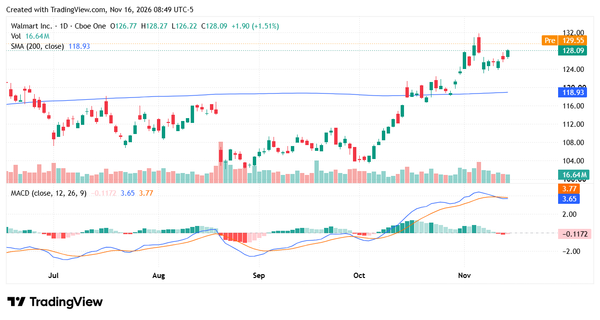
WMT stock has climbed significantly since October, moving from around $118 to nearly $130. Shares closed at $128.09 on November 16, comfortably above their 200-day simple moving average of $118.93. That is an encouraging longer-term signal, suggesting the stock’s underlying uptrend remains intact.
However, momentum indicators suggest the rally could be losing some steam. The MACD line has slipped slightly below its signal line, while the histogram has turned negative. This points to weakening short-term momentum rather than an established reversal.
Investors should watch the $130 to $132 area as near-term resistance. On the downside, $124 is an initial support level, followed by the 200-day moving average near $119. A strong earnings report could help WMT push through resistance, while disappointing guidance could leave shares vulnerable to a pullback.
Shopper Traffic Will Help Explain the Results
One important measure will be comparable sales, which track growth across an established base of stores and related digital operations. During the second quarter, Walmart U.S. comparable sales increased 2.6%, excluding fuel.
This quarter, investors should look closely at the balance between customer visits and spending per transaction. Higher sales driven by more shopping trips can suggest that Walmart is winning customers. Growth driven mainly by higher prices provides a different signal.
The contents of shopping baskets will also matter. Groceries and household essentials can keep customers coming back. Purchases of clothing, electronics, and home merchandise would offer additional insight into shoppers’ willingness to spend beyond necessities.
For the holiday outlook, that distinction is useful. Steady demand for essentials would support Walmart’s resilience, while broader spending could point to a healthier opportunity across its merchandise categories. Right now, there are broad retail projections of total U.S. holiday sales of about $1 trillion, with online holiday sales of about $275 billion, which should help fuel upside for retailers like Walmart, as noted by The National Retail Federation.
Digital Growth Must Produce Better Economics
Walmart’s digital businesses provide another major test.
In the second quarter, global e-commerce sales increased 23%, global advertising grew 38%, and membership fee revenue rose 17%. Those figures give investors several benchmarks beyond traditional store sales.
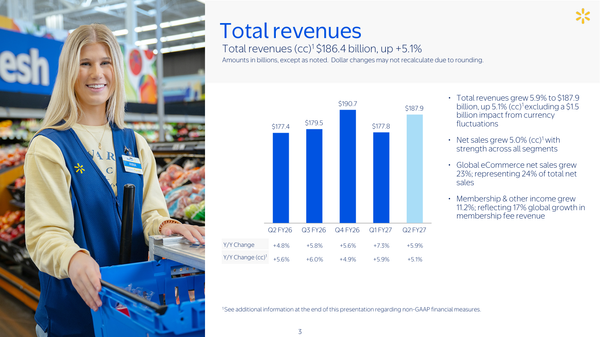
The next question is how much of that growth reaches operating profit. Online orders require picking, packing, and delivery. Selling more products digitally is encouraging, but the financial benefit depends partly on how efficiently Walmart handles those orders.
What Would Make This a Strong Report?
For Walmart, a strong quarter would combine steady shopper traffic with evidence that its digital investments are improving profitability. Growing online sales is encouraging. Turning those orders into stronger earnings would give investors more reason for confidence.
The holiday outlook could be just as important as the quarterly results. Investors will want to hear whether customers are spending beyond essentials and whether Walmart can keep prices competitive while protecting margins.
An earnings beat would be welcome, but the bigger question is whether Walmart can build on it. Strong demand, better delivery efficiency, and a confident outlook would strengthen that case. Without those signs, even respectable results could leave investors looking for more.