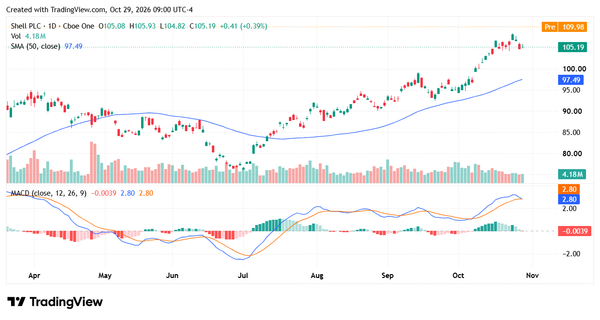
Shell (NYSE: SHEL) is generating billions of dollars in profit as disruptions across global energy markets make oil and refined fuels more expensive. For shareholders, that is translating into a bigger buyback program, strong cash generation, and a healthier balance sheet.
The energy giant reported third-quarter adjusted earnings of $10.81 billion, nearly double the $5.43 billion earned a year earlier. That marked its strongest quarterly performance since the second quarter of 2022, when Russia’s invasion of Ukraine sent energy markets into turmoil.
The results highlight why Shell’s business extends well beyond the price of crude. Producing oil is one source of earnings. Turning that oil into gasoline, diesel, and jet fuel can become another powerful profit driver when supplies are tight.
Refining Becomes a Major Earnings Driver
Shell’s refining margin reached a record $42 per barrel during the quarter, surpassing its previous peak of $28.04 in 2022.
A refining margin broadly measures the difference between the value of finished fuels and the cost of the crude used to produce them. It is an indicator of market conditions, rather than the exact profit Shell pockets on every barrel. When gasoline, diesel, and jet fuel become harder to find, their prices can rise faster than crude costs. That creates an opportunity for refiners that can keep their facilities operating and deliver products to customers.
That is the situation described in the latest energy-market reporting. Disruptions in the Middle East and damage to Russian refineries have reduced available fuel supplies, putting pressure on consumers while improving conditions for operating refineries.
Shell benefits from participating in several parts of that supply chain. Its production, refining, and trading operations give it multiple ways to serve customers during shortages.
More Cash Means Bigger Shareholder Returns
The most appealing part of Shell’s report is what management plans to do with the money.
The company announced a $5 billion share repurchase program, expected to be completed by its next quarterly results announcement. Buybacks can benefit investors by reducing the number of shares outstanding. With fewer shares dividing the company’s earnings, profit per share can increase even if total earnings remain unchanged.
Their effectiveness still depends on the price paid. Repurchasing shares at an attractive valuation can create lasting value. Buying aggressively when earnings and expectations are unusually high requires more care.
Shell’s cash generation provides considerable flexibility. Third-quarter free cash flow reached approximately $16.3 billion, compared with roughly $10 billion a year earlier. Net debt declined to about $39.7 billion from $41.75 billion in the previous quarter.
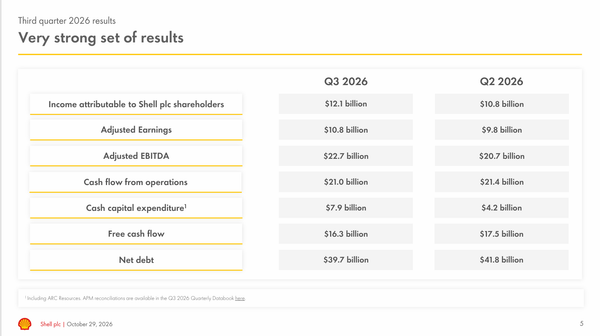
Those figures matter because they show the earnings surge is accompanied by cash that can support shareholder distributions and financial commitments.
Shell Is Still Investing in Future Production
The stronger balance sheet comes alongside Shell’s completed acquisition of Canadian energy producer ARC Resources. The transaction expands its production base and provides another source of future output. That makes the debt reduction particularly encouraging. Shell is adding assets while maintaining financial flexibility, rather than relying entirely on favorable markets to support a growing debt burden.
Management also lowered its 2026 capital spending outlook to between $23 billion and $25 billion, from the previous range of $24 billion to $26 billion. Lower planned spending can leave more money available for other priorities. Still, investors should watch whether that discipline comes with continued progress on projects that support future production and earnings.
The broader challenge is straightforward: Shell needs to reward shareholders today without weakening the business that will generate tomorrow’s cash.
Can These Conditions Last?
Shell’s quarter demonstrates the earning power of its business during a severe supply squeeze. It also raises the risk of investors treating an unusually favorable environment as permanent.
Refining margins could narrow if damaged facilities return, shipping disruptions ease, or demand weakens. Expensive fuel can eventually encourage consumers and businesses to cut consumption.
For shareholders, the next test is whether Shell can turn today’s windfall into durable financial strength. Continued debt discipline, sensible investment and well-priced buybacks would help.
The earnings surge is impressive. How management uses that cash will help determine how much lasting value investors receive.