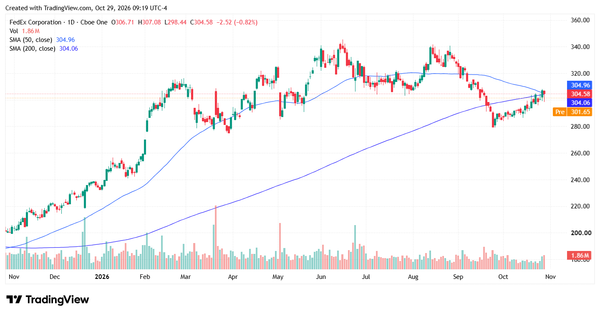
FedEx (NYSE: FDX) delivered better-than-expected quarterly results and raised its full-year forecast, giving investors fresh evidence that its efforts to improve the shipping business are paying off. Higher package volumes and stronger revenue per shipment helped support performance. Still, shares slipped slightly.
For investors, the bigger question is whether FedEx can keep turning stronger shipping activity into sustainable profit growth. This report offered encouraging signs, although the gap between adjusted earnings and reported profit deserves attention.
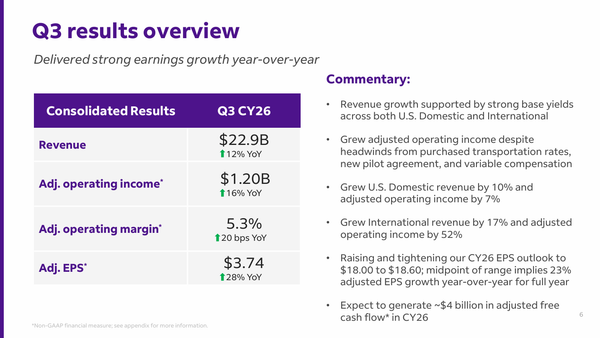
For the quarter ended September 30, FedEx generated revenue of $22.86 billion, ahead of the $22.42 billion expected. Adjusted earnings reached $3.74 per share, comfortably beating the $3.36 consensus. That represents an earnings surprise of roughly 11%, while revenue exceeded expectations by about $440 million.
FedEx Earnings Beat Estimates, but Reported Profit Fell 55%
However, investors looking at the company’s reported net income saw a different picture.
FedEx earned $290 million, or $1.21 per share, compared with $650 million, or $2.73 per share, during the comparable period a year earlier. That means reported net income dropped approximately 55%. The difference comes from adjustments involving investment losses, gains from retiring debt, and restructuring-related items. Removing those items produced the stronger adjusted earnings figure.
Both measures matter. Adjusted earnings can help investors assess ongoing operations, while reported earnings capture financial effects that still influence shareholder value. A strong adjusted number should therefore be considered alongside the expenses, gains and losses excluded from it.
Higher Package Revenue Supports the Business
One encouraging development came from FedEx’s U.S. express business, where operating income increased as package yields and shipping volumes improved. Package yield generally refers to the revenue generated per shipment. It can change because of pricing, surcharges, or the types of services customers choose.
For a delivery company, improving yields while handling more packages is an attractive combination. Higher volume brings additional business into the network, while stronger revenue per package can help cover the considerable expense of operating aircraft, trucks and sorting facilities.
However, more packages do not automatically mean better profitability. The benefit depends on what it costs to collect, sort and deliver them.
FedEx said its domestic performance also benefited from a better service mix and cost savings. Higher transportation expenses and employee compensation partly offset those gains.
That gives investors a useful framework for future reports: watch whether revenue improvements continue to outpace operating costs. The company’s ability to manage that balance will help determine whether stronger demand becomes stronger earnings.
Management Raises the Bar for 2026
Management raised its adjusted earnings forecast to between $18 and $18.60 per share, up from the previous range of $16.90 to $18.10. At the midpoint, that moves the forecast from $17.50 to $18.30, an increase of about 4.6%. The new range is also narrower, giving investors a more focused view of management’s expectations.
FedEx now anticipates revenue growth of approximately 12% for 2026, compared with its previous forecast of roughly 11%.
Together, those changes suggest management sees enough operating momentum to expect better annual results. They also create a higher hurdle for upcoming quarters.
FDX Stock Faces Its Next Test After Earnings and Business Changes
The results arrive during a significant transition.
FedEx has shifted its fiscal year-end from May 31 to December 31. It also completed the separation of FedEx Freight into a standalone publicly traded company. Those changes make careful comparisons especially important. Investors need to check that historical figures cover comparable periods and businesses before drawing conclusions about growth.
There is also a leadership change ahead. Former AutoZone finance executive Jamere Jackson will become FedEx’s chief financial officer on November 30, replacing interim CFO Claude Russ.
Jackson joins as FedEx tries to turn operational improvements into lasting financial gains. That makes spending discipline and the allocation of cash important areas to watch.
For now, FedEx has given shareholders reasons for optimism: earnings exceeded expectations, shipping trends improved, and management lifted its outlook. But the modest stock decline suggests investors still want evidence that this progress can continue.
The next few quarters will show whether FedEx can deliver consistent profit growth from its reshaped business. That will matter far more than one evening’s share-price reaction.