The Nov. 3, 2026, midterm elections could shift the balance of power in Washington and reshape the outlook for businesses that depend on government spending, regulation, and political support.
For investors, that makes the midterm elections about more than which party controls Congress.
- Healthcare companies are watching Medicaid funding.
- Defense contractors are waiting on spending decisions.
- Cryptocurrency businesses want clearer rules.
- Technology giants face questions about the costs of their artificial intelligence expansion.
The outcome of the midterm elections could create opportunities across those industries. But assuming that one election result will automatically send the entire stock market higher could be a mistake.
What History Says About Stock Market Returns After Midterm Elections
There’s a reason that investors are interested in what happens after Election Day.
According to Morningstar research examining U.S. stocks going back to 1926, November returns have generally been stronger in federal election years. Stocks gained an average of 2.4% during those months, compared with 0.9% in Novembers without federal elections.
The research includes both presidential and midterm elections. One possible explanation is that an election removes some uncertainty. Businesses and investors can start assessing the likely direction of policy instead of trying to handicap every possible outcome.
Fidelity’s research also points to a historical pattern of weaker performance before midterms and stronger performance afterward. Investors should also be careful with the familiar argument that divided government is always good for stocks. Morningstar found that, across its broader historical sample, returns were actually stronger under unified government. Political control alone does not explain market performance.
Healthcare and Defense Stocks Face Midterm Election Uncertainty
Healthcare could be especially sensitive to the results. Democratic gains could increase pressure to revisit Medicaid reductions or negotiate changes through future spending agreements. That could improve expectations for insurers serving Medicaid members and hospitals treating patients who depend on government coverage. Analysts have identified healthcare funding as one area where congressional control could influence investment outcomes.
The business connection is straightforward. When fewer patients have insurance, hospitals risk providing more care without receiving full payment. For insurers, changes in eligibility and government payments can affect enrollment and profitability.
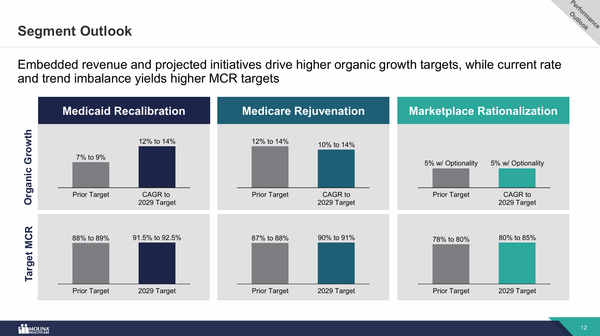
One insurer with significant Medicaid exposure is Molina Healthcare (NYSE: MOH). The company served approximately 4.37 million Medicaid members as of September 30, 2026, making changes to federal funding, eligibility requirements, and reimbursement rates particularly important to its business. Any effort by Congress to revisit Medicaid reductions could influence enrollment expectations and the company’s future revenue.
Defense presents a different challenge. The key question is which programs receive funding, how much they receive, and when that money becomes available.
For investors considering companies such as Lockheed Martin (NYSE: LMT), that means looking beyond headline defense budgets. Proposed spending needs to become authorized, funded business before it can support future revenue.
Financial companies also have reasons to watch closely.
For banks, capital requirements help determine how much money must remain available to absorb losses. Changes can affect lending capacity, dividends and share repurchases. However, an election does not immediately replace the regulators overseeing those rules.
Congressional control can influence oversight and future appointments, while much of the existing regulatory agenda may continue. Morgan Stanley expects considerable continuity in policies carried out through federal agencies and executive authority.
Cryptocurrency companies face a related issue: whether supportive policies become lasting legislation. For businesses such as Coinbase (NASDAQ: COIN), clearer rules could make planning easier. But negotiations could also bring stricter requirements, additional compliance costs, or restrictions on certain products.
AI Stocks Face New Data Center and Infrastructure Challenges
Artificial intelligence may produce some of the most complicated issues coming out of the midterm elections.
Building data centers requires electricity, land, water, and infrastructure. Those needs can create friction when communities worry about utility bills or the costs of accommodating large new facilities. Morgan Stanley (NYSE: MS) expects the AI expansion to continue, but with more conditions, particularly from state and local governments. That makes races outside Washington relevant to the investment outlook, too.
For investors, the useful question after Nov. 3 is how the midterm elections translate into measurable business changes. Watch funding agreements, regulatory decisions, and project approvals.