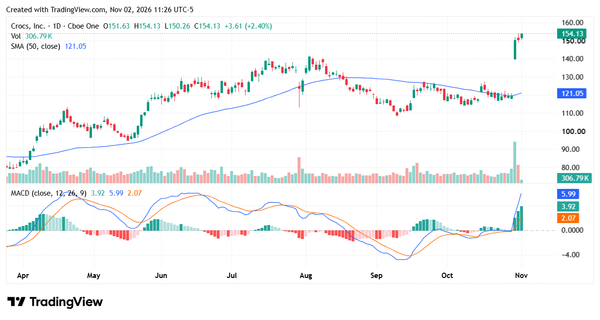
Crocs (NASDAQ: CROX) is giving investors reasons to take another look. Its international business is expanding, newer styles are attracting shoppers, and HeyDude is finally contributing growth again. Together, those improvements suggest the company is doing a lot better.
In its most recent quarter, adjusted earnings increased 26.4% to $3.69 per share, while revenue jumped 4.6% to about $1.04 billion. Management also raised its full-year outlook, forecasting roughly 3% revenue growth and adjusted earnings of $14.45 to $14.65 per share. Previously, it expected revenue growth of 1% to 2% and earnings of $13.70 to $14.00.
Those numbers give investors a stronger starting point. Understanding what’s behind them helps explain why the market reacted so sharply.
HeyDude Is Giving Investors Something to Work With
One of the biggest developments is happening at HeyDude. Third-quarter revenue increased 6.1%, helped by a 14% increase in wholesale sales, which are sales to retailers that carry its products. Direct-to-consumer revenue was essentially flat.
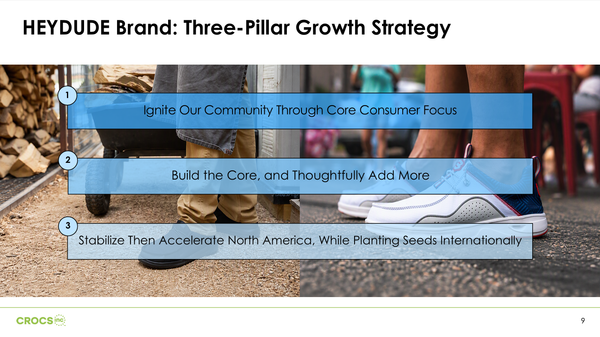
That distinction matters. Retailers ordering more merchandise is encouraging, but investors will also want evidence that shoppers continue buying it.
Bank of America analyst Kendall Toscano said the recovery arrived earlier than expected. She pointed to stronger immediate orders and replenishment orders, along with improvements in both shipments to retailers and sales to consumers. Put simply, retailers appear more willing to stock HeyDude, and shoppers are responding to a broader selection of products.
A single quarter doesn’t establish a lasting turnaround. Still, a business that had been holding back growth is beginning to help. If that improvement continues, Crocs will have a more balanced business and less pressure on its namesake brand to carry the company.
International Markets Offer Room to Expand
Crocs also has an opportunity to reach more customers overseas.
International revenue at the Crocs brand increased 11.8% in the quarter. North American revenue declined 2.1%, showing why the overseas business is so important to the company’s growth outlook.
With that, Raymond James analyst Rick Patel highlighted China, India, and Japan as strong performers, supported by new products and digital engagement.
Also, in a CNBC interview, CEO Andrew Rees credited the company’s early adoption of social commerce in China. Platforms such as Douyin combine entertainment, product discovery, and shopping, giving brands opportunities to turn attention into purchases. Rees also highlighted Crocs’ early move onto TikTok Shop in the United States.
Giving Shoppers More Reasons to Buy
Crocs’ product expansion is another part of the story. The Classic Clog remains central to the brand, but relying heavily on one recognizable style leaves a company exposed when tastes change. Adding products gives existing customers another reason to shop and creates opportunities to reach people who might never buy a clog.
Ballet flats are one example. The earnings report describes Crocs offering the style in different colors, prints, and customizable options, with prices below $50. Barclays analyst Adrienne Yih cited the product’s global appeal as evidence that the business is developing beyond its signature shoe. Affordability helps, too. Rees described much of the company’s footwear as priced between $50 and $70.
That doesn’t make every purchase an easy decision for a stretched household. But it gives Crocs a relatively accessible way to participate in fashion trends without asking shoppers to make a major commitment.
What Investors Should Watch Next
Following such a sharp rally, Crocs faces higher expectations.
The next test is whether HeyDude can sustain its recovery, international markets can keep expanding, and newer products can generate repeat purchases. North America also needs attention: overseas strength is useful, but a healthier domestic business would make the growth story more convincing.
Crocs has given investors evidence that several parts of its strategy are working at once. Keeping that progress going would provide a stronger foundation for the stock’s comeback—and give shareholders more to focus on than one impressive earnings reaction.