Why should investors pay attention to insider buying? The answer goes back to an old saying. Insiders have many reasons to sell a stock, but usually only one reason to buy it.
Insider buying is an example of corporate insiders putting their money where their mouths are. That means investors have a good reason to take a closer look. After all, these are people who help run the business, shape its strategy, and evaluate its opportunities. Their willingness to commit personal money can offer a useful clue about how they view the company’s prospects.
That doesn’t mean every insider purchase will point to a winning investment. Executives can misjudge their businesses, underestimate competition, or buy well before a stock finishes falling. Still, there’s something compelling about a leader backing an optimistic outlook with a substantial personal investment.
Here are three stocks with recent examples of insider buying that may be worth your attention.
One Oracle Insider is Looking Past the Company’s AI Spending
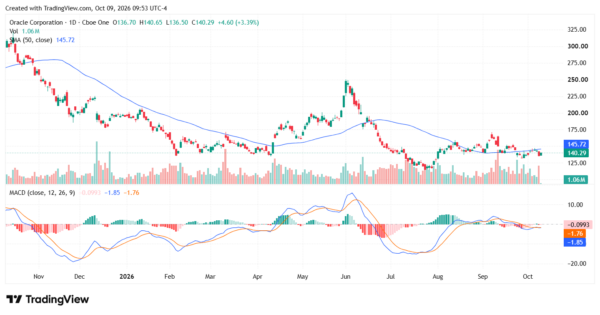
At Oracle (NYSE: ORCL), director Stephen Rusckowski bought 25,000 shares on September 29 for approximately $3.5 million. He paid between $138.96 and $139.74 per share through a living trust. It was his first open-market purchase since joining the board in November 2025.
In addition, as noted by Barron’s, “The open-market purchase coincided with a surge in the cloud-computing provider’s stock price. Shares got a lift on Sept. 29 following a report that OpenAI’s annual recurring revenue was nearing $70 billion. Because Oracle is a primary cloud provider for OpenAI, analysts often view their fortunes as intertwined, meaning the strong revenue figures could bolster expectations for Oracle’s future growth.”
Investors reacted negatively to Oracle’s capital expenditure (CapEx) on AI. This example of insider buying gives investors another side of the story.
GameStop’s CEO Is Doing More Than Talking His Book
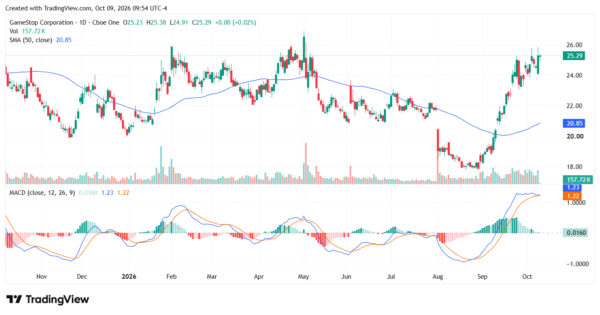
GameStop (NYSE: GME) CEO Ryan Cohen bought 450,000 shares for about $10.6 million, increasing his direct holdings to nearly 40.95 million shares.
GameStop director Nat Turner purchased 10,462 shares on October 1 at a reported price of $24.33 each. Those figures imply an investment of approximately $254,541.
Having more than one insider buying gives investors another reason to investigate. But it still leaves the central question unanswered: Can GameStop generate sustainable business results that justify its stock price? Cohen is attempting to execute a transformation of GameStop’s business. This purchase is an example of a CEO putting his money where his mouth is.
However, investors evaluating a turnaround should look beyond spending reductions. They also need to understand where future revenue will come from, whether profitability can endure, and how management plans to use the company’s capital.
Uber CEO Bought 141,000 Shares
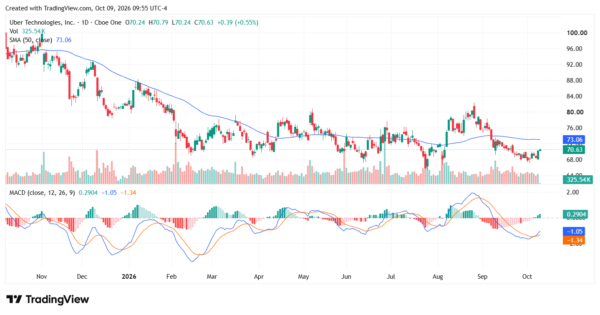
Uber (NYSE: UBER) CEO Dara Khosrowshahi just put about $10 million behind his outlook for the company. Khosrowshahi bought 141,000 shares at an average price of about $70.96 per share, increasing his direct holdings to 1,367,100 shares. That’s a sizable personal investment and one that gives investors another reason to take a closer look at the ride-hailing giant.
He wasn’t the only executive buying, either. His purchase followed a roughly $5.3 million investment by Chief Operating Officer Andrew Macdonald on September 4. Together, the two executives committed approximately $15.3 million to Uber shares.
Why does that matter? Investors hear plenty of upbeat commentary from company executives. Putting personal money into the stock adds weight to those words, suggesting these leaders see an attractive opportunity at the prices they paid.
What Insider Buying Means for Investors
The insider buying at Oracle, GameStop and Uber share an encouraging theme: People with a close understanding of these businesses are willing to put substantial personal money on the line. That deserves attention, especially when investors are trying to separate confidence in a company’s future from enthusiasm surrounding its stock.
The next step is deciding whether the business supports that confidence. Are sales growing? Is the company generating cash? Does its strategy offer a credible path to stronger earnings? And does the stock’s price leave room for an attractive return? Insider buying becomes more persuasive when those answers point in the same direction.
Ultimately, a multimillion-dollar purchase can be a valuable starting point for an investment idea. The strongest case comes when management’s conviction lines up with improving results and a reasonable valuation. When those pieces come together, investors have something much more useful than an eye-catching transaction: a business worth considering for the long haul.