If you’re even thinking about retirement, one of the last things you need to worry about is consistent cash flow. Instead, you’ll want your money to help make you money. One way to do that is with high-yield dividend ETFs that can generate income while keeping you invested in the market.
With these funds, you may be able to supplement your retirement income without relying entirely on selling shares to cover expenses. Dividend ETFs can offer a passive approach to investing, with the potential for regular distributions and long-term growth.
Exchange-traded funds also provide diversification, professional management, and relatively low costs. These features can become increasingly important as you move from accumulating wealth to preserving it and generating income.
Here are three dividend ETFs to consider for a retirement portfolio, each with a different approach to income, diversification, and growth.
VYMI: An International Dividend ETF for Global Diversification
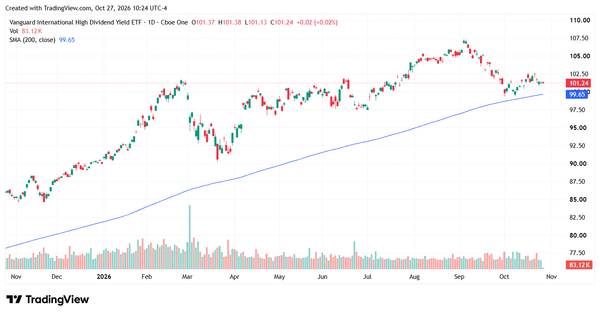
If you want to diversify beyond U.S. markets, the Vanguard International High Dividend Yield Fund ETF (NASDAQ: VYMI) provides access to high-quality global income stocks. It also yields 3.64%.
With an expense ratio of 0.07%, the ETF targets 1,502 global companies, such as Nestle (OTCMKTS: NSRGY), Novartis (NYSE: NVS), Toyota Motor (NYSE: TM), and Shell (NYSE: SHEL). All are established companies with strong balance sheets, global revenue streams, and a history of returning capital to shareholders.
Most recently, the fund paid out a dividend of just over 81 cents on September 22. Before that, it paid out just over $1.25 on June 23. And before that, it paid out just over 70 cents on March 24. Beyond yield, VYMI provides an important portfolio benefit: geographic diversification. Retirees who rely heavily on U.S. stocks may be overexposed to domestic issues. By incorporating international dividend stocks, you can diversify your risk.
VIG: A Dividend Growth ETF for Long-Term Investors
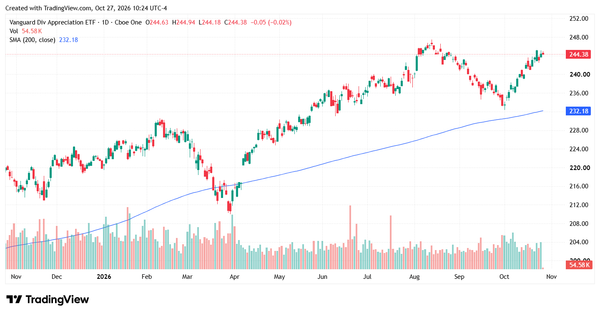
With an expense ratio of 0.04% and a quarterly dividend, the Vanguard Dividend Appreciation ETF (NYSEARCA: VIG) tracks the performance of the S&P U.S. Dividend Growers Index.
In addition, the VIG ETF has just over $127.7 billion in assets under management, a well-diversified portfolio of 333 stocks, and offers a low-cost, resilient, growth-oriented option for smart investors.
Some of its other holdings include Broadcom (NASDAQ: AVGO), Microsoft (NASDAQ: MSFT), JPMorgan Chase (NYSE: JPM), Apple (NASDAQ: AAPL), Visa (NYSE: V), Eli Lilly (NYSE: LLY), and Exxon Mobil (NYSE: XOM). Making the VIG ETF even more attractive, it yields about 1.51% and just paid out a dividend of just paid a dividend of just over 92 cents per share on September 30. It paid just over 99 cents on June 30, and just over 83 cents on March 31.
Although its yield is lower than that of some high-yield dividend ETFs, VIG offers a different proposition: exposure to businesses that have demonstrated a commitment to growing shareholder payouts. For investors with a longer retirement horizon, that combination may be attractive.
DIVO: A Monthly Dividend ETF With a Covered-Call Strategy
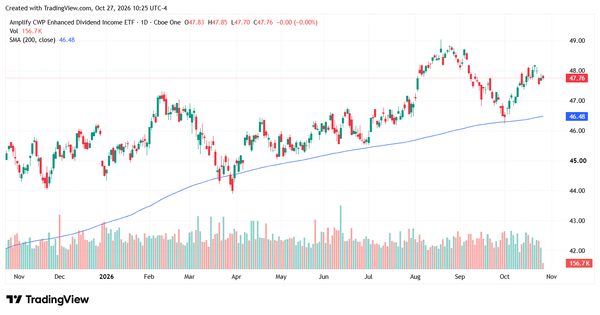
With a monthly yield of 1.4% and an expense ratio of 0.56%, the Amplify CWP Enhanced Dividend Income ETF (NYSEARCA: DIVO) holds large-cap companies that have a strong history of dividend growth. It also uses a covered call strategy on individual stocks to offer high total returns. It also pays a monthly dividend. On September 30, it paid out just over 18 cents per share. On August 31, it paid out just over 19 cents. On July 31, it paid out just over 18 cents.
“DIVO seeks investment results that correspond generally to an existing strategy called the Enhanced Dividend Income Portfolio (EDIP),” as noted by AmplifyETFs.com. That strategy attempts to generate income through dividends and short-term covered calls in an effort to increase cash flow and consistent annual income.
For retirees who value regular payouts, DIVO may be worth considering alongside traditional dividend growth ETFs. However, its covered-call strategy introduces trade-offs, including the potential to sacrifice some capital appreciation. Its distributions can also vary, and a distribution should not automatically be interpreted as investment income generated solely from dividends.
How to Choose Between These Three Dividend ETFs
VYMI, VIG, and DIVO serve different purposes in an income-focused portfolio.
- VYMI emphasizes international diversification and a comparatively higher dividend yield.
- VIG focuses on companies with a record of dividend growth and offers a low-cost approach to long-term investing.
- DIVO combines dividend-paying stocks with covered calls to pursue monthly cash distributions.
The right choice depends on your priorities. Investors seeking broader geographic exposure may favor VYMI, while those emphasizing dividend growth may prefer VIG. Investors who value monthly distributions may find DIVO more appealing.
Ultimately, dividend ETFs can play a role in a retirement strategy, but no fund guarantees consistent income or protects investors from losses. Distribution amounts can change, share prices can fall, and high yields do not necessarily translate into better total returns.
The goal is to build a diversified portfolio that helps cover today’s expenses while giving your savings room to support tomorrow’s needs.