ajax loader

Loading...


Ride-the-Wave Strategy – Best for Stock Traders

Ride-the-Wave targets multi-day price momentum following a company’s earnings announcement (EA). With this strategy:

  1. Buy a stock one day post-EA if a stock reacts positively post-earnings:
    1. Near the close of trading the EA-day for a pre-market-EA
    2. Near the close of the following day for a post-market-EA
  2. Sell-to-close after 7-10 days, or possibly earlier if a desired price target is reached

Similarly,

  1. short a stock one day post-EA if a stock reacts negatively post-earnings:
    1. near the close of trading the EA-day for a premarket-EA
    2. near the close of the following day for a post-market-EA
  2. then buy-to-close after 7-10 days, or possibly earlier if a desired price target is reached

Important: Ride-the-Wave is predicated on significant price momentum triggered by an EA. The 7-10 day scenario is the maximum trade hold-time. If you see post EA-momentum is halted or reversed by a significant opposite move, re-evaluate your presence in the trade.

This popular StockEarnings screen below will give you a list of stocks that historically exhibit significant price momentum following an EA for the next seven days:

  1. Stocks exhibiting positive post-EA price moves are buy-candidates
  2. Stocks exhibiting negative post-EA price moves are sell/short-candidates

The screen includes those stocks whose Earnings just came out in last two days.

Screen criteria:

  1. Earnings Date Start Date : Current Date + -1 Day
  2. Earnings Date End Date : Current Date + -2 Days
  3. Predicted Move (Next Day) Max : 7%
  4. Predicted Move (On 7th Day) Min : 7%

Strategy Guideline:

  1. Buy the stock if stock has reacted positively. Short the stock if stock has reacted negatively (see above).
  2. Close the position in 7-10 days, or possibly earlier based on price move.

Volatility Crush Strategy - Best for Options Traders

The Volatility Crush strategy is used with stocks that typically experience relatively low-to-moderate price moves (≤4%) following their Earnings Announcements (EA). The basic trade idea is to sell put or call options right before the EA, collecting a credit when options premium is very high due to elevated implied volatility (IV). You then close the position right after the EA by buying the option back much cheaper due to the significant drop in IV that occurs after the mystery of the EA disappears. In assessing this trade, you need to do your homework to ensure you collect sufficient premium to make the trade worthwhile.

This trade is practical due to the low-to-moderate price-move after the EA, which generally won’t significantly affect the options price, unlike an “action” stock, which experience great price moves post-EA. With these symbols, if you’re on the right side of the price move, that’s a great thing. But if you’re on the wrong side of the move, not so great. Consequently, by minimizing the effect of the post-EA price move, you have a much better chance to profit from the reduction in IV without it being ruined by a violent price move.

For this trade, open the position either (1) the night before the EA when the company announces earnings or (2) during the EA day when it announces post-market, generally capturing IV at or close to its peak.

For this trade, open the position either (1) the night before the EA when the company announces earnings or (2) during the EA day when it announces post-market, generally capturing IV at or close to its peak.

This popular stockearnings screen will give you a list of stocks which do not react more than 4% fpost-EA. It includes only those stocks whose earnings are releasing next day.

Screen criteria:

  1. Earnings Date Start Date : Current Date + 1
  2. Earnings Date End Date : Current Date + 1
  3. Predicted Move (Next Day) Max : 4%
  4. Options Type: Weekly

Strategy Guideline:

  1. Options Strategy: Sell Call and Put
  2. Options Strike Price: Current Stock Price – (% Predicated Move x 2)
  3. Expiration Date: It should generally be the closest expiry immediately after the EA.
  4. Buy Insurance: Buying back Call and Put at Strike price which 10% lower than Sell Strike Price is optional but recommended.

Watch Video for More Detail

Volatility Rush Strategy - Best for Options Traders

The Volatility Rush takes advantage of increasing options premiums into earnings announcements (EA) caused by an anticipated rise in Implied Volatility (IV). With this strategy, Buy a Call and Put at-the-money (a long straddle) 2-3 weeks before the EA when IV is lower. Sell the position either (1) the night before the EA when the company announces earnings pre-market, or (2) during the EA day when it announces post-market, generally capturing IV at or close to its peak.

This popular screen will give you a list of stocks whose Options premiums tend to rise into Earnings. It includes only those stocks whose Earnings are at least two weeks away from today.

Screen criteria:

  1. Earnings Date Start Date : Current Date + 15 Days
  2. Earnings Date End Date : Current Date + 30 Days
  3. Predicted Move (Next Day) Min : 5%
  4. Options Type: Weekly or Monthly if that lines up with the two to three-week lead-time for entering the trade

Strategy Guideline:

  1. Buy a Straddle at or close to the money two to three weeks pre-EA.
  2. Sell the position either the night before the EA when the company announces earnings pre-market, or during the EA day when it announces post-market.
  3. Expiration date should generally be the closest expiry immediately after the EA.
  4. Straddle price should not be more 60% of predicted move.

Predicted Move (Volatility)

Similar to Implied Volatility in Options. Expected volatility % based on our Proprietary Volatility Predication Model. We are expecting that stock price will likely to reach % in either direction by the end of next trading session after Earnings are released and not necessarily the closing volatility %.

Why is it important?

    This indicator helps

  1. Knowing expected volatility in stocks after Earnings helps to decide trading stocks before Earnings Announcement.
  2. Taking Advantage of volatility collapse following Earnings Results by using Advance Options strategies such as Spread and Straddles.

Since Last Earnings

Change in share price since last Earnings release.

Why is it Important?

When share has gained more than 10% since it's last Earning release, it tends to over react to minor bad news and give up some gains if not all. So, it contains more downside volatility than upside When share has dropped more than 10% since it's last Earning release, it tends to over react to minor good news and recover some drops if not all. So, it contains more upside volatility than downside.

EPS Surprise (%)

Occurs when a company's reported quarterly or annual profits are above or below analysts' expectations. Here is the formula to derive % EPS Surprice:

Actual EPS - Estimated EPS
------------------------------------- x 100
Estimated EPS

Why is it Important?

Earnings surprises can have a huge impact on a company's stock price. Several studies suggest that positive earnings surprises not only lead to an immediate hike in a stock's price, but also to a gradual increase over time. Hence, it's not surprising that some companies are known for routinely beating earning projections. A negative earnings surprise will usually result in a decline in share price.

Next Day Price Change (%)

Next Regular trading session Closing price following Earnings result.

For After Market Close Earnings, It is a next trading day closing price. For Before Market Open Earnings, It is the same trading day closing price.

Why is it Important?

Next Day price change is a reaction of Earnings result.

3 Top Ways to Profit From a Potential Anthropic IPO

Posted on Oct 26, 2026 by Ian Cooper

3 Top Ways to Profit From a Potential Anthropic IPO

We could soon see an Anthropic IPO, giving investors another major artificial intelligence company to watch. The company behind Claude has filed to go public and plans to list on the Nasdaq under the ticker “ANT.” For investors eager to own a piece of the AI industry, that puts a potential new opportunity on the horizon.

Of course, an exciting company doesn’t automatically make for an attractive investment at any price. SpaceX (NASDAQ: SPCX) has demonstrated to investors the volatility that can happen after a company goes public. A similar story is in place with SK hynix (NASDAQ: SKHY).

Investors will need to weigh Anthropic growth potential against its valuation, spending needs, and competition. And if enthusiasm sends shares soaring when trading begins, buying into that excitement could prove expensive.

Fortunately, waiting to buy Anthropic shares directly isn’t the only approach worth considering. Investors can also explore funds that own newly public companies or funds with exposure to private businesses before they reach the stock market. These offer different ways to participate in the broader IPO theme, depending on their holdings and investment rules.

Anthropic Isn’t the Only Potential IPO to Watch in 2026


Anthropic isn’t the only private company attracting attention ahead of a potential 2026 IPO. OpenAI and Databricks are also among the high-profile names investors are watching as they look for the next major artificial intelligence listing.

Unlike publicly traded companies such as NVIDIA (NASDAQ: NVDA) and Palantir Technologies (NASDAQ: PLTR), these private businesses don’t yet offer investors the same direct access through ordinary stock-market purchases. Anthropic’s proposed Nasdaq ticker, ANT, could make it easier to follow the company if its listing proceeds, but investors should distinguish announced plans from a completed IPO.

For investors looking to position themselves for the next wave of IPOs in 2026, funds focused on newly public companies or private-market innovation may offer alternative ways to gain exposure.

With that in mind, here are three funds worth a closer look.

First Trust US Equity Opportunities ETF (FPX): Broad IPO Exposure

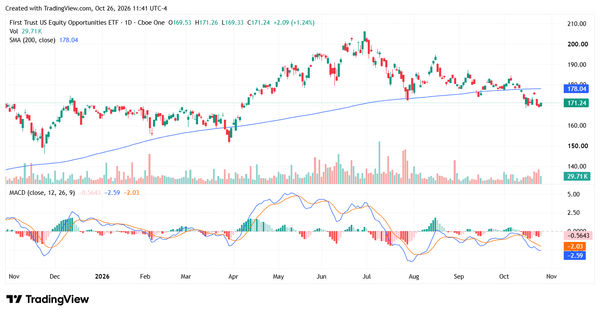
With an expense ratio of 0.61%, the First Trust US Equity Opportunities ETF (NYSEARCA: FPX) tracks hot IPOs, giving investors access to new stocks during their initial, most crucial days on the market. By buying it, not only can you avoid paying gobs of money for IPOs that may or may not work out, but you’re also being exposed to multiple hot IPOs at the same time at a lower cost.

Even with its share of high-profile IPO disappointments, FPX has delivered strong long-term gains, climbing from around $11 in 2009 to recent highs near $169. The key advantage is simple: whether individual IPOs succeed or fail, the overall excitement and capital inflows into the IPO market tend to support the ETF over time.

With the FPX, it doesn’t matter if the stock is hot or a dud; the excitement surrounding IPOs continues to send the FPX to new highs.
anthropic - StockEarnings

Renaissance IPO ETF (IPO): Diversified Exposure to New Stocks

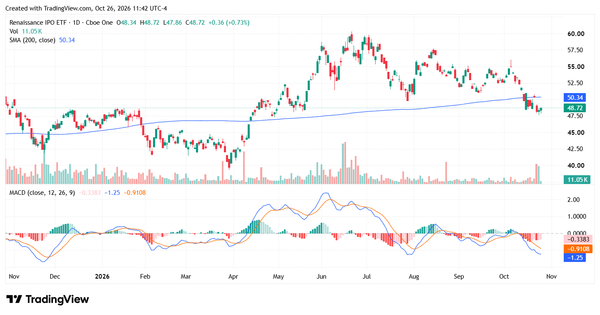
With an expense ratio of 0.6%, the Renaissance IPO ETF (NYSEARCA: IPO) provides “investors with the largest, most liquid US-listed newly public company stocks in one security, reducing the risk of single-stock ownership while avoiding overlap with major core indices for optimal diversification across markets and time,” as noted by Renaissance Capital.

Since November 2023, the ETF rallied from a low of about $30 to its current price of $48.38. From here, we’d eventually like to see the ETF rally back to $60 a share.
anthropic - StockEarnings

Fundrise Innovation Fund (VCX): Private AI Investment Exposure

At the moment, AI accounts for about 44% of the Fundrise Innovation Fund (NYSE: VCX) portfolio and data infrastructure 23%, with the remainder invested in fintech, aerospace, gaming, software, and healthcare. The strong demand for VCX comes as its top holdings, such as Anthropic, Databricks, and OpenAI, are expected to go public this year.

How to Invest Around the Anthropic IPO Without Buying Shares Directly

An Anthropic IPO could give investors another way to participate in the growth of artificial intelligence. But there’s no need to rush into a stock simply because its debut attracts attention. The price you pay and the business performance behind it will matter long after the opening-day excitement fades.

Funds such as FPX, IPO, and the Fundrise Innovation Fund offer different approaches to this opportunity. Before investing, look closely at what each fund actually owns, its fees, and how it fits your goals. Exposure to newly public companies is different from owning a stake in Anthropic. The aim is to find an investment that makes sense even after the headlines move on.


Over the last 26 years, he’s taught thousands of investors how to trade news flow and herd mentality using a unique blend of technical and fundamental analysis. Cooper was among the few analysts to spot the financial crisis of 2008, the top of subprime and Alt-A, the death of Lehman Brothers, Bear Stearns, and New Century Financial, and even the Dow’s collapse to 6,500, as well as its recovery. He even called for gold to rally well above $1.500 when it traded under $600. At the moment, Cooper makes use of technical, fundamental and news analysis, to help individual investors grow their wealth. He’s a firm believer that hard work and thorough research will lead to investment success.

Join over 1.2M+ investors/traders who receive daily and weekly notable earnings alerts with predicted move