ajax loader

Loading...


Ride-the-Wave Strategy – Best for Stock Traders

Ride-the-Wave targets multi-day price momentum following a company’s earnings announcement (EA). With this strategy:

  1. Buy a stock one day post-EA if a stock reacts positively post-earnings:
    1. Near the close of trading the EA-day for a pre-market-EA
    2. Near the close of the following day for a post-market-EA
  2. Sell-to-close after 7-10 days, or possibly earlier if a desired price target is reached

Similarly,

  1. short a stock one day post-EA if a stock reacts negatively post-earnings:
    1. near the close of trading the EA-day for a premarket-EA
    2. near the close of the following day for a post-market-EA
  2. then buy-to-close after 7-10 days, or possibly earlier if a desired price target is reached

Important: Ride-the-Wave is predicated on significant price momentum triggered by an EA. The 7-10 day scenario is the maximum trade hold-time. If you see post EA-momentum is halted or reversed by a significant opposite move, re-evaluate your presence in the trade.

This popular StockEarnings screen below will give you a list of stocks that historically exhibit significant price momentum following an EA for the next seven days:

  1. Stocks exhibiting positive post-EA price moves are buy-candidates
  2. Stocks exhibiting negative post-EA price moves are sell/short-candidates

The screen includes those stocks whose Earnings just came out in last two days.

Screen criteria:

  1. Earnings Date Start Date : Current Date + -1 Day
  2. Earnings Date End Date : Current Date + -2 Days
  3. Predicted Move (Next Day) Max : 7%
  4. Predicted Move (On 7th Day) Min : 7%

Strategy Guideline:

  1. Buy the stock if stock has reacted positively. Short the stock if stock has reacted negatively (see above).
  2. Close the position in 7-10 days, or possibly earlier based on price move.

Volatility Crush Strategy - Best for Options Traders

The Volatility Crush strategy is used with stocks that typically experience relatively low-to-moderate price moves (≤4%) following their Earnings Announcements (EA). The basic trade idea is to sell put or call options right before the EA, collecting a credit when options premium is very high due to elevated implied volatility (IV). You then close the position right after the EA by buying the option back much cheaper due to the significant drop in IV that occurs after the mystery of the EA disappears. In assessing this trade, you need to do your homework to ensure you collect sufficient premium to make the trade worthwhile.

This trade is practical due to the low-to-moderate price-move after the EA, which generally won’t significantly affect the options price, unlike an “action” stock, which experience great price moves post-EA. With these symbols, if you’re on the right side of the price move, that’s a great thing. But if you’re on the wrong side of the move, not so great. Consequently, by minimizing the effect of the post-EA price move, you have a much better chance to profit from the reduction in IV without it being ruined by a violent price move.

For this trade, open the position either (1) the night before the EA when the company announces earnings or (2) during the EA day when it announces post-market, generally capturing IV at or close to its peak.

For this trade, open the position either (1) the night before the EA when the company announces earnings or (2) during the EA day when it announces post-market, generally capturing IV at or close to its peak.

This popular stockearnings screen will give you a list of stocks which do not react more than 4% fpost-EA. It includes only those stocks whose earnings are releasing next day.

Screen criteria:

  1. Earnings Date Start Date : Current Date + 1
  2. Earnings Date End Date : Current Date + 1
  3. Predicted Move (Next Day) Max : 4%
  4. Options Type: Weekly

Strategy Guideline:

  1. Options Strategy: Sell Call and Put
  2. Options Strike Price: Current Stock Price – (% Predicated Move x 2)
  3. Expiration Date: It should generally be the closest expiry immediately after the EA.
  4. Buy Insurance: Buying back Call and Put at Strike price which 10% lower than Sell Strike Price is optional but recommended.

Watch Video for More Detail

Volatility Rush Strategy - Best for Options Traders

The Volatility Rush takes advantage of increasing options premiums into earnings announcements (EA) caused by an anticipated rise in Implied Volatility (IV). With this strategy, Buy a Call and Put at-the-money (a long straddle) 2-3 weeks before the EA when IV is lower. Sell the position either (1) the night before the EA when the company announces earnings pre-market, or (2) during the EA day when it announces post-market, generally capturing IV at or close to its peak.

This popular screen will give you a list of stocks whose Options premiums tend to rise into Earnings. It includes only those stocks whose Earnings are at least two weeks away from today.

Screen criteria:

  1. Earnings Date Start Date : Current Date + 15 Days
  2. Earnings Date End Date : Current Date + 30 Days
  3. Predicted Move (Next Day) Min : 5%
  4. Options Type: Weekly or Monthly if that lines up with the two to three-week lead-time for entering the trade

Strategy Guideline:

  1. Buy a Straddle at or close to the money two to three weeks pre-EA.
  2. Sell the position either the night before the EA when the company announces earnings pre-market, or during the EA day when it announces post-market.
  3. Expiration date should generally be the closest expiry immediately after the EA.
  4. Straddle price should not be more 60% of predicted move.

Predicted Move (Volatility)

Similar to Implied Volatility in Options. Expected volatility % based on our Proprietary Volatility Predication Model. We are expecting that stock price will likely to reach % in either direction by the end of next trading session after Earnings are released and not necessarily the closing volatility %.

Why is it important?

    This indicator helps

  1. Knowing expected volatility in stocks after Earnings helps to decide trading stocks before Earnings Announcement.
  2. Taking Advantage of volatility collapse following Earnings Results by using Advance Options strategies such as Spread and Straddles.

Since Last Earnings

Change in share price since last Earnings release.

Why is it Important?

When share has gained more than 10% since it's last Earning release, it tends to over react to minor bad news and give up some gains if not all. So, it contains more downside volatility than upside When share has dropped more than 10% since it's last Earning release, it tends to over react to minor good news and recover some drops if not all. So, it contains more upside volatility than downside.

EPS Surprise (%)

Occurs when a company's reported quarterly or annual profits are above or below analysts' expectations. Here is the formula to derive % EPS Surprice:

Actual EPS - Estimated EPS
------------------------------------- x 100
Estimated EPS

Why is it Important?

Earnings surprises can have a huge impact on a company's stock price. Several studies suggest that positive earnings surprises not only lead to an immediate hike in a stock's price, but also to a gradual increase over time. Hence, it's not surprising that some companies are known for routinely beating earning projections. A negative earnings surprise will usually result in a decline in share price.

Next Day Price Change (%)

Next Regular trading session Closing price following Earnings result.

For After Market Close Earnings, It is a next trading day closing price. For Before Market Open Earnings, It is the same trading day closing price.

Why is it Important?

Next Day price change is a reaction of Earnings result.

What Happens To Defense Stocks If Netanyahu Foils The Iran Deal?

Posted on Jun 25, 2026 by Grayson Cavern

What Happens To Defense Stocks If Netanyahu Foils The Iran Deal?

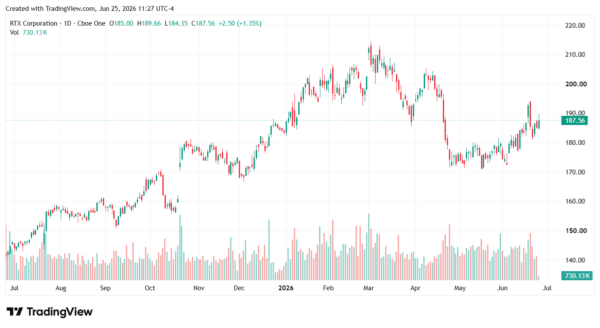
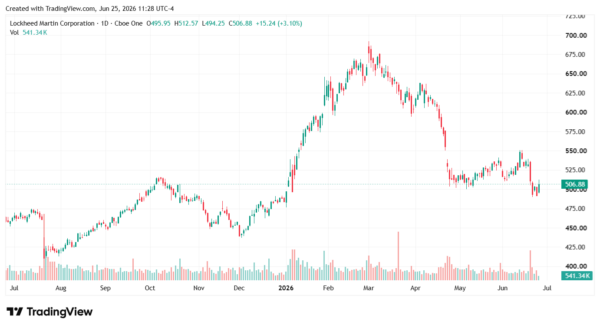
Markets already voted on this ceasefire. The day President Trump announced an interim memorandum with Iran, defense stocks sold off almost immediately. Lockheed Martin (NYSE: LMT) fell 5%, RTX (NYSE: RTX) lost 4%, while Northrop Grumman (NYSE: NOC) and L3Harris (NYSE: LHX) each dropped roughly 6%, signaling that investors had begun stripping a meaningful war premium from the sector on the assumption that diplomacy had finally gained the upper hand.

That assumption now seems premature. Continued Israeli military operations in Lebanon have emerged as one of the biggest tests of the agreement, placing Netanyahu’s government in collision course with the diplomatic framework Washington is trying to preserve. 

The problem is, the market is starting to price that peace before the peace itself has been retested.

The Selloff Already Showed You The Premium


Run the numbers from deal day and the structure of this trade becomes obvious immediately. RTX dropped hardest among the names most tied to consumable munitions, because Patriot interceptors and AMRAAM restocking accelerates during active conflict and slows the second the shooting stops. That single fact explains why RTX is the most reactive name in this entire group on both sides of the move. 
defense stocks-StockEarnings

Lockheed fell too, despite sitting on a backlog north of $190 billion built almost entirely on multi-decade allied procurement that has nothing to do with whether Tehran and Washington are technically at peace this particular month.
defense stocks-StockEarnings

That gap between the headline drop and the underlying contract base is the whole trade. The market sold a war premium across the board, even on the names whose real revenue runs on F-35 deliveries and PAC-3 production schedules signed years before this specific conflict started, which means the stocks most exposed to a Lebanon flare-up and the stocks most insulated from one just got priced as if they were the same thing.

Netanyahu Doesn’t Need To Kill The Deal Outright

He just needs to keep fighting in Lebanon, and he’s already told voters he plans to. Iran’s foreign minister has stated that any violation in Lebanon voids the ceasefire on every front simultaneously, which means this agreement isn’t insulated from a second theater the way most coverage is treating it. 

Right now, Netanyahu is heading into elections this fall with his political survival tied to looking uncompromising on Hezbollah, and he’s said outright that the fighting continues “with an agreement, without an agreement.” Defense Minister Israel Katz has vowed to keep Israeli troops in southern Lebanon regardless of what Washington prefers, and Trump has reportedly told Netanyahu in blunt, documented terms that continued strikes risk unraveling the entire framework he just built with Tehran.

None of that belongs to some distant scenario investors may have to price one day. The disagreement is already unfolding between the two governments that helped shape this framework, and the 60-day clock resets the moment Iran concludes the ceasefire has been violated.

The conflict that originally drove the war premium into RTX, Lockheed, and other defense stocks doesn’t need a new trigger. Netanyahu has already signaled the course he intends to take.

Congress, Not Tehran, May Move These Stocks First

Here’s where the setup gets genuinely asymmetric, and where I think most of the coverage on this trade is looking in the wrong direction entirely. 

The war already drained U.S. stockpiles of Patriot interceptors and Tomahawks faster than planners expected, which is why the White House recently summoned Lockheed, RTX, Boeing, Northrop, L3Harris, and Honeywell Aerospace specifically to address the shortage. Demand for replenishment isn’t theoretical and isn’t contingent on whether Iran stays calm. It already exists. 

The constraint is that those framework agreements can’t be fully funded until a defense appropriations bill clears Congress, and that legislative timeline runs on its own schedule, completely disconnected from both the ceasefire and from whatever Netanyahu decides to do next week in Beirut.

That creates two outcomes stacking on top of each other rather. If the deal holds and Lebanon stays contained, defense stocks likely keep grinding lower on a fading war premium, but the replenishment cycle from depleted stockpiles still happens regardless, because that demand was created by the war that already occurred. 

If Netanyahu escalates far enough to void the framework, you get the replenishment cycle and a reignited war premium landing in the same quarter – and RTX, given its munitions exposure, is the name most levered to that exact combination arriving at once.

The Watchlist, Not The Trade

I’m not chasing defense stocks today. The selloff was rational, the war premium needed to come out, and chasing a bounce on a ceasefire that the intelligence community itself doubts is a bet on a headline rather than a thesis. 

But I’m keeping RTX and Lockheed and others on the watchlist, because procurement cycles like this one rarely announce themselves on the day they actually begin. They start in appropriations subcommittees, in Pentagon meetings nobody covers, in stockpile assessments that leak out months before contracts get signed… and by the time the market reacts to Netanyahu’s next move in Lebanon, the funding decision that  matters will have already been made.

Join over 1.2M+ investors/traders who receive daily and weekly notable earnings alerts with predicted move