Alphabet (NASDAQ: GOOGL) isn’t looking healthy at the moment. In fact, it just plummeted about $19 lower yesterday, and could drop even more. This isn’t happening because of any earnings miss, regulatory pressures, or a poor idea.
Nope.
Instead, Wall Street was reacting to the departures of two key AI researchers whose work helped shape Google’s standing as one of the world’s leading artificial intelligence companies.
That included:
- Noam Shazeer, Google’s vice president of engineering and co-lead of its Gemini models, who announced he would leave for OpenAI. Shazeer is widely regarded as one of the pioneers of modern AI, having co-authored the seminal 2017 paper “Attention Is All You Need,” which introduced the Transformer architecture that underpins today’s leading large language models. His departure is especially striking given that Google reportedly spent $2.7. billion to bring him back from Character.AI less than two years ago.
- DeepMind executive John Jumper said he would leave for Anthropic. Jumper, who shared the 2024 Nobel Prize in Chemistry for his role in developing AlphaFold, helped transform computational biology and establish DeepMind.
Individually, either departure would attract attention. Together, they raise concerns about whether Google is losing talent at a moment when AI leadership may depend as much on people as on computing infrastructure.
Why Wall Street is paying attention.
The AI boom has fueled much of the market’s recent gains, helping drive trillions of dollars in market capitalization across the technology sector. Investors have largely rewarded companies perceived to be at the forefront of the AI race, betting that today’s leaders will become tomorrow’s dominant platforms.
Google remains one of those leaders.
It possesses world-class research teams, enormous computing resources, and one of the deepest AI talent benches in the industry. Yet the departures suggest that rivals such as OpenAI and Anthropic are becoming increasingly successful at attracting the researchers responsible for the next generation of breakthroughs.
In AI, talent isn’t merely an asset. It is often the competitive advantage.
The industry’s biggest advances have frequently been driven by relatively small groups of researchers capable of turning cutting-edge theory into commercially viable products. When those individuals move, they don’t simply take institutional knowledge with them. They often influence recruiting, research direction, and innovation pipelines for years to come.
For Alphabet investors, the risk isn’t that Gemini suddenly falls behind. Rather, it’s that the company gradually loses its ability to attract and retain the people responsible for defining the next wave of AI innovation.
The timing also undermines a narrative Google has been working hard to establish. Just weeks ago, the company used its I/O developer conference to showcase new Gemini models and AI agents, highlighting its progress against competitors. The conversation has now shifted from product momentum to talent retention.
Google helped invent much of the technology powering today’s AI revolution. The concern now is whether it can continue holding onto the people best positioned to shape the next one.
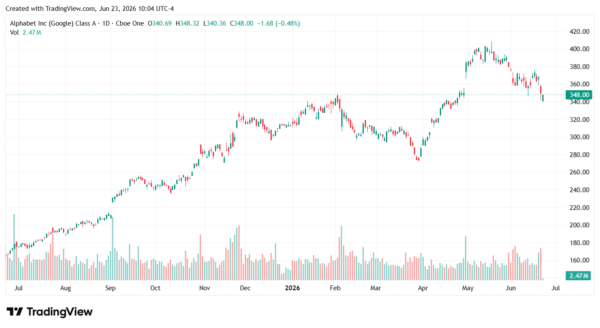
The Real Question for Google
Whether this turns into a temporary headline or a more meaningful shift in the AI landscape remains to be seen. Google still possesses enormous advantages, including its vast infrastructure, deep research capabilities, and financial resources. But in a field evolving as rapidly as artificial intelligence, retaining the people responsible for the biggest breakthroughs can be just as important as building the technology itself.
For investors, the recent departures serve as a reminder that the AI race isn’t only being fought with chips, data centers, and billion-dollar budgets. It’s also a competition for the industry’s brightest minds. And right now, Wall Street is questioning whether Alphabet can continue winning that battle.