Copper is quickly becoming one of the biggest long-term investment stories in the market. Driven by accelerating demand from artificial intelligence, electric vehicles, renewable energy infrastructure, and the ongoing digital transformation of the global economy, the red metal is facing a supply-demand imbalance that could last for years.
The problem is there’s too much demand, and not enough supply.
Here’s why there’s concern.
While copper has always been a critical industrial metal, emerging technologies are creating an entirely new level of demand that many analysts believe the industry is unprepared to meet.
One of the biggest catalysts is the rapid expansion of artificial intelligence data centers.
BHP estimates that copper consumption from data centers alone could increase six-fold by 2050, rising from roughly 500,000 tonnes annually today to approximately 3 million tonnes per year. To put that into perspective, the additional copper required would be roughly equal to the combined annual production of the world’s four largest copper mines.
Not helping, the U.S. Department of Energy projects that data centers could account for up to 12% of total U.S. electricity demand by 2028. Some hyperscale facilities are expected to consume more than one gigawatt of power each, enough electricity to power hundreds of thousands of homes.
Every layer of that infrastructure requires copper.
From transformers and switchgear to wiring, busbars, substations, and grid expansion projects, copper remains one of the most essential materials for moving and managing electricity efficiently. At the same time, demand from electric vehicles and renewable energy projects continues to expand. Bloomberg NEF estimates that the copper industry may require as much as $1.2 trillion in investment over the next 25 years simply to supply enough copper to meet future demand.
Unfortunately, supply growth may not keep pace.
Legendary resource investor Rick Rule recently pointed out that there is “zero doubt” copper supplies will decline over the next five years. His concerns center around the mining industry’s inability to rapidly bring new projects online.
Unlike many commodities, copper mining projects often require 10 to 15 years from discovery to commercial production. The mines needed to satisfy demand later this decade would have required major capital commitments more than a decade ago. Today, lengthy permitting processes, environmental regulations, and rising development costs are creating additional obstacles for new production.
Adding to the bullish outlook…
Copper markets are already showing signs of strain. According to Mining.com, copper has entered a period of historic backwardation, a condition where near-term prices trade above future contracts. This typically signals immediate supply shortages and strong demand.
Wall Street is also becoming increasingly optimistic.
Analysts at Citi recently forecast that copper could rally to $12,000 per metric ton over the next six to 12 months. The firm cited unprecedented mine disruptions, resilient demand, and supportive macroeconomic conditions as key drivers behind its bullish outlook.
So, what’s the best way to trade potential upside in copper?
For investors looking to capitalize on the trend, copper mining stocks and exchange-traded funds may offer attractive exposure.
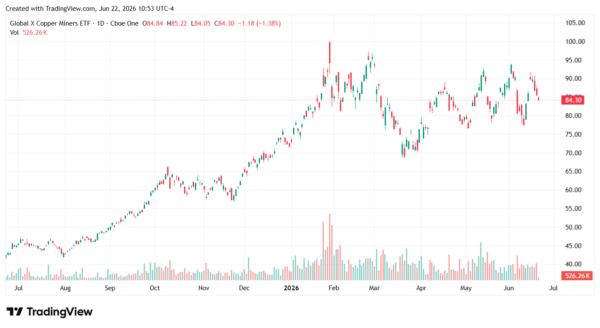
One option is the Global X Copper Miners ETF (NYSEARCA: COPX).
The fund provides diversified exposure to approximately 40 copper-related companies from around the world. Major holdings include Lundin Mining, Glencore, Southern Copper, BHP Group, Freeport-McMoRan, Ero Copper, and Taseko Mines.
The ETF has already delivered strong performance. After bottoming near $30.60 in April, shares recently climbed to approximately $85.50 as investor enthusiasm for copper and critical minerals strengthened.
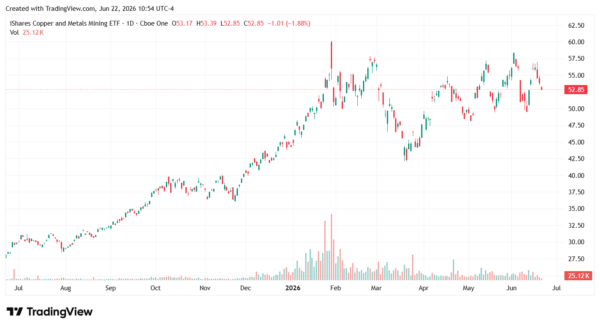
There’s also the iShares Copper and Metals Mining ETF (NASDAQ: ICOP).
With an expense ratio of 0.47%, the ICOP ETF offers exposure to global copper and metal ore miners, such as Anglo American, BHP Group, Freeport-McMoRan, Newmont, Lundin Mining, and Teck Resources, to name a few.
CONCLUSION
In short, copper is shaping up to be one of the defining commodities of the next decade. The combination of structurally rising demand from AI infrastructure, electrification, and grid modernization collides with a supply pipeline that is slow, expensive, and increasingly difficult to expand. That imbalance is exactly what has historically driven major commodity cycles.