ajax loader

Loading...


Ride-the-Wave Strategy – Best for Stock Traders

Ride-the-Wave targets multi-day price momentum following a company’s earnings announcement (EA). With this strategy:

  1. Buy a stock one day post-EA if a stock reacts positively post-earnings:
    1. Near the close of trading the EA-day for a pre-market-EA
    2. Near the close of the following day for a post-market-EA
  2. Sell-to-close after 7-10 days, or possibly earlier if a desired price target is reached

Similarly,

  1. short a stock one day post-EA if a stock reacts negatively post-earnings:
    1. near the close of trading the EA-day for a premarket-EA
    2. near the close of the following day for a post-market-EA
  2. then buy-to-close after 7-10 days, or possibly earlier if a desired price target is reached

Important: Ride-the-Wave is predicated on significant price momentum triggered by an EA. The 7-10 day scenario is the maximum trade hold-time. If you see post EA-momentum is halted or reversed by a significant opposite move, re-evaluate your presence in the trade.

This popular StockEarnings screen below will give you a list of stocks that historically exhibit significant price momentum following an EA for the next seven days:

  1. Stocks exhibiting positive post-EA price moves are buy-candidates
  2. Stocks exhibiting negative post-EA price moves are sell/short-candidates

The screen includes those stocks whose Earnings just came out in last two days.

Screen criteria:

  1. Earnings Date Start Date : Current Date + -1 Day
  2. Earnings Date End Date : Current Date + -2 Days
  3. Predicted Move (Next Day) Max : 7%
  4. Predicted Move (On 7th Day) Min : 7%

Strategy Guideline:

  1. Buy the stock if stock has reacted positively. Short the stock if stock has reacted negatively (see above).
  2. Close the position in 7-10 days, or possibly earlier based on price move.

Volatility Crush Strategy - Best for Options Traders

The Volatility Crush strategy is used with stocks that typically experience relatively low-to-moderate price moves (≤4%) following their Earnings Announcements (EA). The basic trade idea is to sell put or call options right before the EA, collecting a credit when options premium is very high due to elevated implied volatility (IV). You then close the position right after the EA by buying the option back much cheaper due to the significant drop in IV that occurs after the mystery of the EA disappears. In assessing this trade, you need to do your homework to ensure you collect sufficient premium to make the trade worthwhile.

This trade is practical due to the low-to-moderate price-move after the EA, which generally won’t significantly affect the options price, unlike an “action” stock, which experience great price moves post-EA. With these symbols, if you’re on the right side of the price move, that’s a great thing. But if you’re on the wrong side of the move, not so great. Consequently, by minimizing the effect of the post-EA price move, you have a much better chance to profit from the reduction in IV without it being ruined by a violent price move.

For this trade, open the position either (1) the night before the EA when the company announces earnings or (2) during the EA day when it announces post-market, generally capturing IV at or close to its peak.

For this trade, open the position either (1) the night before the EA when the company announces earnings or (2) during the EA day when it announces post-market, generally capturing IV at or close to its peak.

This popular stockearnings screen will give you a list of stocks which do not react more than 4% fpost-EA. It includes only those stocks whose earnings are releasing next day.

Screen criteria:

  1. Earnings Date Start Date : Current Date + 1
  2. Earnings Date End Date : Current Date + 1
  3. Predicted Move (Next Day) Max : 4%
  4. Options Type: Weekly

Strategy Guideline:

  1. Options Strategy: Sell Call and Put
  2. Options Strike Price: Current Stock Price – (% Predicated Move x 2)
  3. Expiration Date: It should generally be the closest expiry immediately after the EA.
  4. Buy Insurance: Buying back Call and Put at Strike price which 10% lower than Sell Strike Price is optional but recommended.

Watch Video for More Detail

Volatility Rush Strategy - Best for Options Traders

The Volatility Rush takes advantage of increasing options premiums into earnings announcements (EA) caused by an anticipated rise in Implied Volatility (IV). With this strategy, Buy a Call and Put at-the-money (a long straddle) 2-3 weeks before the EA when IV is lower. Sell the position either (1) the night before the EA when the company announces earnings pre-market, or (2) during the EA day when it announces post-market, generally capturing IV at or close to its peak.

This popular screen will give you a list of stocks whose Options premiums tend to rise into Earnings. It includes only those stocks whose Earnings are at least two weeks away from today.

Screen criteria:

  1. Earnings Date Start Date : Current Date + 15 Days
  2. Earnings Date End Date : Current Date + 30 Days
  3. Predicted Move (Next Day) Min : 5%
  4. Options Type: Weekly or Monthly if that lines up with the two to three-week lead-time for entering the trade

Strategy Guideline:

  1. Buy a Straddle at or close to the money two to three weeks pre-EA.
  2. Sell the position either the night before the EA when the company announces earnings pre-market, or during the EA day when it announces post-market.
  3. Expiration date should generally be the closest expiry immediately after the EA.
  4. Straddle price should not be more 60% of predicted move.

Predicted Move (Volatility)

Similar to Implied Volatility in Options. Expected volatility % based on our Proprietary Volatility Predication Model. We are expecting that stock price will likely to reach % in either direction by the end of next trading session after Earnings are released and not necessarily the closing volatility %.

Why is it important?

    This indicator helps

  1. Knowing expected volatility in stocks after Earnings helps to decide trading stocks before Earnings Announcement.
  2. Taking Advantage of volatility collapse following Earnings Results by using Advance Options strategies such as Spread and Straddles.

Since Last Earnings

Change in share price since last Earnings release.

Why is it Important?

When share has gained more than 10% since it's last Earning release, it tends to over react to minor bad news and give up some gains if not all. So, it contains more downside volatility than upside When share has dropped more than 10% since it's last Earning release, it tends to over react to minor good news and recover some drops if not all. So, it contains more upside volatility than downside.

EPS Surprise (%)

Occurs when a company's reported quarterly or annual profits are above or below analysts' expectations. Here is the formula to derive % EPS Surprice:

Actual EPS - Estimated EPS
------------------------------------- x 100
Estimated EPS

Why is it Important?

Earnings surprises can have a huge impact on a company's stock price. Several studies suggest that positive earnings surprises not only lead to an immediate hike in a stock's price, but also to a gradual increase over time. Hence, it's not surprising that some companies are known for routinely beating earning projections. A negative earnings surprise will usually result in a decline in share price.

Next Day Price Change (%)

Next Regular trading session Closing price following Earnings result.

For After Market Close Earnings, It is a next trading day closing price. For Before Market Open Earnings, It is the same trading day closing price.

Why is it Important?

Next Day price change is a reaction of Earnings result.

Tokenization Of Stocks: Volatility  And 3 Stocks Building The New Market 

Posted on Sep 22, 2026 by Grayson Cavern

Tokenization Of Stocks: Volatility  And 3 Stocks Building The New Market 

The stock market is about to get a lot more hours – and that could mean a very different volatility game. For decades, equities have operated around a clock. The bell rings, liquidity floods in, price discovery accelerates, and the market shuts down. Then the world keeps moving while stocks wait for the next session.

Tokenization threatens to break that routine. On September 17, the SEC granted qualifying Tokenized Securities Venues a temporary five-year exemption allowing them to trade tokenized NMS stocks through permissioned automated market makers and liquidity pools. The tokenization framework is deliberately limited, with symbol and volume caps, investor protections, and a requirement that tokenized shares stop trading when the underlying stock is halted.

So this isn’t the U.S. stock market suddenly becoming crypto. It’s a regulatory test of what happens when stocks move onto rails that can operate around the clock.

And for traders, the biggest change may not be where stocks trade, but when they trade.

24/7 Trading Doesn’t Mean 24/7 Liquidity


A study of tokenized stocks and funds found that trading activity remains heavily concentrated around the hours when the underlying exchange is open, even though investors can trade the tokenized assets around the clock. And that price gaps widen outside core market hours, consistent with limits to arbitrage.  

That makes sense. You can keep the market open at 2 a.m., but you can’t manufacture a deep pool of buyers and sellers simply by leaving the door unlocked…which creates a weird setup for price discovery. Overnight news can hit while the traditional market is closed, tokenized versions can react, but the liquidity supporting those prices may be thinner. A large order can push the token further than the same order would during the U.S. session.

Now put that into the S&P 500. If tokenized versions of major companies start trading around the clock, their combined moves could become an increasingly useful overnight signal for where SPY and the S&P 500 Index (SPX) should open. Instead of waking up to one giant opening gap after a major headline, traders could watch price discovery develop through the night.

But there is another possibility: those overnight prices become noisy enough to create larger temporary dislocations.

Tokenization Could Shift Where Stock Market Volatility Happens

This is where the research gets especially useful for traders because another study found that higher volatility and weaker integration between tokenized assets and their underlying equities are associated with larger tracking errors, with stronger mis-tracking among high-beta companies. The study found average tracking errors close to 3%, rising above 4% for its least-liquid group. Imagine a major macro headline hits at 2:30 a.m.

A tokenized high-beta stock sells off sharply while the underlying exchange is closed. Arbitrageurs step in, but liquidity is thin. The token doesn’t immediately converge with the traditional market because there isn’t enough capital willing to close the gap.

By 9:30 a.m., the underlying stock finally opens. Now you have an overnight price signal, a traditional market opening print, and potentially a completely different liquidity environment colliding within hours.

For SPY, that could eventually mean smaller opening surprises if overnight trading efficiently absorbs information. For SPX and its options market, it could also mean traders have a much richer stream of information before the opening bell.

The catch is that a continuously available price isn’t automatically a perfectly reliable price.

That’s exactly why traders should watch volume, spreads and the size of deviations between tokenized assets and their underlying shares, rather than treating every overnight print as gospel.

Three Stocks Building the Future of Tokenized Markets

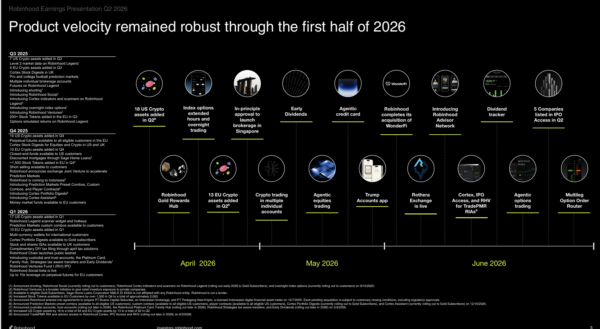
Robinhood Markets (NASDAQ: HOOD) is sitting closest to the retail distribution layer. Robinhood’s own blockchain documentation says its Stock Tokens represent specific underlying equities or ETFs and can be held in self-custodied wallets around the clock.

That gives HOOD a direct way to monetize the shift: more tradable hours can mean more trading activity, more customer engagement and more transactions running through Robinhood’s ecosystem. If tokenized equities become a normal way for retail traders to react to overnight news, HOOD already has the wallet, audience and trading interface sitting in front of them.
tokenization - StockEarnings

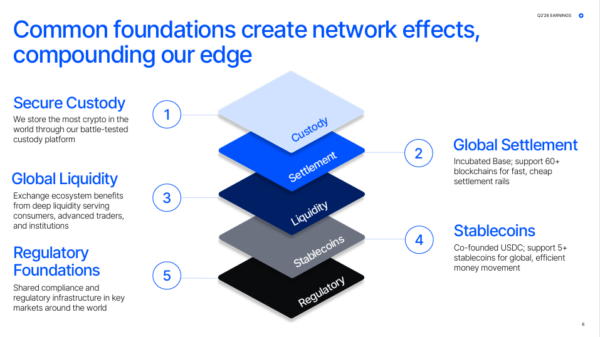
Coinbase Global (NASDAQ: COIN) attacks the problem from the other side. Coinbase’s tokenization platform now markets the ability to trade, lend and borrow tokenized stocks 24/7 across the Base ecosystem, while its research has identified 24/7 access and near-instant settlement as core attractions of tokenized equities. For COIN, the upside is that every tokenized stock can become another asset trading on crypto-native infrastructure, creating additional activity across trading, custody and on-chain financial services as this market expands.
tokenization - StockEarnings

Then there is Nasdaq Inc. (NASDAQ: NDAQ), which gives this story a completely different angle.

Wall Street doesn’t have to surrender the market to crypto-native platforms. Nasdaq is building into it. The exchange operator agreed to invest $100 million in Payward, Kraken’s parent, while advancing its Nasdaq Equity Tokens framework and infrastructure for always-on markets. Nasdaq expects to launch its Equity Tokens in the second quarter of 2027. 

So unlike HOOD and COIN, NDAQ can monetize the infrastructure behind the market itself as trading shifts toward tokenized securities and always-on liquidity.

The Market May Never Close The Same Way Again

The mistake here would be assuming tokenization simply means “stocks trade 24/7.” The bigger shift is that price discovery can start happening before the traditional market is ready to absorb it.

That could eventually give traders better information before the opening bell, but it could also create new gaps when overnight liquidity is thin, arbitrage is expensive and high-beta names start moving harder than their underlying shares can immediately follow.

HOOD, COIN and NDAQ give investors three different ways to play that infrastructure shift.

For traders, though, the bigger opportunity may be watching what happens to SPY, SPX and the options market when the bell stops being the moment when stock prices suddenly wake up.


Join over 1.2M+ investors/traders who receive daily and weekly notable earnings alerts with predicted move