Target (NYSE: TGT) is giving investors more reasons to take its recovery seriously. Shoppers are returning, sales are improving, and HSBC believes the retailer could deliver stronger earnings than its forecasts currently suggest.
Analyst Joe Thomas upgraded TGT to Buy from Hold and raised his price target to $190 from $125. Helping, Target’s recently reported second-quarter comparable sales increased 3.8%, including a 2.7% gain in store-originated sales. Comparable sales help investors evaluate growth across an established retail business without relying on expansion through new locations.
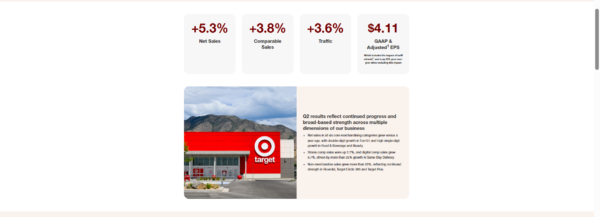
HSBC highlighted that growth came primarily from increased customer traffic rather than higher spending per transaction. In other words, Target’s improvement reflects more shopping activity, which gives the recovery a stronger foundation.
The Recovery Has Room to Run
According to HSBC, beauty, food and beverage, and household essentials are showing improvement. Apparel and home remain areas where Target has more work to do. There are encouraging signs, however. The analyst highlighted double-digit growth in back-to-school apparel, suggesting customers will respond when Target gets its merchandise and value proposition right.
Target is also sharpening its marketing and putting more than $2 billion in incremental investment toward improving the shopping experience, according to the HSBC note. The challenge is making those investments productive. Better merchandise, more appealing stores, and competitive prices need to translate into repeat visits and profitable purchases.
Why HSBC Thinks Earnings Could Keep Improving
Thomas raised his fiscal 2027 earnings estimate to $10.61 per share from $8.26. HSBC also sees potential for operating margins to reach around 6%, depending on how much sales recover. These are analyst forecasts, rather than guaranteed outcomes.
The logic is straightforward. Retailers carry expenses such as store leases, equipment, and management that don’t necessarily rise at the same pace as sales. When revenue grows, those costs can be spread across a larger sales base.
That can allow profits to increase faster than revenue. However, price reductions, promotions, and investments in stores can absorb some of those gains. Investors should watch whether Target can attract customers while protecting profitability.
Target’s Dividend Adds Another Reason to Watch
Target’s board also declared a quarterly dividend of $1.16 per share, payable December 1, 2026, to shareholders of record November 11. It will mark the company’s 237th consecutive dividend since becoming publicly held in 1967.
At the current quarterly rate, that works out to $4.64 per share annually. The payment gives shareholders income while they assess the recovery’s progress. Target’s investment case ultimately comes down to consistency. One encouraging quarter can lift sentiment, but sustained traffic growth, healthier merchandise categories, and stronger underlying earnings would make a more convincing case.
TGT Stock Is Testing Key Technical Support
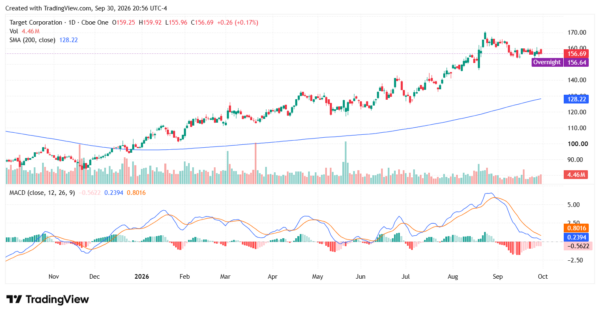
TGT stock has pulled back from its August peak near $170 and is now trading around $157. Despite the recent weakness, the stock remains comfortably above its rising 200-day simple moving average at $128.22, keeping the longer-term trend intact. However, short-term momentum has weakened considerably. The MACD has fallen below its signal line and moved into negative territory, indicating that selling pressure has increased.
The $155 area now represents an important near-term level to watch. A break below that level could signal additional weakness, while a move back above $160 would give the bulls an early indication that momentum is improving. The rising 200-day moving average provides a much deeper potential support level if the pullback continues. For now, TGT’s chart shows a stock in consolidation after a powerful advance, rather than one that has clearly broken its longer-term uptrend.
Target’s Recovery Still Has More to Prove
Target’s improving customer traffic is an encouraging sign. Getting shoppers back into stores gives the company more opportunities to sell everyday essentials alongside clothing, beauty products, and home goods. If those visits become regular habits, Target could build a more dependable foundation for sales and earnings growth.
That’s what makes HSBC’s bullish outlook worth watching. Target doesn’t need every department to recover at once to make progress. Continued strength in essentials, combined with gradual improvement in apparel and home, could help the retailer generate more profit from its existing stores.
Still, execution will matter. Lower prices and a better shopping experience can attract customers, but Target needs to deliver those improvements without putting too much pressure on margins. Investors should look for evidence that stronger traffic is translating into sustained earnings growth. For now, TGT offers a recovery story with dividend income along the way. If management can keep winning back shoppers and turn those visits into stronger profits, HSBC’s confidence could prove well placed.