ajax loader

Loading...


Ride-the-Wave Strategy – Best for Stock Traders

Ride-the-Wave targets multi-day price momentum following a company’s earnings announcement (EA). With this strategy:

  1. Buy a stock one day post-EA if a stock reacts positively post-earnings:
    1. Near the close of trading the EA-day for a pre-market-EA
    2. Near the close of the following day for a post-market-EA
  2. Sell-to-close after 7-10 days, or possibly earlier if a desired price target is reached

Similarly,

  1. short a stock one day post-EA if a stock reacts negatively post-earnings:
    1. near the close of trading the EA-day for a premarket-EA
    2. near the close of the following day for a post-market-EA
  2. then buy-to-close after 7-10 days, or possibly earlier if a desired price target is reached

Important: Ride-the-Wave is predicated on significant price momentum triggered by an EA. The 7-10 day scenario is the maximum trade hold-time. If you see post EA-momentum is halted or reversed by a significant opposite move, re-evaluate your presence in the trade.

This popular StockEarnings screen below will give you a list of stocks that historically exhibit significant price momentum following an EA for the next seven days:

  1. Stocks exhibiting positive post-EA price moves are buy-candidates
  2. Stocks exhibiting negative post-EA price moves are sell/short-candidates

The screen includes those stocks whose Earnings just came out in last two days.

Screen criteria:

  1. Earnings Date Start Date : Current Date + -1 Day
  2. Earnings Date End Date : Current Date + -2 Days
  3. Predicted Move (Next Day) Max : 7%
  4. Predicted Move (On 7th Day) Min : 7%

Strategy Guideline:

  1. Buy the stock if stock has reacted positively. Short the stock if stock has reacted negatively (see above).
  2. Close the position in 7-10 days, or possibly earlier based on price move.

Volatility Crush Strategy - Best for Options Traders

The Volatility Crush strategy is used with stocks that typically experience relatively low-to-moderate price moves (≤4%) following their Earnings Announcements (EA). The basic trade idea is to sell put or call options right before the EA, collecting a credit when options premium is very high due to elevated implied volatility (IV). You then close the position right after the EA by buying the option back much cheaper due to the significant drop in IV that occurs after the mystery of the EA disappears. In assessing this trade, you need to do your homework to ensure you collect sufficient premium to make the trade worthwhile.

This trade is practical due to the low-to-moderate price-move after the EA, which generally won’t significantly affect the options price, unlike an “action” stock, which experience great price moves post-EA. With these symbols, if you’re on the right side of the price move, that’s a great thing. But if you’re on the wrong side of the move, not so great. Consequently, by minimizing the effect of the post-EA price move, you have a much better chance to profit from the reduction in IV without it being ruined by a violent price move.

For this trade, open the position either (1) the night before the EA when the company announces earnings or (2) during the EA day when it announces post-market, generally capturing IV at or close to its peak.

For this trade, open the position either (1) the night before the EA when the company announces earnings or (2) during the EA day when it announces post-market, generally capturing IV at or close to its peak.

This popular stockearnings screen will give you a list of stocks which do not react more than 4% fpost-EA. It includes only those stocks whose earnings are releasing next day.

Screen criteria:

  1. Earnings Date Start Date : Current Date + 1
  2. Earnings Date End Date : Current Date + 1
  3. Predicted Move (Next Day) Max : 4%
  4. Options Type: Weekly

Strategy Guideline:

  1. Options Strategy: Sell Call and Put
  2. Options Strike Price: Current Stock Price – (% Predicated Move x 2)
  3. Expiration Date: It should generally be the closest expiry immediately after the EA.
  4. Buy Insurance: Buying back Call and Put at Strike price which 10% lower than Sell Strike Price is optional but recommended.

Watch Video for More Detail

Volatility Rush Strategy - Best for Options Traders

The Volatility Rush takes advantage of increasing options premiums into earnings announcements (EA) caused by an anticipated rise in Implied Volatility (IV). With this strategy, Buy a Call and Put at-the-money (a long straddle) 2-3 weeks before the EA when IV is lower. Sell the position either (1) the night before the EA when the company announces earnings pre-market, or (2) during the EA day when it announces post-market, generally capturing IV at or close to its peak.

This popular screen will give you a list of stocks whose Options premiums tend to rise into Earnings. It includes only those stocks whose Earnings are at least two weeks away from today.

Screen criteria:

  1. Earnings Date Start Date : Current Date + 15 Days
  2. Earnings Date End Date : Current Date + 30 Days
  3. Predicted Move (Next Day) Min : 5%
  4. Options Type: Weekly or Monthly if that lines up with the two to three-week lead-time for entering the trade

Strategy Guideline:

  1. Buy a Straddle at or close to the money two to three weeks pre-EA.
  2. Sell the position either the night before the EA when the company announces earnings pre-market, or during the EA day when it announces post-market.
  3. Expiration date should generally be the closest expiry immediately after the EA.
  4. Straddle price should not be more 60% of predicted move.

Predicted Move (Volatility)

Similar to Implied Volatility in Options. Expected volatility % based on our Proprietary Volatility Predication Model. We are expecting that stock price will likely to reach % in either direction by the end of next trading session after Earnings are released and not necessarily the closing volatility %.

Why is it important?

    This indicator helps

  1. Knowing expected volatility in stocks after Earnings helps to decide trading stocks before Earnings Announcement.
  2. Taking Advantage of volatility collapse following Earnings Results by using Advance Options strategies such as Spread and Straddles.

Since Last Earnings

Change in share price since last Earnings release.

Why is it Important?

When share has gained more than 10% since it's last Earning release, it tends to over react to minor bad news and give up some gains if not all. So, it contains more downside volatility than upside When share has dropped more than 10% since it's last Earning release, it tends to over react to minor good news and recover some drops if not all. So, it contains more upside volatility than downside.

EPS Surprise (%)

Occurs when a company's reported quarterly or annual profits are above or below analysts' expectations. Here is the formula to derive % EPS Surprice:

Actual EPS - Estimated EPS
------------------------------------- x 100
Estimated EPS

Why is it Important?

Earnings surprises can have a huge impact on a company's stock price. Several studies suggest that positive earnings surprises not only lead to an immediate hike in a stock's price, but also to a gradual increase over time. Hence, it's not surprising that some companies are known for routinely beating earning projections. A negative earnings surprise will usually result in a decline in share price.

Next Day Price Change (%)

Next Regular trading session Closing price following Earnings result.

For After Market Close Earnings, It is a next trading day closing price. For Before Market Open Earnings, It is the same trading day closing price.

Why is it Important?

Next Day price change is a reaction of Earnings result.

Starship Proves Space Is Ready for Its Next Big Leap

Posted on Sep 29, 2026 by Chris Markoch

Starship Proves Space Is Ready for Its Next Big Leap

SpaceX (NASDAQ: SPCX) just crossed a line it has chased for years. On Monday, Starship reached orbit for the first time on its 14th test flight. It also released 26 Starlink V3 satellites, the first of that new generation to reach space.

Not everything went to plan. One of the six engines on the upper stage shut down early during the climb. SpaceX briefly called off the orbit attempt, then reversed that decision minutes later.

The company then cut the mission short. Starship was scheduled to circle Earth six times over nearly 10 hours before splashing down near Chile. Instead, flight controllers played it safe and brought it home several hours early.

Some of the coverage focused on the early return. That misses the point. The engine that failed wasn’t needed to reach orbit or come back to Earth. SpaceX pushed through a problem, completed its primary objective, and still chose caution. NASA Administrator Jared Isaacman praised the flight for being handled safely and responsibly.

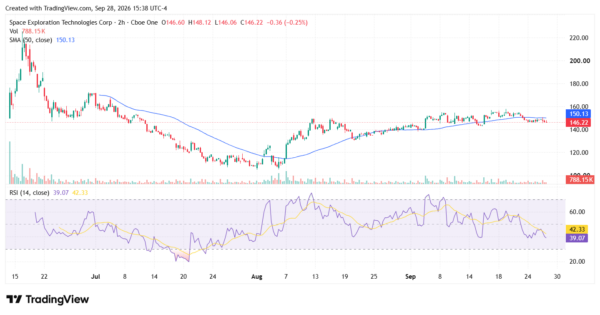
Wall Street barely reacted. After an initial pop when the market opened, SPCX shares were down about 1.6% in the Sept. 28 session.
space - StockEarnings

That muted reaction may be the real opportunity. Starship’s orbital debut is further confirmation that the space sector is ramping up. And the companies building alongside SpaceX could start getting a bid.

Why Cutting the Flight Short Was the Right Call


Test flights exist to gather data, not to impress. One BryceTech analyst compared this mission to an airplane’s first flight. The vehicle simply had to prove it could do what it was designed to do.

It did. And SpaceX is learning fast. Engineers modified this Starship’s heat shield based on inspections of a spacecraft recovered in July. If the next flight goes well, SpaceX could attempt to catch Starship with giant mechanical arms. It hopes to refly a spacecraft by year-end or early next year.

The stakes extend far beyond SpaceX. NASA’s Artemis III mission could come as soon as next summer. Starship is also central to SpaceX’s goal of cutting the cost to orbit by 99% or more.

Demand Is Outrunning Supply

Here’s the part investors may be overlooking. SpaceX plans to end shared Falcon 9 missions after 2028 because Starlink is absorbing so much capacity. That tightens launch supply and hands pricing power to the few other companies that can reach orbit.

Meanwhile, demand keeps broadening. Alphabet plans to put its first AI chips into orbit on a Falcon 9 rideshare on October 1. Space is no longer a niche. It is becoming infrastructure.

That creates a clear setup. The companies that launch, build, and operate in space have more customers than capacity. Here are three worth watching.

Rocket Lab: The Natural Second Source

Rocket Lab (NASDAQ: RKLB) is the most direct beneficiary of a tighter launch market. Second-quarter revenue rose 62% to $234.1 million. Its backlog hit a record $2.36 billion.

The big catalyst is Neutron, its reusable medium-lift rocket. Neutron can carry about 13,000 kilograms to low Earth orbit. Customers are already booking full-price slots at $50 million to $55 million per launch.

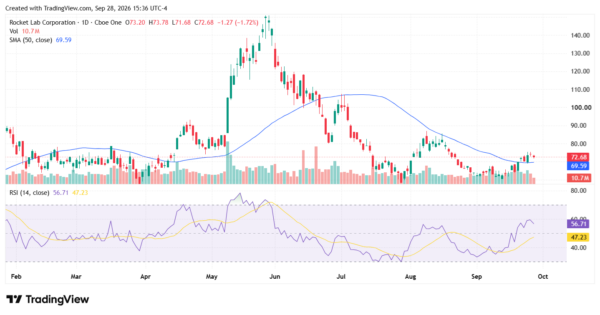
The problem is timing. Shares fell more than 9% in August when management warned Neutron’s first flight could slip into 2027. The stock is now down more than 50% from its 52-week high.

That’s a classic perception-versus-fundamentals gap. The market is punishing a schedule delay. The business keeps growing, and roughly $2.4 billion in cash funds the runway. Its pending Iridium deal would also add 66 operational satellites and 2.55 million subscribers.
space - StockEarnings

Intuitive Machines: From Moon Lander to Space Prime

Intuitive Machines (NASDAQ: LUNR) is best known for its lunar landers. But the business is becoming much bigger than that.

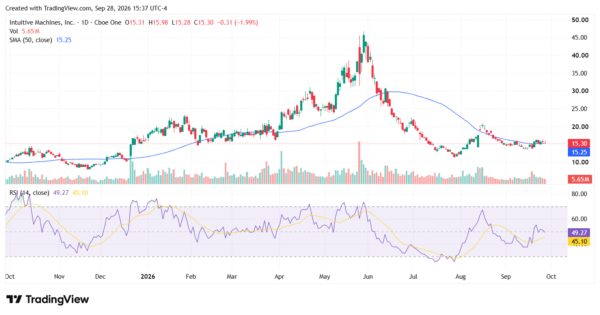
Second-quarter revenue reached $206.2 million, more than four times the prior-year level. Backlog climbed to a record $1.8 billion, up $1.5 billion since the end of 2025. Second-quarter bookings alone totaled $920 million.

The key move was buying Lanteris Space Systems for $800 million. That turned Intuitive Machines into a satellite builder with commercial, civil, and defense customers. National security now makes up 30% of revenue, up from 3% a year earlier.

The company isn’t profitable yet. Adjusted EBITDA was negative $13.8 million, though that improved from a year ago. As Artemis moves forward, Intuitive Machines sits directly in the path of the lunar economy.
space - StockEarnings

Planet Labs: A Customer That Wins When Launch Gets Cheaper

Planet Labs (NYSE: PL) doesn’t build rockets. It buys launches. That makes it a different kind of Starship beneficiary.

Planet operates satellites that image Earth daily and sells that data by subscription. Recurring contracts make up 98% of its annual contract value. Second-quarter fiscal 2027 revenue jumped 58% to a record $116.1 million.

The financials are turning. Adjusted EBITDA reached $13.9 million, more than double last year’s figure. Planet ended the quarter with $865.4 million in cash and short-term investments. Its backlog stood near $815 million.

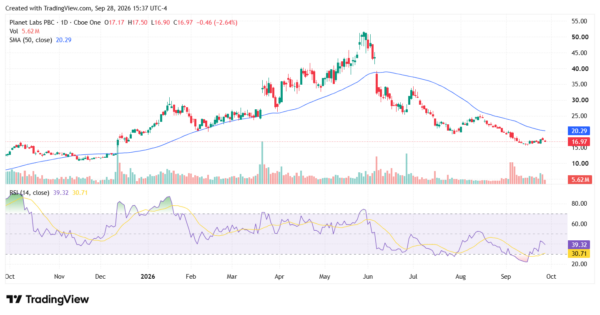
Investors should note that Planet raised about $120 million by selling stock during the quarter. Still, cheaper and larger launches lower the cost of refreshing its constellation. That’s a long-term tailwind for margins.
space - StockEarnings

A Test Flight, Not a Verdict

Monday’s flight wasn’t perfect. It didn’t need to be. Starship reached orbit, delivered its payload, and gave SpaceX the data it needs for the next step.

The headlines focused on what went wrong. The bigger story is what went right. Launch capacity is tight, demand is broadening, and the space economy is scaling.

Rocket Lab, Intuitive Machines, and Planet Labs each carry real risks. Delays, dilution, and losses are part of this sector. But when the market is focused on the wrong detail, patient investors often find their best entry points.


A former marketing copywriter turned freelance financial writer and market analyst. I have a passion for delivering insights to investors. I write regularly about stocks for StockEarnings and MarketBeat. Posts are not advice.

Join over 1.2M+ investors/traders who receive daily and weekly notable earnings alerts with predicted move