The GLP-1 movement is alive and well. What started out as a fringe area of the pharmaceutical space is now as mainstream as it gets. Anything you watch or stream will probably have a commercial for one or more of the GLP-1 drugs in the market. It’s a huge market that continues to grow and is likely to do so for several years.
Yet, that hasn’t mattered much to the two biggest names in the sector. Eli Lilly (NYSE: LLY) is up 8.43% in 2026 as of the market close on Sept. 21. That’s below the S&P 500 and far below the stock’s blistering performance over the last five years. Still, analysts remain bullish on LLY, due in part – but not completely – on its leadership in GLP-1.
The situation with Novo Nordisk (NYSE: NVO) is not as bright. As of the market close on Sept. 21, NVO stock is down over 35% in the last 12 months, including over 21% in 2026. That makes the 55% stock price gain in the last five years less impressive.
But what about the future? Biopharmaceutical investors may want to look beyond GLP-1 drugs. That’s a debate that seems to have been settled.
Why GLP-1 Drugs Have Become Mature
GLP-1 is no longer a set-it-and-forget-it growth story. The category is crowded now. Novo and Lilly face pricing pressure from insurers and pharmacy benefit managers, plus a growing list of oral and injectable competitors working their way through trials.
Perception hasn’t caught up to that shift. Investors still treat GLP-1 exposure as an automatic winner, but the market has started pricing in deceleration, not acceleration. It’s becoming more difficult for drugmakers to differentiate themselves either by indication or dosage.
This isn’t about the current GLP-1 drugs being effective. The question for investors is how to make them better, and that’s proving to be difficult.
Artificial Intelligence Is the Pivot
So, where is the capital rotating? Artificial intelligence (AI) has become the dominant growth narrative across every sector, and the pharmaceutical sector is no exception. Drugmakers using AI to compress trial timelines and cut discovery costs are attracting fresh investor attention.
That shift matters for two reasons. First, it’s pulling speculative dollars away from GLP-1 as the default biotech trade. Second, it’s rewarding companies with diversified pipelines over single-drug bets. Merck and AbbVie fit that description. Neither depends on obesity drugs for its growth story, and both have leaned into AI-assisted drug development.
Why Merck Stock Offers More Than Keytruda
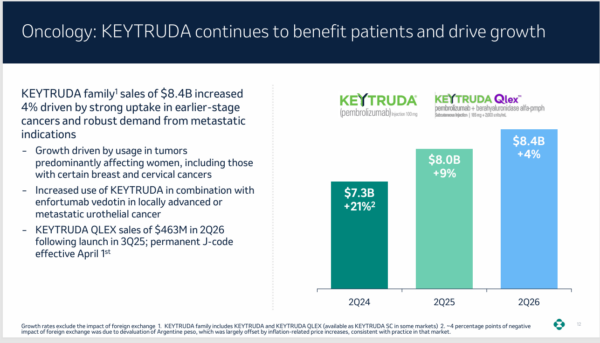
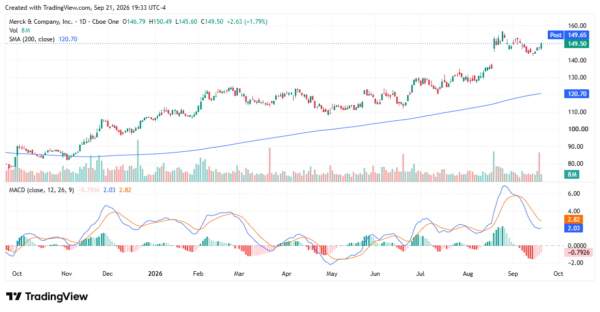
Merck (NYSE: MRK) built its 2026 story around Keytruda, its flagship oncology drug. Keytruda sales grew in the high single digits in the first half of the year, and management has guided toward tens of billions in new commercial opportunities by the mid-2030s. The stock has rallied sharply off its 2025 lows, moving from roughly $110 in January to well above $140 by late summer.
That’s the fundamentals side. But until 2026, perception lagged behind. Investors spent much of last year fixated on Keytruda’s looming patent cliff, treating Merck as a one-drug company facing a cliff edge.
That framing undersold the pipeline. WINREVAIR and OHTUVAYRE are scaling. New oncology combinations, including a lung cancer therapy developed with a Chinese partner, are showing strong late-stage results. Merck also priced $6 billion in debt this spring to maintain funding for pipeline investments. That’s a sign that management sees more runway ahead.
MRK stock still trades at a discount to peers on a forward basis. Analysts have been raising price targets throughout the year as the pipeline story firms up. That’s a pattern that income and growth investors should recognize.
Why AbbVie Stock Is Moving Beyond Humira
AbbVie (NYSE: ABBV) faced its own version of the single-drug fear. Humira, once the world’s best-selling drug, lost U.S. patent exclusivity in 2023. The market treated that loss of exclusivity as an existential threat. It wasn’t.
Skyrizi and Rinvoq, AbbVie’s next-generation immunology drugs, have more than replaced what Humira lost. Combined sales topped $25 billion in 2025 and are on pace to clear $31 billion in 2026, ahead of management’s own prior guidance. Skyrizi alone is capturing roughly three-quarters of new frontline patient starts in inflammatory bowel disease. Humira’s decline, meanwhile, has become a footnote rather than a headline.
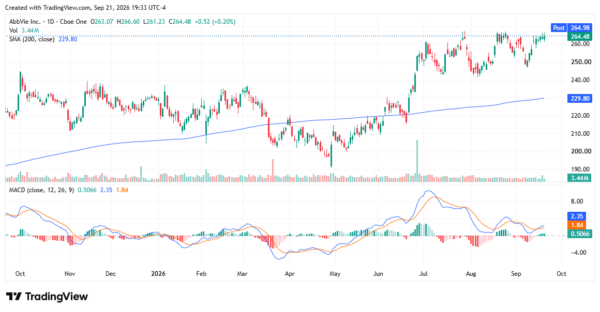
Normalized earnings per share bottomed near $10 in 2025 after falling from nearly $14 in 2022. The Street now models a sharp rebound, with EPS climbing back toward that prior peak in 2026 and continuing higher from there. AbbVie’s neuroscience segment is also compounding at double-digit growth. The stock has been volatile in 2026, but the underlying business looks stronger than the price action suggests.
The Future of Pharmaceutical Stocks
Perception and fundamentals rarely move in lockstep, and that gap is where opportunity tends to hide. GLP-1 stocks still dominate pharma headlines, but Lilly and Novo Nordisk’s stock performance in 2026 hasn’t matched the hype.
Merck and AbbVie tell a different story. Both weathered a narrative of decline tied to a single blockbuster drug, and both have since rebuilt their growth cases around diversified, less obvious pipelines. For investors willing to look past the GLP-1 spotlight, MRK and ABBV offer exposure to the next chapter in pharmaceutical stocks, one where AI-driven pipeline execution, not a single weight-loss drug, decides who wins.