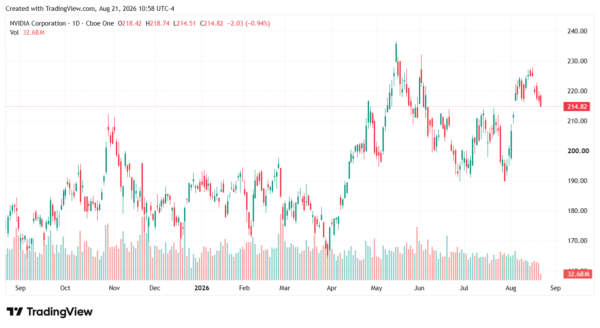
NVIDIA (NASDAQ: NVDA) is heading into its fiscal second-quarter 2027 earnings report, with strong demand for artificial intelligence chips likely to drive another major revenue beat. In fact, analysts at Jefferies (NYSE: JEF) expect NVIDIA to report $95 billion in revenue, above the $92.07 billion consensus estimate, while its next-generation Vera Rubin platform could provide another major growth catalyst for NVDA in 2027.
The company is already coming off a very strong first quarter. NVDA reported $81.62 billion in revenue, beating expectations by about $2.5 billion. That was its largest revenue beat ever at the time. And Jefferies thinks NVIDIA’s growth could get even stronger in the coming quarters.
NVDA Could Hit $108 Billion Next Quarter
Jefferies expects NVIDIA to report $108 billion in revenue for its fiscal third quarter. That would be about $4.3 billion higher than Wall Street’s current forecast. What’s interesting is that these estimates do not include the full impact of NVIDIA’s next-generation Vera Rubin platform.
Vera Rubin is expected to become NVIDIA’s next major growth driver as customers begin moving away from the company’s Blackwell systems. Jefferies analyst Blayne Curtis expects Rubin to become a much bigger part of NVIDIA’s business toward the end of 2026 and into 2027.
The firm expects Rubin-based systems to account for about 12% of NVIDIA’s GPU revenue in the fiscal third quarter of 2027. By the following quarter, that number could rise to more than 40%.
Curtis also believes fiscal first-quarter 2028 could be a major turning point. That’s when Rubin could overtake Blackwell as NVIDIA’s biggest source of revenue.
One reason Jefferies is so optimistic about Rubin is that NVIDIA appears to have made the new system easier and faster to assemble. Rubin’s NVL72 system continues to use a 72-GPU rack design, similar to NVIDIA’s previous Blackwell systems. That means data centers can build on infrastructure they already have.
In addition, Jefferies expects more than 13,000 Rubin racks to ship by the end of 2026. During 2027, the firm expects more than 120,000 racks to ship.
Big AI Companies Are Expected to Use Rubin
Another reason for the optimism is demand from the world’s biggest AI companies.
Jefferies expects major AI labs to adopt Rubin from the beginning. That would be different from NVIDIA’s Blackwell rollout, when some major AI customers did not immediately move to the new technology.
OpenAI is one example. On August 17, OpenAI and SB Energy announced plans for a massive AI data center campus. The project will use NVIDIA GPUs, CPUs and networking equipment to provide computing power for OpenAI’s next-generation AI systems.
The first phase is expected to provide 4.25 gigawatts of AI computing capacity. There is also an option to add another 3.75 gigawatts, potentially bringing the total to 8 gigawatts.
NVIDIA is investing $1.5 billion in SB Energy and is also providing credit support for parts of the project. The deal shows just how much money is being invested in AI infrastructure.
The Bottom Line
For NVDA investors, the upcoming earnings report could offer another look at just how strong demand for AI infrastructure remains. The company’s Blackwell chips are still driving substantial revenue, while Vera Rubin could give NVIDIA another boost as it rolls out to customers.
Of course, there are still questions around NVDA’s valuation, customer spending, and the company’s growing involvement in AI infrastructure financing. But if demand continues at its current pace, NVDA appears to have plenty of momentum heading into 2027.
The big question now is whether NVDA can deliver the kind of numbers investors have come to expect. If Jefferies is right, the company may have another record-breaking quarter — and potentially an even bigger growth story waiting with Vera Rubin.