ajax loader

Loading...


Ride-the-Wave Strategy – Best for Stock Traders

Ride-the-Wave targets multi-day price momentum following a company’s earnings announcement (EA). With this strategy:

  1. Buy a stock one day post-EA if a stock reacts positively post-earnings:
    1. Near the close of trading the EA-day for a pre-market-EA
    2. Near the close of the following day for a post-market-EA
  2. Sell-to-close after 7-10 days, or possibly earlier if a desired price target is reached

Similarly,

  1. short a stock one day post-EA if a stock reacts negatively post-earnings:
    1. near the close of trading the EA-day for a premarket-EA
    2. near the close of the following day for a post-market-EA
  2. then buy-to-close after 7-10 days, or possibly earlier if a desired price target is reached

Important: Ride-the-Wave is predicated on significant price momentum triggered by an EA. The 7-10 day scenario is the maximum trade hold-time. If you see post EA-momentum is halted or reversed by a significant opposite move, re-evaluate your presence in the trade.

This popular StockEarnings screen below will give you a list of stocks that historically exhibit significant price momentum following an EA for the next seven days:

  1. Stocks exhibiting positive post-EA price moves are buy-candidates
  2. Stocks exhibiting negative post-EA price moves are sell/short-candidates

The screen includes those stocks whose Earnings just came out in last two days.

Screen criteria:

  1. Earnings Date Start Date : Current Date + -1 Day
  2. Earnings Date End Date : Current Date + -2 Days
  3. Predicted Move (Next Day) Max : 7%
  4. Predicted Move (On 7th Day) Min : 7%

Strategy Guideline:

  1. Buy the stock if stock has reacted positively. Short the stock if stock has reacted negatively (see above).
  2. Close the position in 7-10 days, or possibly earlier based on price move.

Volatility Crush Strategy - Best for Options Traders

The Volatility Crush strategy is used with stocks that typically experience relatively low-to-moderate price moves (≤4%) following their Earnings Announcements (EA). The basic trade idea is to sell put or call options right before the EA, collecting a credit when options premium is very high due to elevated implied volatility (IV). You then close the position right after the EA by buying the option back much cheaper due to the significant drop in IV that occurs after the mystery of the EA disappears. In assessing this trade, you need to do your homework to ensure you collect sufficient premium to make the trade worthwhile.

This trade is practical due to the low-to-moderate price-move after the EA, which generally won’t significantly affect the options price, unlike an “action” stock, which experience great price moves post-EA. With these symbols, if you’re on the right side of the price move, that’s a great thing. But if you’re on the wrong side of the move, not so great. Consequently, by minimizing the effect of the post-EA price move, you have a much better chance to profit from the reduction in IV without it being ruined by a violent price move.

For this trade, open the position either (1) the night before the EA when the company announces earnings or (2) during the EA day when it announces post-market, generally capturing IV at or close to its peak.

For this trade, open the position either (1) the night before the EA when the company announces earnings or (2) during the EA day when it announces post-market, generally capturing IV at or close to its peak.

This popular stockearnings screen will give you a list of stocks which do not react more than 4% fpost-EA. It includes only those stocks whose earnings are releasing next day.

Screen criteria:

  1. Earnings Date Start Date : Current Date + 1
  2. Earnings Date End Date : Current Date + 1
  3. Predicted Move (Next Day) Max : 4%
  4. Options Type: Weekly

Strategy Guideline:

  1. Options Strategy: Sell Call and Put
  2. Options Strike Price: Current Stock Price – (% Predicated Move x 2)
  3. Expiration Date: It should generally be the closest expiry immediately after the EA.
  4. Buy Insurance: Buying back Call and Put at Strike price which 10% lower than Sell Strike Price is optional but recommended.

Watch Video for More Detail

Volatility Rush Strategy - Best for Options Traders

The Volatility Rush takes advantage of increasing options premiums into earnings announcements (EA) caused by an anticipated rise in Implied Volatility (IV). With this strategy, Buy a Call and Put at-the-money (a long straddle) 2-3 weeks before the EA when IV is lower. Sell the position either (1) the night before the EA when the company announces earnings pre-market, or (2) during the EA day when it announces post-market, generally capturing IV at or close to its peak.

This popular screen will give you a list of stocks whose Options premiums tend to rise into Earnings. It includes only those stocks whose Earnings are at least two weeks away from today.

Screen criteria:

  1. Earnings Date Start Date : Current Date + 15 Days
  2. Earnings Date End Date : Current Date + 30 Days
  3. Predicted Move (Next Day) Min : 5%
  4. Options Type: Weekly or Monthly if that lines up with the two to three-week lead-time for entering the trade

Strategy Guideline:

  1. Buy a Straddle at or close to the money two to three weeks pre-EA.
  2. Sell the position either the night before the EA when the company announces earnings pre-market, or during the EA day when it announces post-market.
  3. Expiration date should generally be the closest expiry immediately after the EA.
  4. Straddle price should not be more 60% of predicted move.

Predicted Move (Volatility)

Similar to Implied Volatility in Options. Expected volatility % based on our Proprietary Volatility Predication Model. We are expecting that stock price will likely to reach % in either direction by the end of next trading session after Earnings are released and not necessarily the closing volatility %.

Why is it important?

    This indicator helps

  1. Knowing expected volatility in stocks after Earnings helps to decide trading stocks before Earnings Announcement.
  2. Taking Advantage of volatility collapse following Earnings Results by using Advance Options strategies such as Spread and Straddles.

Since Last Earnings

Change in share price since last Earnings release.

Why is it Important?

When share has gained more than 10% since it's last Earning release, it tends to over react to minor bad news and give up some gains if not all. So, it contains more downside volatility than upside When share has dropped more than 10% since it's last Earning release, it tends to over react to minor good news and recover some drops if not all. So, it contains more upside volatility than downside.

EPS Surprise (%)

Occurs when a company's reported quarterly or annual profits are above or below analysts' expectations. Here is the formula to derive % EPS Surprice:

Actual EPS - Estimated EPS
------------------------------------- x 100
Estimated EPS

Why is it Important?

Earnings surprises can have a huge impact on a company's stock price. Several studies suggest that positive earnings surprises not only lead to an immediate hike in a stock's price, but also to a gradual increase over time. Hence, it's not surprising that some companies are known for routinely beating earning projections. A negative earnings surprise will usually result in a decline in share price.

Next Day Price Change (%)

Next Regular trading session Closing price following Earnings result.

For After Market Close Earnings, It is a next trading day closing price. For Before Market Open Earnings, It is the same trading day closing price.

Why is it Important?

Next Day price change is a reaction of Earnings result.

Forget the 10-Year: 5 Stocks That Pay More and Can Still Grow

Posted on Oct 12, 2026 by Chris Markoch

Forget the 10-Year: 5 Stocks That Pay More and Can Still Grow

The 10-year Treasury yield is sending a clear message to income investors. In late September, the benchmark note reached 5.2%, its highest level since 2007. As of the market close on Oct. 9, that rate was 5.237%. For anyone comparing dividend stocks against bonds, that’s a high bar to clear.

It’s also a tempting one. A 5.2% coupon backed by the U.S. government feels like the safe, sensible choice. Lock it in, collect your payments, and stop worrying about the stock market.

But that coupon has limits. It never grows. Ten thousand dollars pays $520 a year in 2027 and the same $520 in 2036. Inflation chips away at it the whole time. And “risk-free” only applies if you hold to maturity. If yields keep rising, the note’s market value falls.

5 Stocks That Clear the 10-Year Bar


There’s a common perception that beating 5.2% in stocks means reaching for junk. The fundamentals tell a different story. Plenty of companies pay yields at or above the 10-year Treasury. Many still have real growth drivers.

The key is knowing what you’re buying. A Treasury pays you to wait. A dividend stock pays you to own a business that can expand. Over a decade, that difference can add up.

Here are five high-yield dividend stocks that clear the 10-year bar. They aren’t risk-free. Some carry variable payouts tied to commodity prices or shipping rates. But each offers something a Treasury never will: the chance for your income and capital to grow.

Pipelines Feeding the AI Buildout

Energy Transfer (NYSE: ET) is the steadiest name on this list. The pipeline giant earns fees for moving natural gas. That means its cash flow depends more on volume than commodity prices.

That model is working. In July, Energy Transfer raised its quarterly distribution to $0.34 per unit, its 19th consecutive increase. Management plans to grow the payout 3% to 5% per year. The yield sits near 6.6%, well above the 10-year.

The growth story is just as compelling. Data centers need enormous amounts of power, and natural gas supplies much of it. Energy Transfer recently raised its full-year adjusted EBITDA guidance to between $18.8 billion and $19.1 billion. One caveat for investors. Energy Transfer operates as a partnership, so investors receive a K-1 tax form.

High Yield From Low-Decline Wells

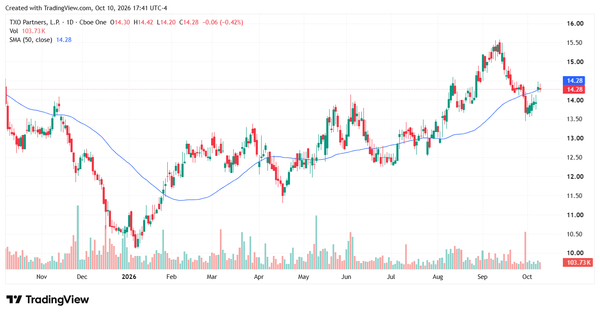
TXO Partners (NYSE: TXO) takes a different approach to oil and gas. It focuses on mature, conventional fields in the Permian, San Juan, and Williston basins. These wells produce steadily without the steep declines of shale.

TXO pays out essentially everything it earns. Its variable distribution policy is designed to deliver all available cash to unitholders. That means payouts rise and fall with energy prices. Investors should expect volatility.

Right now, the trend is moving the right way. The quarterly distribution climbed from $0.30 to $0.36 to $0.40 in 2026. Daily oil production has grown at a 30% compound annual rate since 2022. At its latest payout, TXO’s annualized yield runs well above the 10-year.
10-year - StockEarnings

A 2026 Winner With Room to Run

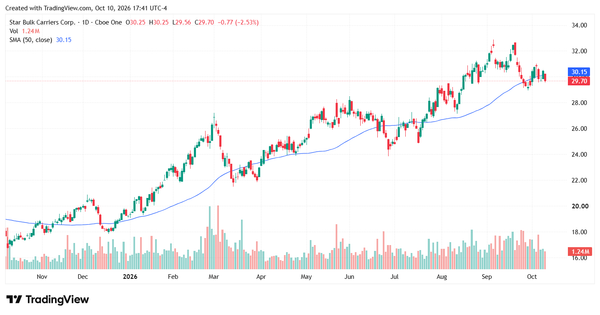
Star Bulk Carriers (NASDAQ: SBLK) has been one of the market’s standout performers this year. The dry bulk shipper was up nearly 47% year-to-date by early August. Stronger shipping rates are driving surging earnings and cash flow.

Shareholders are getting their cut. In August, Star Bulk raised its quarterly dividend 80% to $0.90 per share. That puts the yield above 12%. Like TXO, the payout is variable and moves with shipping rates.

The rally may not be over. Even after the big run, SBLK trades around 6 times forward earnings. That’s a steep discount to the broader market. Analysts keep raising estimates, a sign the fundamentals are still catching up to the momentum.
10-year - StockEarnings

The Contrarian Renewable Play

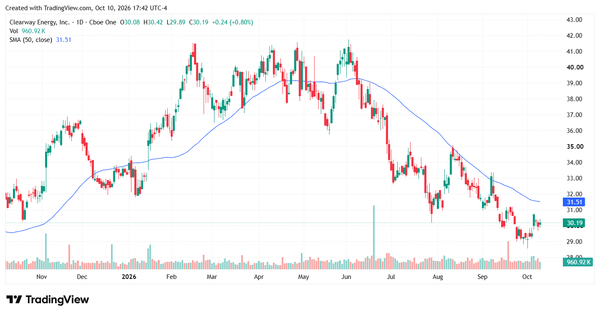
Renewable energy hasn’t been a popular sector. That’s exactly why Clearway Energy (NYSE: CWEN) deserves a look. The company owns about 5,000 megawatts of wind and solar. It also has 2,500 megawatts of natural gas generation.

The stock has had a big year. Even so, the Class C shares (CWEN) yield around 5.6%. Clearway raises its dividend every quarter. It has grown the payout roughly 7% annually over the past five years.

There’s also a potential catalyst ahead. Renewable energy policy has been a political lightning rod. The November midterm elections could shift the outlook for clean energy incentives. For contrarians, that uncertainty may be an opportunity rather than a reason to stay away.
10-year - StockEarnings

Affordable Housing in a Locked-Up Market

The housing market remains stuck. High mortgage rates are keeping buyers out and owners locked into their homes. That’s pushing more Americans toward affordable alternatives like manufactured housing.

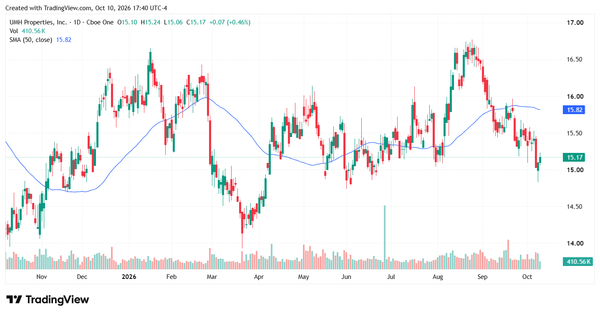
UMH Properties (NYSE: UMH) is positioned to benefit. The REIT owns 145 manufactured home communities across 12 states. As of June 30, portfolio occupancy reached 89%. Rental home occupancy hit 95.3%. Both numbers have been climbing.

The dividend is $0.90 per share annually, a yield of about 5.4%. The payout hasn’t increased yet in 2026. But rising occupancy and the conversion of inventory into rental homes give UMH room to grow its cash flow.
10-year-StockEarnings

Safety Doesn’t Have to Mean Standing Still

A 5.2% Treasury note is a reasonable choice for investors who need guaranteed income. But it’s a fixed bet that today’s yield will be enough tomorrow.

These five stocks offer a different trade. Each yields at or above the 10-year. Each has a growth driver the market may be underestimating. And each gives investors a chance to grow their income instead of watching inflation erode it.


A former marketing copywriter turned freelance financial writer and market analyst. I have a passion for delivering insights to investors. I write regularly about stocks for StockEarnings and MarketBeat. Posts are not advice.

Join over 1.2M+ investors/traders who receive daily and weekly notable earnings alerts with predicted move