One of the most effective investing strategies is buying quality, undervalued stocks during temporary pullbacks. Even the strongest companies rarely move higher in a straight line. Market volatility, short-term economic concerns, profit-taking, or broader market weakness can often push fundamentally strong stocks lower, creating opportunities for long-term investors.
Temporary pullbacks can provide investors with a chance to buy shares at a discount relative to recent highs. When a company’s long-term growth story remains intact, a short-term decline may have little to do with its underlying business performance.
Instead, the selloff may simply reflect shifting market sentiment or broader market conditions. For patient investors, these periods can offer attractive entry points into companies they may have previously considered too expensive.
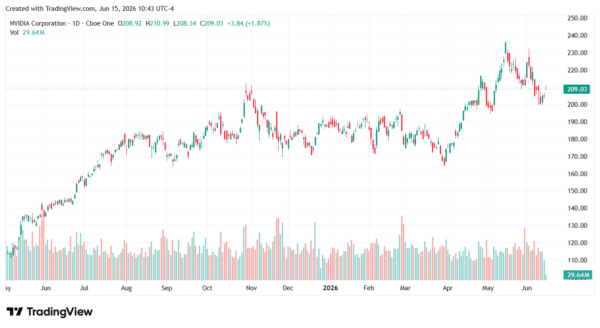
NVIDIA Remains a Core AI Growth Story
After dropping from about $235 to about $200, the tech giant has become technically oversold on relative strength, MACD, and Williams’ %R. We also have to remember that NVIDIA (NASDAQ: NVDA) is the backbone to the AI boom, which shows no signs of cooling off.
For one, the global artificial intelligence market is valued at approximately $617 billion. Projections indicate the market size will exceed $3.4 trillion by 2033, fueled by widespread adoption and rapid scaling of generative and agentic AI, as noted by Grand View Research.
Two, the rapid growth of data centers further supports the long-term outlook. There are currently around 4,000 operational data centers in the United States, with another 1,500 to 3,000 either planned or under construction. Research also shows strong regional expansion across the country, particularly in the South and Midwest. Globally, there are now more than 10,000 data centers. Those numbers are only set to climb.
Oracle Is Showing Signs of Recovery
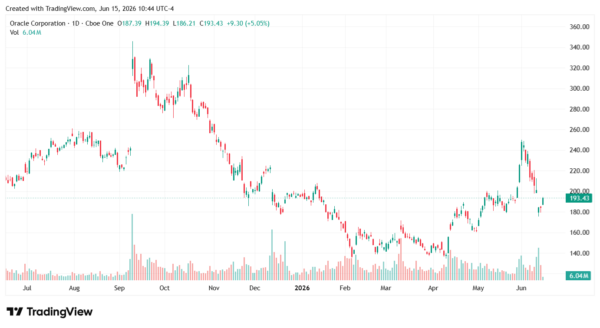
After getting beaten up on earnings, Oracle (NYSE: ORCL) is starting to pivot higher, too.
EPS of $2.11 beat by 15 cents. Revenue of $19.2 billion, up 20.8% year over year, beat by $110 million. While solid, the stock cell after it forecast higher capital expenditure for fiscal 2027 than analysts’ estimates and said it expects to raise about $40 billion in debt and equity in fiscal 2027 to support its capital investment program.
However, according to Citi analysts, the stock is a buy. “It was a mixed print for ORCL as Q4 saw a solid beat, with bookings upside, accelerating IaaS growth, and decreased financing intensity, but underwhelming FY27 EPS guidance on gross margin pressure. We still see more positives than negatives,” said analysts led by Tyler Radke.
“While gross margins are under pressure from significant capacity ramps in FY27, we believe the Q4 bookings strength, reduced financing needs (from pre-payments/BYOC) give increasing confidence to the ramp in long-term targets. We further raise our Infrastructure revenue forecasts, with our FY27 EPS staying largely unchanged but FY29- 30 moving slightly higher,” said Radke and his team, as quoted by Seeking Alpha.
Lowe’s Could Benefit From Improving Housing Trends
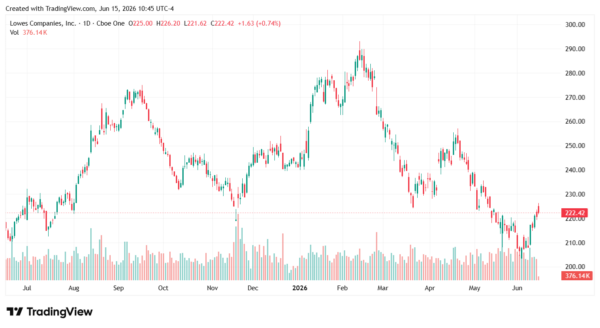
After a devastating pullback from about $350 to about $290 in May, shares of Lowe’s (NYSE: LOW) are starting to come back strong, too.
Last trading at $332.81, we’d like to see it rally back to $350 initially.
For one, Citi, for example, just upgraded Lowe’s to a buy rating following the latest pullback, arguing that the worst may already be priced into the stock.
According to Citi analysts, the housing and home improvement market could see gradual improvement throughout 2026. While growth may remain modest, there is still significant pent-up demand for home improvement spending after years of elevated mortgage rates and reduced housing turnover.
“We see 2026 as a year of gradual improvement, even if the growth is slightly lower. There is pent-up demand for home improvement spending on a multi-year basis as existing home sales step up to higher levels and lower rates drive increased engagement with projects,” said the firm, as quoted by Seeking Alpha.
Two, it typically benefits from hurricane season, which runs from June 1 to late November. This segment is “naturally positively exposed to preparation and recovery efforts,” says Morgan Stanley. These typically see a boost in sales post-storm as damaged property is repaired.”
Undervalued Stocks Can Lead to Opportunities
While volatility can feel uncomfortable, it often creates some of the best opportunities for investors who are willing to look beyond the noise. For investors, the key is not trying to perfectly time every move, but rather identifying quality companies when sentiment temporarily pulls prices down.