The S&P 500’s average price-to-earnings ratio was hovering around 31x earnings as of mid-June 2026. By that measure, the three stocks in this article: Walmart (NASDAQ: WMT), Eli Lilly (NYS: LLY), and Caterpillar (NYSE: CAT) are all expensive. Walmart’s P/E ratio stands at approximately 42x earnings. Eli Lilly is trading at roughly 40x trailing earnings as of June 12, 2026. Caterpillar’s P/E ratio is around 48x, well above its 12-month average of 31x.
But framing them that way misses the bigger picture.
In today’s market, passive money flows pour into index funds regardless of valuation. Algorithmic trading and momentum strategies reward quality businesses with durable earnings power. And in an environment defined by uncertainty — tariff disruptions, rate volatility, geopolitical noise — investors are increasingly willing to pay a premium for companies that don’t need a perfect macro backdrop to execute.
High P/E stocks that are still worth buying share a common thread: their earnings growth is outrunning their valuation. When the underlying business compounds at a fast enough rate, a premium multiple doesn’t stay premium for long. That’s the case for Walmart, Eli Lilly, and Caterpillar. Each comes from a different sector. Each carries a valuation that will scare off value investors. And each has a credible path to growing into — and beyond — that multiple over the next several years.
In a market where many investors are focused on speculative bets, these are best-in-class businesses in sectors where being the best matters enormously. Here’s why it’s worth paying the premium for these high P/E stocks.
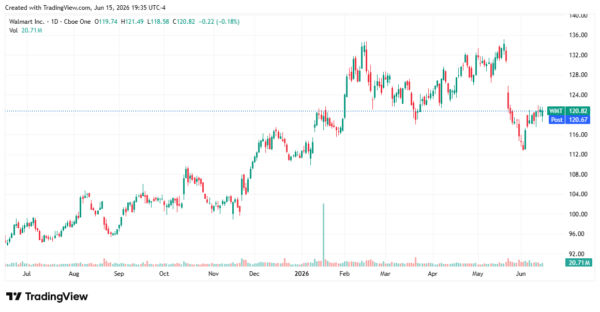
Walmart Is No Longer Just a Retailer — And the Market Knows It
The knock on Walmart stock has always been the same: you’re paying a consumer staples P/E for a grocery store. And today, you could say you’re paying a tech stock premium. But that framing is increasingly obsolete.
Walmart has actively invested in AI-driven retail. The retailer embedded its own chatbot, Sparky, into platforms such as ChatGPT and Google Gemini. The company is executing a two-front competitive strategy: holding its own against Costco (NASDAQ: COST) in the brick-and-mortar warehouse club format through Sam’s Club, while simultaneously closing the gap on Amazon (NASDAQ: AMZN) in e-commerce. Global e-commerce sales have surged, and Walmart’s U.S. e-commerce growth has been a consistent double-digit story, with the company also exploring drone delivery to stay competitive with Amazon.
Meanwhile, the customer mix is shifting in Walmart’s favor. Walmart’s latest earnings revealed growth from higher-income customers and a rise in e-commerce, with higher-income households increasingly prioritizing value as they look to stretch their dollars. That’s a market share story. Affluent consumers discovering Walmart’s improved shopping experience don’t tend to leave once they arrive.
Walmart’s chief financial officer (CFO) indicated that the company will likely see average operating income growth of about 10% each year. At a 42x P/E, that’s a growth rate that can work — especially for a company that increasingly looks less like a retailer and more like a technology-enabled consumer ecosystem.
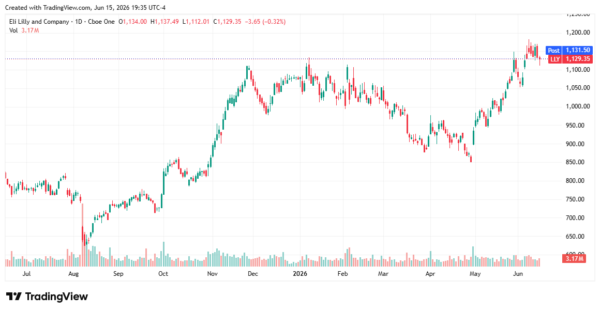
Eli Lilly’s GLP-1 Lead Is the Story — But It’s Not the Whole Story
Eli Lilly built its premium valuation on the back of tirzepatide — the active ingredient behind Mounjaro and Zepbound, its blockbuster diabetes and obesity franchise. That catalyst isn’t slowing down. Mounjaro generated $8.7 billion in Q1 2026 alone, overtaking Merck’s Keytruda as a top revenue driver, and Lilly raised its full-year 2026 sales forecast to as high as $85 billion on surging demand for its obesity drugs.
But investors focused only on GLP-1 are missing the depth of Lilly’s pipeline. The company recently received approval for orforglipron — the first oral GLP-1 receptor agonist small molecule for obesity — and launched donanemab for early symptomatic Alzheimer’s disease, while simultaneously advancing a diversified oncology portfolio spanning CDK4/6 inhibition, BTK inhibition, and bispecific T-cell engagers.
Lilly is using its GLP-1 financial strength to fund an aggressive dealmaking strategy, with head of corporate development Jacob Van Naarden noting that the company is now “wider than early-stage bets.” Recent acquisitions and agreements include Verve Therapeutics for gene therapies for heart disease, Scorpion Therapeutics for oncology, and Adverum Biotechnologies for a gene therapy targeting wet age-related macular degeneration. CNBCNasdaq
LLY’s current P/E of 40x is actually 23% below its 10-year historical average — making this one of the rare cases where a stock that looks expensive by market standards is actually trading at a discount to its own history. The obesity market alone is a multi-decade tailwind. The rest of Lilly’s portfolio is the upside.
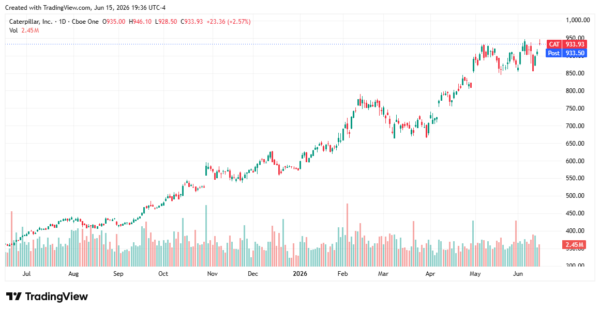
Caterpillar Is an Industrial — With an AI Infrastructure Angle
Caterpillar has always been a bellwether for the global economy. But something has changed. The market is now treating it as a dual-identity stock: part heavy industrial, part AI infrastructure play. Both narratives are intact.
After a record 2025 with $67.6 billion in full-year sales and revenues, Caterpillar entered 2026 with a $51 billion dealer backlog and Wall Street expecting roughly 15% year-over-year revenue growth in Q1 2026. Construction Industries’ total sales in Q1 2026 came in at $7.16 billion, up 38% year over year, driven by higher sales volume and favorable price realization.
The AI angle comes through Caterpillar’s Power & Transportation segment. Caterpillar’s power generation business has become a major driver as data center developers look for fast, reliable electricity, especially for large AI campuses — a key reason the stock has rallied sharply in 2026.
Favorable trends in construction activity, commodity demand, data center investments, and energy-transition projects continue to support Caterpillar’s growth opportunities, while the company’s expanding aftermarket services business, known for its high margins, further strengthens its earnings profile. CAT shares have gained over 137% in the past year, outpacing both its industry peers and the broader S&P 500.
For a company building the physical infrastructure that enables the digital economy, paying a premium multiple doesn’t seem like a stretch.
High P/E Stocks with Long-Term Payoffs
Paying 40x earnings for any stock requires conviction. Paying that premium for three of them requires a thesis. The thesis here is straightforward: in a market where passive flows reward the biggest and best companies regardless of daily valuation readings, quality wins over time.
Walmart, Eli Lilly, and Caterpillar don’t share a sector or a growth story. What they share is dominance — in retail and technology convergence, in pharmaceutical innovation, and in the physical infrastructure buildout that underpins both the old economy and the new one. Each has multiple ways to win from here. Each has an earnings growth trajectory that can justify its current multiple.
High P/E stocks get punished hardest when earnings disappoint. That’s the risk. But when the underlying businesses are executing at this level, the risk of overpaying looks less threatening than the risk of waiting for a cheaper entry that may never come.