ajax loader

Loading...


Ride-the-Wave Strategy – Best for Stock Traders

Ride-the-Wave targets multi-day price momentum following a company’s earnings announcement (EA). With this strategy:

  1. Buy a stock one day post-EA if a stock reacts positively post-earnings:
    1. Near the close of trading the EA-day for a pre-market-EA
    2. Near the close of the following day for a post-market-EA
  2. Sell-to-close after 7-10 days, or possibly earlier if a desired price target is reached

Similarly,

  1. short a stock one day post-EA if a stock reacts negatively post-earnings:
    1. near the close of trading the EA-day for a premarket-EA
    2. near the close of the following day for a post-market-EA
  2. then buy-to-close after 7-10 days, or possibly earlier if a desired price target is reached

Important: Ride-the-Wave is predicated on significant price momentum triggered by an EA. The 7-10 day scenario is the maximum trade hold-time. If you see post EA-momentum is halted or reversed by a significant opposite move, re-evaluate your presence in the trade.

This popular StockEarnings screen below will give you a list of stocks that historically exhibit significant price momentum following an EA for the next seven days:

  1. Stocks exhibiting positive post-EA price moves are buy-candidates
  2. Stocks exhibiting negative post-EA price moves are sell/short-candidates

The screen includes those stocks whose Earnings just came out in last two days.

Screen criteria:

  1. Earnings Date Start Date : Current Date + -1 Day
  2. Earnings Date End Date : Current Date + -2 Days
  3. Predicted Move (Next Day) Max : 7%
  4. Predicted Move (On 7th Day) Min : 7%

Strategy Guideline:

  1. Buy the stock if stock has reacted positively. Short the stock if stock has reacted negatively (see above).
  2. Close the position in 7-10 days, or possibly earlier based on price move.

Volatility Crush Strategy - Best for Options Traders

The Volatility Crush strategy is used with stocks that typically experience relatively low-to-moderate price moves (≤4%) following their Earnings Announcements (EA). The basic trade idea is to sell put or call options right before the EA, collecting a credit when options premium is very high due to elevated implied volatility (IV). You then close the position right after the EA by buying the option back much cheaper due to the significant drop in IV that occurs after the mystery of the EA disappears. In assessing this trade, you need to do your homework to ensure you collect sufficient premium to make the trade worthwhile.

This trade is practical due to the low-to-moderate price-move after the EA, which generally won’t significantly affect the options price, unlike an “action” stock, which experience great price moves post-EA. With these symbols, if you’re on the right side of the price move, that’s a great thing. But if you’re on the wrong side of the move, not so great. Consequently, by minimizing the effect of the post-EA price move, you have a much better chance to profit from the reduction in IV without it being ruined by a violent price move.

For this trade, open the position either (1) the night before the EA when the company announces earnings or (2) during the EA day when it announces post-market, generally capturing IV at or close to its peak.

For this trade, open the position either (1) the night before the EA when the company announces earnings or (2) during the EA day when it announces post-market, generally capturing IV at or close to its peak.

This popular stockearnings screen will give you a list of stocks which do not react more than 4% fpost-EA. It includes only those stocks whose earnings are releasing next day.

Screen criteria:

  1. Earnings Date Start Date : Current Date + 1
  2. Earnings Date End Date : Current Date + 1
  3. Predicted Move (Next Day) Max : 4%
  4. Options Type: Weekly

Strategy Guideline:

  1. Options Strategy: Sell Call and Put
  2. Options Strike Price: Current Stock Price – (% Predicated Move x 2)
  3. Expiration Date: It should generally be the closest expiry immediately after the EA.
  4. Buy Insurance: Buying back Call and Put at Strike price which 10% lower than Sell Strike Price is optional but recommended.

Watch Video for More Detail

Volatility Rush Strategy - Best for Options Traders

The Volatility Rush takes advantage of increasing options premiums into earnings announcements (EA) caused by an anticipated rise in Implied Volatility (IV). With this strategy, Buy a Call and Put at-the-money (a long straddle) 2-3 weeks before the EA when IV is lower. Sell the position either (1) the night before the EA when the company announces earnings pre-market, or (2) during the EA day when it announces post-market, generally capturing IV at or close to its peak.

This popular screen will give you a list of stocks whose Options premiums tend to rise into Earnings. It includes only those stocks whose Earnings are at least two weeks away from today.

Screen criteria:

  1. Earnings Date Start Date : Current Date + 15 Days
  2. Earnings Date End Date : Current Date + 30 Days
  3. Predicted Move (Next Day) Min : 5%
  4. Options Type: Weekly or Monthly if that lines up with the two to three-week lead-time for entering the trade

Strategy Guideline:

  1. Buy a Straddle at or close to the money two to three weeks pre-EA.
  2. Sell the position either the night before the EA when the company announces earnings pre-market, or during the EA day when it announces post-market.
  3. Expiration date should generally be the closest expiry immediately after the EA.
  4. Straddle price should not be more 60% of predicted move.

Predicted Move (Volatility)

Similar to Implied Volatility in Options. Expected volatility % based on our Proprietary Volatility Predication Model. We are expecting that stock price will likely to reach % in either direction by the end of next trading session after Earnings are released and not necessarily the closing volatility %.

Why is it important?

    This indicator helps

  1. Knowing expected volatility in stocks after Earnings helps to decide trading stocks before Earnings Announcement.
  2. Taking Advantage of volatility collapse following Earnings Results by using Advance Options strategies such as Spread and Straddles.

Since Last Earnings

Change in share price since last Earnings release.

Why is it Important?

When share has gained more than 10% since it's last Earning release, it tends to over react to minor bad news and give up some gains if not all. So, it contains more downside volatility than upside When share has dropped more than 10% since it's last Earning release, it tends to over react to minor good news and recover some drops if not all. So, it contains more upside volatility than downside.

EPS Surprise (%)

Occurs when a company's reported quarterly or annual profits are above or below analysts' expectations. Here is the formula to derive % EPS Surprice:

Actual EPS - Estimated EPS
------------------------------------- x 100
Estimated EPS

Why is it Important?

Earnings surprises can have a huge impact on a company's stock price. Several studies suggest that positive earnings surprises not only lead to an immediate hike in a stock's price, but also to a gradual increase over time. Hence, it's not surprising that some companies are known for routinely beating earning projections. A negative earnings surprise will usually result in a decline in share price.

Next Day Price Change (%)

Next Regular trading session Closing price following Earnings result.

For After Market Close Earnings, It is a next trading day closing price. For Before Market Open Earnings, It is the same trading day closing price.

Why is it Important?

Next Day price change is a reaction of Earnings result.

These 3 Companies Are Spending Billions on Stock Buybacks

Posted on Nov 09, 2026 by Ian Cooper

These 3 Companies Are Spending Billions on Stock Buybacks

When a company spends billions buying its own stock, investors should take a closer look. These stock buybacks can signal management confidence, strengthen per-share earnings, and potentially reward long-term shareholders.

Businesses have plenty of choices for their cash. 

They can develop products, expand operations, acquire competitors, pay down debt, or increase dividends. Buying back shares is another option, and it can tell investors something about how management views the business and its stock price.

When buybacks reduce the number of shares outstanding, each remaining share represents a larger ownership stake. Shareholders who hold onto their stock own a little more of the company without purchasing another share.

Buybacks can also lift earnings per share. Imagine a business earning $100 million with 100 million shares outstanding. That works out to $1 per share. If its share count falls to 90 million and profits stay unchanged, earnings per share rise to about $1.11.

However, a smaller share count doesn’t automatically make a stock more valuable. The company spends cash to purchase those shares, and the price it pays matters. Buying an undervalued business can reward shareholders. Overpaying can waste money that would have been better spent elsewhere.

With that in mind, Berkshire Hathaway, Lam Research, and United Therapeutics offer three examples worth watching for investors interested in companies using stock buybacks to return capital to shareholders.

Berkshire Hathaway Steps Up Its Stock Buybacks


Berkshire Hathaway (NYSE: BRK-B) made a substantial investment in a familiar business during the third quarter. The conglomerate repurchased $9.6 billion of stock, bringing its total buybacks for the first nine months of 2026 to about $14.4 billion. That quarterly spending more than doubled the $4.5 billion repurchased during the second quarter.

The acceleration deserves attention because Berkshire’s repurchase policy ties purchases to valuation. Its program allows buybacks when the chief executive, after consulting the chairman, believes shares trade below a conservative estimate of the company’s intrinsic value—essentially, what the business is worth based on its underlying economics.

That makes the spending a useful indication of management’s thinking. Berkshire was willing to commit considerably more money to its own shares during the quarter.

Lam Research Combines Stock Buybacks With Dividends

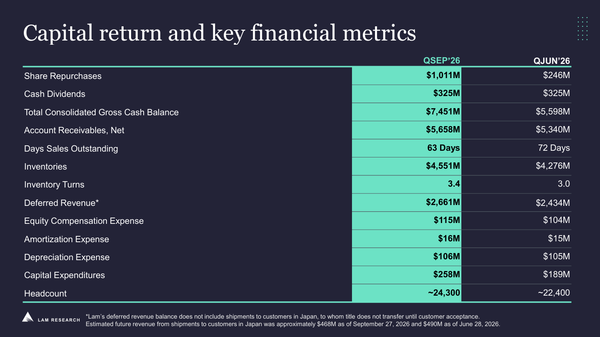
Lam Research (NASDAQ: LRCX) is also making a sizable commitment to shareholder returns. On November 5, the semiconductor equipment company announced a new $25 billion share repurchase authorization alongside a quarterly dividend of $0.33 per share. The authorization adds to the remaining balance under its previous program.
stock buybacks - StockEarnings

The combination gives shareholders two potential benefits. Dividends provide cash directly, while repurchases can increase the ownership stake represented by each remaining share.

Chief Financial Officer Doug Bettinger pointed to Lam’s cash generation and technology positioning as reasons management believes it can continue returning capital to shareholders.

However, there is an important distinction between Lam’s announcement and Berkshire’s quarterly results. Berkshire reported money already spent. Lam announced permission to make future purchases.

United Therapeutics Adds Another $2 Billion Authorization

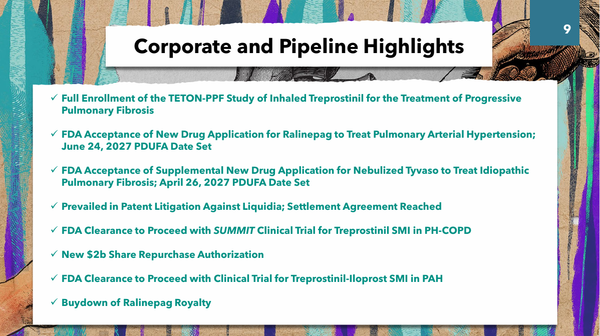
United Therapeutics (NASDAQ: UTHR) has also put a substantial repurchase program on the table. The company announced an additional authorization to buy up to $2 billion of its shares, available through October 21, 2027. Chief Financial Officer James Edgemond said management believes its balance sheet and free cash flow can support both its longer-term ambitions and purchases of attractively valued shares.
stock buybacks - StockEarnings

That balance matters. Returning cash to shareholders is most compelling when a company can also adequately fund its future. United Therapeutics said an accelerated repurchase transaction under its previous authorization would not reduce the amount available under the new program. However, the new authorization carries no minimum purchase requirement, and management can adjust buying based on market conditions and other uses for its money.

Follow the Share Count, Not Just the Buyback Headlines

Big buyback announcements make headlines, but the real test comes afterward. You should watch to see whether shares outstanding actually decline. Companies can spend heavily on repurchases while issuing new shares for employee compensation or other purposes, offsetting some of the benefit.

Berkshire, Lam and United Therapeutics give investors reasons to pay attention. What matters next is whether their purchases leave shareholders owning more of a healthy business at a sensible cost. That is where a buyback can turn into lasting value.


Over the last 26 years, he’s taught thousands of investors how to trade news flow and herd mentality using a unique blend of technical and fundamental analysis. Cooper was among the few analysts to spot the financial crisis of 2008, the top of subprime and Alt-A, the death of Lehman Brothers, Bear Stearns, and New Century Financial, and even the Dow’s collapse to 6,500, as well as its recovery. He even called for gold to rally well above $1.500 when it traded under $600. At the moment, Cooper makes use of technical, fundamental and news analysis, to help individual investors grow their wealth. He’s a firm believer that hard work and thorough research will lead to investment success.

Join over 1.2M+ investors/traders who receive daily and weekly notable earnings alerts with predicted move