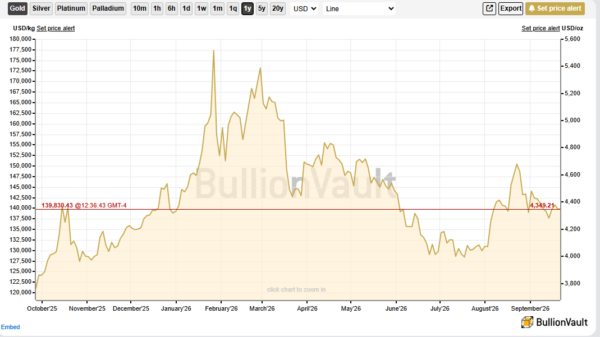
Gold has already enjoyed a massive run in the last 12 months, but investors may not want to assume the rally is nearing its end. Goldman Sachs (NYSE: GS) recently reiterated its forecast that the price of gold could reach $5,400 per ounce by the end of 2026. That may sound ambitious, especially after interest-rate pressures created new questions about the outlook for precious metals.
Yet Goldman’s bullish argument is based on something bigger than the Federal Reserve’s next move: a long-term change in the way central banks, institutions and private investors view gold. Traditionally, higher interest rates have been considered a headwind for the price of gold. Because the metal does not pay interest or generate income, it can become less attractive when investors can earn competitive yields from bonds and cash.
However, gold can continue rising during periods of elevated interest rates when investors are worried about inflation, government debt, geopolitical conflict or the stability of major currencies. In the current environment, those longer-term concerns may be powerful enough to offset the pressure created by higher borrowing costs.
Central Banks Are Still Driving the Price of Gold Higher
One of the strongest catalysts supporting the price of gold is continued buying by central banks.
According to figures cited by the World Gold Council, central banks purchased an estimated 289 metric tonnes of gold during the second quarter. They reportedly added another 23 tonnes in July. In addition, emerging-market central banks have been particularly active. China reportedly added approximately 20 tonnes in July, while Poland purchased another eight tonnes. Poland has also remained one of the most aggressive sovereign gold buyers of 2026.
Goldman Sachs reportedly expects central banks to purchase an average of roughly 60 tonnes of gold per month during 2026. If buying remains anywhere near that level, it could continue placing meaningful support underneath the market.
Government Debt Is Strengthening the Argument
Another catalyst is the rapid growth of government debt.
Large budget deficits and rising interest expenses have increased concerns about the long-term purchasing power of traditional currencies. Governments can issue more debt, and central banks can expand the money supply, but no institution can create unlimited amounts of gold.
That scarcity is part of the metal’s appeal.
De-dollarization could create another tailwind. Gold may also benefit from a gradual shift away from the U.S. dollar in certain parts of the world. The dollar remains the dominant global reserve currency, and that is unlikely to change overnight. Still, some countries are trying to reduce their reliance on dollar-denominated assets.
David Einhorn Sees More Upside for Gold
In addition, Greenlight Capital founder David Einhorn is bullish. As reported by GoldSilver.com, Einhorn believes gold could “significantly outperform” the Nasdaq over the next three to five years. His outlook is based partly on concerns about loose U.S. fiscal policy and the continuing global trend toward de-dollarization.
In short, the longer-term case for gold is still strong, despite rising interest rates. Central banks are still accumulating the metal, government debt continues to rise, and investors remain concerned about inflation, currency stability and geopolitical risk. If those trends persist, Goldman Sachs’ $5,400 forecast may not be as aggressive as it initially appears.
How to Invest In a Higher Price of Gold
For investors who believe the price of gold has further to run, there are several ways to gain exposure beyond owning physical bullion. Newmont (NYSE: NEM) is one of the world’s largest gold miners and could benefit from higher realized gold prices. Barrick Mining (NYSE: B) offers another large-scale mining option with operations across multiple regions.
More aggressive investors could consider Agnico Eagle Mines (NYSE: AEM), which has significant exposure to gold prices and a portfolio of established mines. Wheaton Precious Metals (NYSE: WPM) provides a different approach through its streaming business, which gives it exposure to gold and other precious metals without directly operating mines. Each company carries its own operational, geopolitical and cost risks, so investors should consider those factors alongside their outlook for the price of gold.
The Price of Gold Won’t Rise in a Straight Line
None of this means gold is guaranteed to climb steadily.
The metal could experience sharp pullbacks, particularly if interest rates stay higher for longer, the dollar strengthens, or investors become more comfortable taking risks. After such a powerful rally, profit-taking would be normal.
But over the long-term, we expect to see higher gold prices, especially with central banks still buying. Government debt continues to expand. Geopolitical risks have not disappeared, and some countries are actively diversifying their reserves. At the same time, investors remain concerned about inflation and the future purchasing power of paper currencies. Taken together, those forces suggest gold’s bull market may still have room to run.