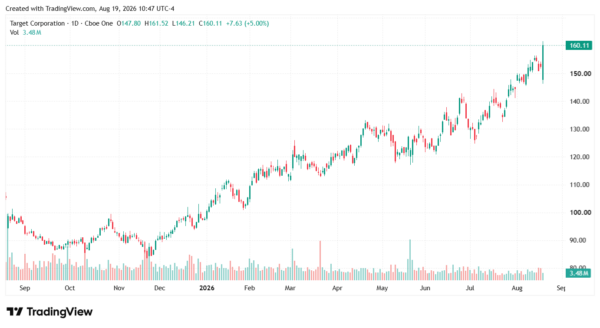
Target (NYSE: TGT) is showing signs that its turnaround plan is starting to work. The retailer reported stronger-than-expected sales for its second quarter and raised its outlook for the rest of the year.
The company also benefited from more than $700 million in tariff refunds. For the quarter ended August 1, TGT reported $26.54 billion in sales, up 5.3% from the same period last year. Wall Street had expected about $26.14 billion. Comparable sales jumped 3.8%. That was well above analysts’ expectations of 2.4%.
The company said sales were strong across most parts of the business. Food and beauty were among the strongest categories, while apparel and home continued to struggle. “We’re encouraged by the progress made so far,” CEO Michael Fiddelke said, as quoted by CNBC. However, he also warned that the company still has plenty of work to do.
Tariff refunds boost profits
TGT’s profits saw a massive boost from tariff refunds during the quarter. The company reported $1.88 billion in net income, or $4.11 per share. That compares with $935 million, or $2.05 per share, a year earlier.
However, those numbers include the benefit from the tariff refunds. Target said the refunds added $752 million to net earnings, or $1.65 per share. The refunds also provided a $994 million pretax benefit to gross margin and operating income.
Thanks to refunds, Target raised its earnings forecast for the full year. But the company said it is also seeing stronger sales, which helped support the higher outlook.
TGT now expects full-year sales to grow by about 5%, up from its previous forecast. The company expects full-year earnings per share of between $9.90 and $10.90, including the tariff refunds. Without the refunds, Target expects earnings per share of $8.25 to $9.25. That is still higher than its previous forecast of $7.50 to $8.50.
Digital sales are growing
Target’s online business also had a strong quarter. Digital comparable sales increased 8.7%. Same-day delivery grew by more than 25%.
The company has been investing in ways to make shopping more convenient for customers. Those efforts appear to be paying off as more people use the company’s digital services.
Target also said all six of its major merchandise categories grew during the quarter.
However, not every part of the business is doing so hot. Home and apparel remain challenges
Target continues to have problems in its home and apparel businesses. “We knew a category like home was going to be a multiyear journey,” Fiddelke added. Target plans to make more changes in both home and apparel as it works to improve those parts of the business.
Lower prices and new stores
Target is also trying to attract shoppers by lowering prices. The company said it has reduced prices on more than 10,000 products, with more price cuts planned.
That strategy is important because many consumers are still being careful about their spending. Higher costs and economic uncertainty have made shoppers more focused on getting good value for their money. Target also opened 17 new stores during the quarter. The company hopes that lower prices, better products, new stores and improved digital services will help bring customers back.
Investors appear to be responding positively to Target’s progress.
And for now, the company appears to be heading in the right direction. Sales are improving, digital business is growing and the company is making changes to weaker parts of its business. The tariff refunds gave profits a temporary boost, but the bigger test will be whether Target can continue growing after that one-time benefit fades.
For a retailer that has struggled to maintain consistent growth, the latest results offer a reason for optimism, but the turnaround is far from finished.