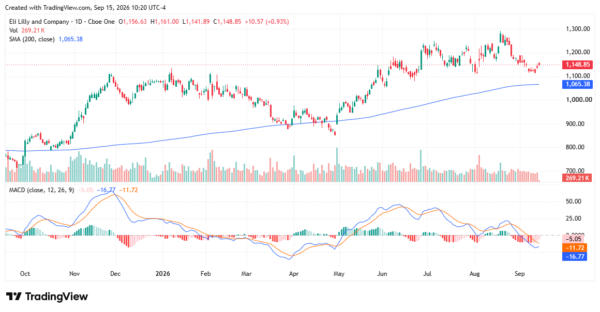
Weakness in Eli Lilly (NYSE: LLY) may be an opportunity. In fact, according to analysts at Berenberg, they could see more upside, upgrading the stock to a Buy rating with a price target of $1,400. Berenberg analyst Kerry Holford believes investors may still be underestimating Lilly’s long-term growth potential.
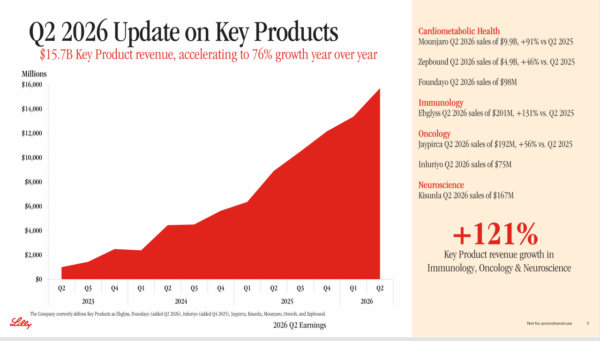
Eli Lilly’s recent success has largely been driven by Mounjaro and Zepbound, two drugs containing the active ingredient tirzepatide. Mounjaro is approved to help improve blood-sugar control in adults with Type 2 diabetes. Zepbound, meanwhile, is prescribed for chronic weight management and certain weight-related health conditions.
Demand for these drugs has surged as more patients, doctors, insurers and employers recognize obesity as a chronic disease requiring long-term treatment—not simply a lifestyle problem. That long-term treatment thesis is key to understanding LLY as an investment.
Rising GLP-1 Adoption Could Fuel Lilly’s Next Growth Phase
According to the Centers for Disease Control and Prevention, more than two out of every five American adults are obese. The CDC also estimates that obesity accounted for nearly $173 billion in annual medical expenses.
For Eli Lilly, that represents a substantial patient population. The opportunity becomes even larger when related conditions such as diabetes, high blood pressure, heart disease and sleep apnea are considered.
Plus, GLP-1 medications are quickly moving into the mainstream. A 2026 Gallup survey found that 11% of U.S. adults were taking GLP-1 medications for weight loss, up from just 3% in 2024. Meanwhile, 15% said they had used one of the treatments at some point.
Awareness of the drug category also reached 90%, compared with 80% two years earlier. Those figures show how quickly the market is developing.
Yet they also suggest the industry may still be in the early stages of adoption. Although tens of millions of Americans may qualify for treatment, access can remain limited by price, insurance coverage, supply and the need for injections.
Solving even some of those problems could unlock another wave of demand.
Oral GLP-1 Treatments Could Unlock New Demand for Eli Lilly
One of the most important potential catalysts for Eli Lilly is the development of GLP-1 treatments that are easier to take. Many existing drugs in the category are delivered by injection. Although patients have become increasingly comfortable with injectable treatments, a pill could be more convenient and appealing to a much broader population.
Berenberg is particularly optimistic about Foundayo, Lilly’s oral GLP-1 treatment. While its initial rollout has been slower than hoped, Holford expects an anticipated diabetes approval to help unlock substantial demand.
An oral option could attract patients who have avoided GLP-1 therapy because they dislike needles or find injections inconvenient. It may also make prescribing and distributing the treatment easier, potentially helping Lilly reach more patients.
If Lilly can successfully add an oral drug to its portfolio, the company could serve different parts of the market instead of relying heavily on injectable products.
Eli Lilly’s Pipeline Could Extend Its Weight-Loss Success
Perhaps the most overlooked part of the Lilly story is what the company is doing with the cash generated by Mounjaro and Zepbound.
Strong obesity drug sales are giving Lilly the financial flexibility to increase manufacturing capacity, fund internal research and acquire promising external treatments. Berenberg argues that investors are not assigning enough value to those pipeline investments.
According to Holford, several newer pipeline candidates have the potential to become multibillion-dollar products. They could also diversify Lilly beyond obesity and diabetes, reducing its dependence on a single therapeutic category over time.
A broader pipeline gives the company more ways to grow while providing some protection against more intense competition in weight management.
What Berenberg’s $1,400 Price Target Means for Eli Lilly Investors
Oversold, the underlying opportunity is difficult to ignore. GLP-1 adoption continues to rise, the addressable patient population remains large, and Eli Lilly appears well-positioned to protect its leadership. For investors willing to wait, Berenberg’s $1,400 price target makes a clear argument: Eli Lilly’s weight-loss rally has already been extraordinary, but its next stage of growth may be just beginning.