Crypto investors were hit with bad news this week. Bitcoin and other cryptocurrencies fell after the CLARITY Act failed to advance in the Senate. Several crypto-related stocks also moved lower as investors worried about what the setback could mean for the industry.
At first, the vote looked like a major defeat. The digital currency industry had been pushing hard to get the bill passed this year. Without it, companies may have to wait longer for Washington to provide clear rules for digital assets.
However, some Wall Street analysts believe the market may be overreacting.
The failed vote creates uncertainty, but it does not change how companies such as Coinbase (NASDAQ: COIN) and Robinhood (NASDAQ: HOOD) operate today. It also does not mean the push for clearer crypto regulation is over. That could make the latest weakness a buying opportunity for long-term investors.
What Was the CLARITY Act?
The CLARITY Act was designed to make cryptocurrency regulations easier to understand. One of its main goals was to explain how the Securities and Exchange Commission (SEC) and the Commodity Futures Trading Commission (CFTC) should oversee digital assets.
That is important because the two agencies have different responsibilities. Companies in this space have spent years trying to understand which agency has authority over certain coins, trading platforms, and other digital products.
Clearer rules could make it easier for exchanges and financial companies to develop new services. They could also encourage more banks, investment firms, and large companies to enter the digital-asset market.
Unfortunately, the bill failed to move forward in the Senate.
That means Congress is unlikely to pass a major crypto market-structure law this year. For an industry hoping for quick answers from Washington, the setback was disappointing.
Still, the bill may not be gone forever.
The Crypto Industry Can Keep Moving
Morgan Stanley (NYSE: MS) analyst Felix Stratmann said the CLARITY Act is not dead. However, he believes its chances of becoming law soon have dropped sharply. Even without the bill, federal regulators can continue developing new crypto rules.
The SEC and CFTC can still provide guidance for digital-asset trading, coin issuance, custody services, and blockchain-based financial markets. These agencies may not be able to solve every problem, but they can give companies a better idea of what is allowed. That means the industry does not have to stop growing while Congress decides what to do next.
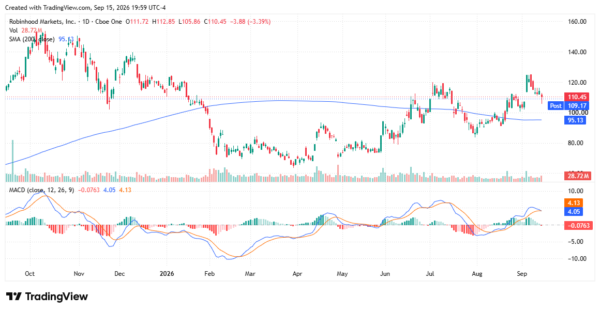
When the bill failed, traders quickly adjusted their expectations and sold some of their crypto-related holdings. However, that reaction may be more about investor emotion than a serious change in the businesses.
Coinbase and Robinhood Still Have Business Momentum
Needham analyst John Todaro also believes investors should keep the setback in perspective. Todaro said the failed vote probably ends major crypto legislation for the year. Even so, it remains “business as usual” for cryptocurrency exchanges.
That may be the most important point for investors.
Coinbase can still operate its trading platform. Robinhood can still offer cryptocurrency trading alongside stocks, options, and other investments. People can still buy and sell Bitcoin, and financial companies can continue exploring blockchain technology. The failed vote did not suddenly take away customers, reduce trading volume, or prevent these companies from operating.
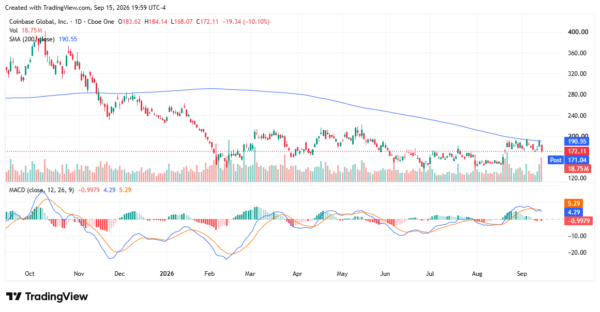
Todaro also noted that the CLARITY Act probably would not have created a major immediate boost for exchanges or brokerage platforms. The bill could have provided greater confidence and clearer rules. However, it would not have completely changed the businesses of Coinbase or Robinhood. For that reason, Todaro believes the selloff could give investors a chance to buy strong crypto-related stocks at lower prices.
The CLARITY Act Is a Setback, Not the End of Crypto Growth
The CLARITY Act’s failure is a setback, but it is not the end of the crypto growth story.
Federal agencies can continue creating digital-asset rules. Crypto exchanges can continue operating. Congress may also return to the issue later with a revised bill. For investors, the key question is simple: Did the failed vote permanently damage these companies, or did it only create a temporary wave of fear?