Home Depot (NYSE: HD), Target (NYSE: TGT), and Walmart (NASDAQ: WMT) will all post earnings over the next few days.
Home Depot’s Q2 results will test whether a housing-market recovery is sustainable, while Target’s earnings will provide an important update on its turnaround under new leadership. Walmart will be closely watched, with strong eCommerce, advertising and marketplace growth but continued concerns over margins, tariffs and earnings guidance.
Home Depot Earnings
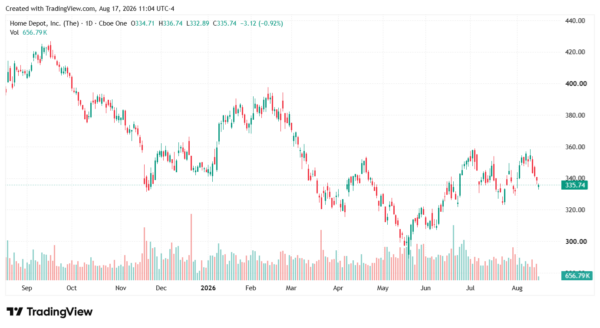
Home Depot is set to report its second-quarter results before the market opens Tuesday, with investors focused on whether improving conditions in the housing market can continue supporting comparable-sales growth.
The home improvement giant reported $41.8 billion in net sales in Q1, a 4.8% year-over-year increase. Comparable sales, however, rose only 0.6%, highlighting the challenge of converting broader sales growth into stronger underlying demand. Adjusted diluted earnings per share came in at $3.43, compared with $3.56 a year earlier.
Management maintained its fiscal 2026 outlook, calling for total sales growth of 2.5% to 4.5% and adjusted EPS growth ranging from roughly flat to 4%.
Heading into earnings, Wall Street expects for Home Depot to report adjusted earnings of $4.71 to $4.73 per share and quarterly revenue of about $47.2 to $47.5 billion, reflecting modest year-over-year growth.
Target Earnings Test the Retail Turnaround
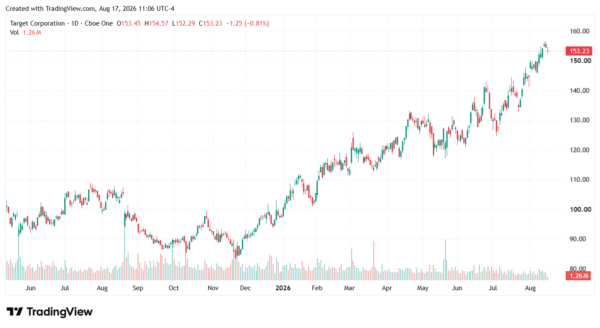
Target reports Q2 results before the market opens Wednesday, making the company one of the most closely watched turnaround stories in retail.
The retailer’s shares have risen more than 50% year to date under new CEO Michael Fiddelke, raising expectations ahead of the earnings report. In Q1, Target generated $25.44 billion in sales, while comparable sales increased 5.6%.
That marked Target’s first quarter of positive comparable sales in five quarters. Traffic increased 4.4%, and all six core merchandising categories posted gains. eCommerce also continued to strengthen, providing another source of growth as Target works to regain momentum with consumers.
Management had also doubled its full-year sales growth target to 4% and increased its quarterly dividend. The key question now is whether Q2 can confirm that the improvement is sustainable rather than simply a short-term rebound.
Heading into earnings, Wall Street expects for Target to post EPS of about $2.25 per share, which would be about 9.8% year over year growth. Revenue is expected to come in at around $26.06 billion, a 3.4% jump year over year.
Walmart Earnings Focus on Growth and Margins
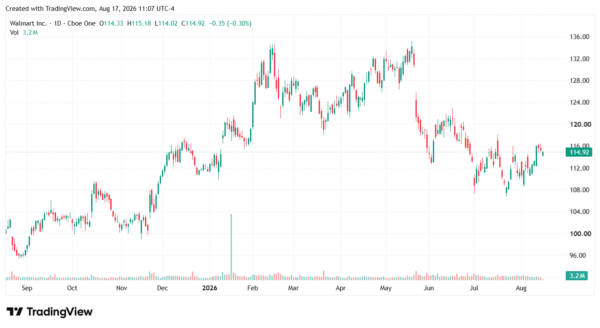
Walmart reports its fiscal second-quarter 2027 results before the market opens Thursday. Despite strong operating trends, Walmart shares have dropped, but are showing signs of improvement.
In addition, in Q1, Walmart generated $175.7 billion in revenue, up 6.1% year over year. Adjusted EPS of $0.66 comfortably exceeded the $0.58 estimates. Global eCommerce increased 26%, which was 23% of net sales, while advertising revenue jumped 36%.
At the time, the company also provide full-year EPS guidance of $2.75 to $2.85, below the $2.92 consensus, as well as potential pressure from tariffs and the cost of absorbing higher expenses.
Heading into earnings, Wall Street is looking for EPS to range from about 73 cents to 74 cents on revenue of between $186.3 billion and $186.9 billion.
What Investors Should Watch
In short, Home Depot needs to demonstrate that housing-related demand can produce stronger comparable sales. Target must prove that its recent improvement in traffic and sales represents a durable turnaround. Walmart needs to show that its impressive digital and advertising growth can continue while protecting earnings and margins.
Together, the results should provide an important snapshot of U.S. consumers, housing demand, and the increasingly central role of AI and digital technology in modern retail.