If you were wondering why you should own cybersecurity stocks, November gave you the answer. Two outages in one week showed how fragile critical systems can be. On Nov. 13, the FAA halted flights nationwide for about four hours after a telecommunications failure. A day earlier, a Microsoft 365 outage disrupted government agencies, courts, and businesses worldwide.
Neither event has been tied to a cyberattack. Transportation Secretary Sean Duffy blamed aging equipment for the FAA failure. But the lesson for corporate boards is the same. When systems go down, the cost is immediate and public.
These events are crystallizing the threat matrix for enterprises. Legacy infrastructure, cloud concentration, and AI-driven attacks all widen the attack surface. Security budgets will have to grow to match.
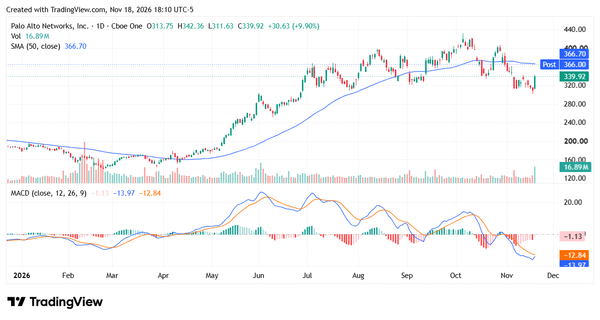
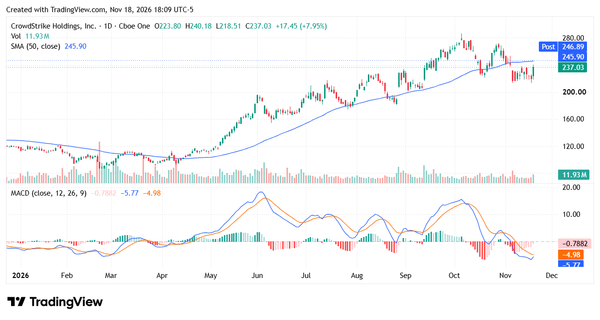
For investors, that makes cybersecurity stocks long-term holdings rather than trading vehicles. The group sold off sharply on Nov. 5, with Palo Alto Networks and CrowdStrike each falling about 10%. Several leaders also report earnings in the coming weeks, so volatility is likely. The five cybersecurity stocks below are built to outlast it.
Palo Alto Networks: Fresh Results Confirm the Platform Story
Palo Alto Networks (NASDAQ: PANW) reported fiscal first-quarter results after the close on Nov. 18. Revenue jumped 39% to $3.44 billion. Next-Generation Security annual recurring revenue (ARR) rose 66% to $9.73 billion.
Management also raised its full-year outlook. It now expects fiscal 2027 revenue of $14.52 billion to $14.57 billion, up 26% to 27%. Remaining performance obligations, a measure of contracted future revenue, grew 35% to $21 billion.
Palo Alto is still buying, too. It announced a $4.5 billion all-stock deal for Applied Compute to bring secure open-weight AI to enterprises. The strategy is consolidation: one platform instead of dozens of tools. The stock entered the report up about 75% this year, so swings are inevitable. The long-term story remains intact.
CrowdStrike: Record ARR Heading Into Its Next Report
CrowdStrike (NASDAQ: CRWD) is expected to report fiscal third-quarter results around Dec. 1. Its last report set a high bar. In the fiscal second quarter, CrowdStrike added a record $333 million in net new ARR. Total ARR grew 25% to $5.84 billion.
The Falcon Flex subscription model is a key driver. ARR from Flex customers more than doubled to over $2.29 billion. All 10 of the company’s largest deals in the quarter were Flex subscriptions. Management raised its full-year net new ARR growth outlook to 34% at the midpoint.
CrowdStrike knows outages firsthand. Its faulty July 2024 software update crashed millions of Windows machines. Yet revenue growth has now accelerated for five straight quarters. That resilience is why it belongs among the cybersecurity stocks worth holding through volatility.
Zscaler: Zero Trust for a Fragile Network
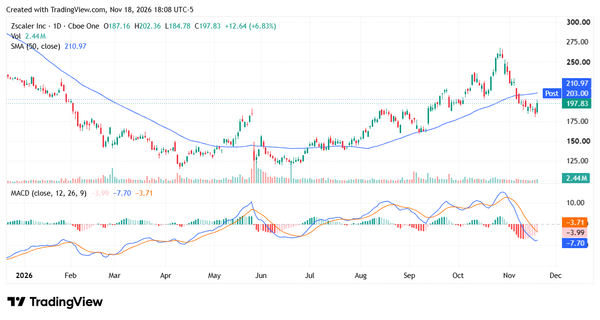
Zscaler (NASDAQ: ZS) is expected to report fiscal first-quarter results in late November. Its zero trust platform connects users to applications without exposing the broader network. That limits how far an attacker can move once inside.
In fiscal 2026, revenue and ARR each grew 25%. Non-GAAP operating margin hit a record 24% in the fourth quarter. In October, Zscaler reaffirmed first-quarter revenue guidance of $935 million to $939 million, about 19% growth.
For fiscal 2027, the company expects ARR of $4.40 billion to $4.43 billion. Management calls AI one of the most significant opportunities in Zscaler’s history. One caution: fourth-quarter free cash flow fell to 7% of revenue as infrastructure spending rose. Investors should watch whether that investment pays off.
Fortinet: A Selloff That Ignored the Fundamentals
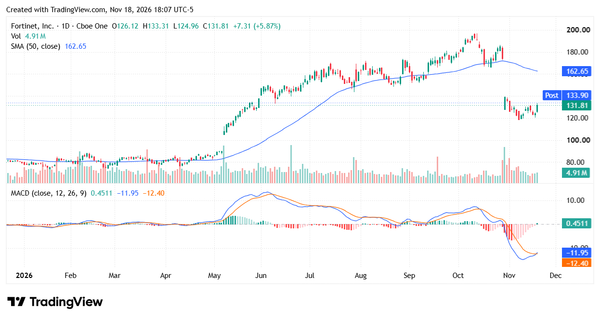
Fortinet (NASDAQ: FTNT) shows how quickly sentiment can turn. After its Oct. 28 report, shares fell about 25% in after-hours trading. Product revenue growth slowed to 37% from 52% in the prior quarter.
Yet the broader numbers were strong. Revenue rose 20% to $2.08 billion, and billings climbed 29% to $2.34 billion. Fortinet raised its full-year billings guidance for the third time this year. Non-GAAP operating margin reached a third-quarter record of 38.2%.
Fortinet is also a cash machine. Free cash flow rose 52% to $864.8 million, a 41.6% margin. The board added $1.2 billion to its buyback authorization. Fortinet protects the network layer that outages expose. For long-term investors in cybersecurity stocks, the selloff looks more like an entry point than a warning.
Okta: Identity Is the New Perimeter
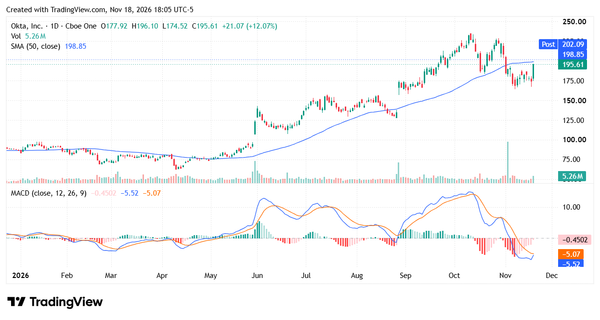
Okta (NASDAQ: OKTA) is the slowest grower in this group, but it may be the most underappreciated. Stolen credentials remain one of the easiest ways into a network. Uber recently said hackers stole driver data through compromised credentials at an AI vendor.
In its fiscal second quarter, Okta’s revenue grew 11% to $805 million. Current remaining performance obligations grew 14%, and management cited accelerating momentum. Free cash flow rose to $227 million, or 28% of revenue. GAAP net income nearly doubled to $116 million.
The next leg of growth is AI agents. Each one needs an identity and limits on what it can access. Okta is positioning itself as the neutral provider to manage them. It is expected to report fiscal third-quarter results in early December. Management has kept guidance prudent, setting a manageable bar.
Why Cybersecurity Stocks Belong in a Long-Term Portfolio
Last week’s outages weren’t cyberattacks. They didn’t need to be. They showed boards, regulators, and investors how much depends on systems staying online. That pressure lands on security budgets.
Cybersecurity stocks will stay volatile, especially with several earnings reports ahead. Valuations are high, and any slowdown will be punished. But demand isn’t tied to one quarter or one product cycle. For investors with a long horizon, these five companies are positions to own, not trade.