Enterprise software vendors have a new competitor. A handful of public companies are now using AI to replace enterprise software they’ve licensed for years, treating the shift as a way to squeeze cash out of the balance sheet rather than just a productivity story.
Most of the AI-and-jobs conversation focuses on headcount. That narrative is real, but it’s only half the picture. The other half is happening inside corporate IT budgets, where companies are quietly building their own AI-powered tools to do what Microsoft, IBM, Oracle, and Salesforce used to do for them. It’s less visible than a layoff announcement, but the dollar figures involved are just as large, and in some cases larger.
Call it hiring AI as the new consultant. Instead of paying a vendor’s subscription fee or a systems integrator’s hourly rate, these companies are pointing internal engineering teams, aided by AI coding tools, at the enterprise software they already pay for and asking a simple question: could we build this ourselves, cheaper?
At a moment when every basis point of margin matters to investors, that question is being asked more often and answered “yes” more often than before. Here are four publicly traded companies doing exactly that.
Starbucks Builds AI to Cut $400M in Enterprise Software Costs
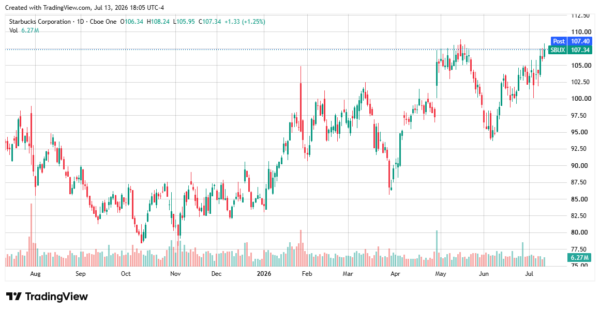
Starbucks (NASDAQ: SBUX) spends roughly $400 million a year on software, according to comments its CTO made to employees in an internal forum reviewed by Bloomberg. The company is now building AI-powered replacements for a Microsoft inventory-tracking system and an IBM maintenance-management platform, with internal rollouts possible by late 2027. It’s also been developing homegrown point-of-sale software to eventually replace Oracle Simphony.
The effort ties into a broader $2 billion turnaround plan, and the enterprise technology division is on pace to cut its own budget by about $30 million this fiscal year, roughly a third of that from software specifically.
Klarna Uses AI to Slash Costs, SEC Filings Show
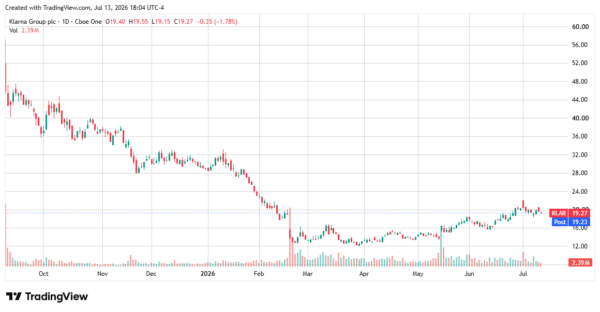
Klarna (NYSE: KLAR) has been the most transparent of the group, disclosing AI-driven savings directly in its IPO filings. An internal AI tool that classifies and routes customer service conversations delivered about $4.9 million in savings over twelve months.
More broadly, the company says AI helped cut sales and marketing costs from $531 million in 2022 to $355 million by mid-2025, including a 75% drop in outside marketing-agency spend. Klarna also runs an internal AI knowledge assistant, called Kiki, and an AI tool that explains credit decisions to support agents, both aimed at reducing reliance on external systems and staff.
Shopify Makes AI Adoption a Hiring Requirement
Shopify’s (NASDAQ: SHOP) version of this shows up as policy, not a product announcement. CEO Tobi Lütke told employees in an internal memo that teams must prove AI can’t do a job before requesting new headcount or resources, calling AI use “a fundamental expectation.” The company built internal tools, including a proxy layer and dozens of connected AI agents, to make that mandate practical rather than aspirational.
The intent isn’t to replace a specific enterprise software vendor the way Starbucks is. It’s using AI to hold headcount and internal tooling spend flat while the business keeps growing, which shows up on the income statement the same way.

IBM Cuts HR Costs With AI, Then Quietly Rehires
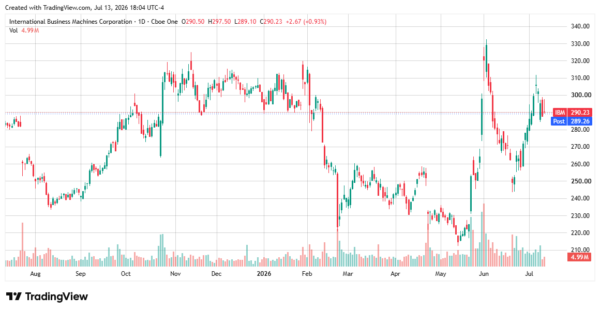
IBM (NYSE: IBM) built an internal AI assistant called AskHR to automate routine human resources work: leave requests, payroll questions, and internal paperwork. The company says AskHR now handles about 94% of those interactions without human involvement, contributing to $3.5 billion in productivity savings in 2024 against a $2 billion target.
IBM cut roughly 8,000 HR-related jobs on the strength of that automation, then quietly rehired in some areas after gaps in service quality emerged. It’s a useful reminder that these tools cut costs, but not always as cleanly as the initial announcement suggests.
Does This Actually Move the Needle?
Two caveats are worth noting before you invest in this thesis. First, none of this shows up as its own line item in a 10-Q. Companies don’t break out “software costs” separately from wages, occupancy, or general corporate overhead, and new FASB rules requiring that kind of expense disaggregation don’t take effect for most large filers until fiscal years starting in 2027 or later. Numbers like Starbucks’ $400 million figure come from internal comments reported by journalists, not audited disclosures. Investors are taking management’s word for it.
Second, building this software isn’t free. Industry estimates suggest a mid-sized internal tool that once cost $300,000 and six months to build can now be done for roughly $30,000 to $50,000 in six to eight weeks, thanks to AI-assisted coding.
That’s a real cost reduction, but it’s not zero, and it comes with ongoing maintenance, security, and staffing obligations that don’t disappear once the tool ships. A 2026 survey from Retool found 35% of enterprise teams have already replaced at least one SaaS tool with something custom-built, so this isn’t unique to these four names. But industry-wide, it’s still a fraction of the roughly $674 billion companies spent on enterprise software as of a few years ago.
Why This Trend Is Bigger Than Layoffs
None of these four companies is going to swing its earnings per share on internally built software alone. But that’s exactly the point most of the job-loss coverage misses: this isn’t a one-time event, it’s a slow reallocation of spend away from software vendors and toward internal AI-assisted development, one contract renewal at a time.
For investors watching Microsoft, IBM, Oracle, and Salesforce, the more interesting question may not be who’s building AI products to sell, but which of their own customers are using AI to stop buying.