The intense heat wave spanning most of the United States and Europe in late June and early July is a reminder of all the things we take for granted. Calls to set our thermostats higher to save energy are considered wishful thinking to millions of people who are out of power after strong storms that came on the back half of the heat wave.
From an investor’s perspective, these intense weather events can present an opportunity to make substantial gains. Momentum is on the side of companies likely to post strong revenue and earnings in the upcoming reporting season.
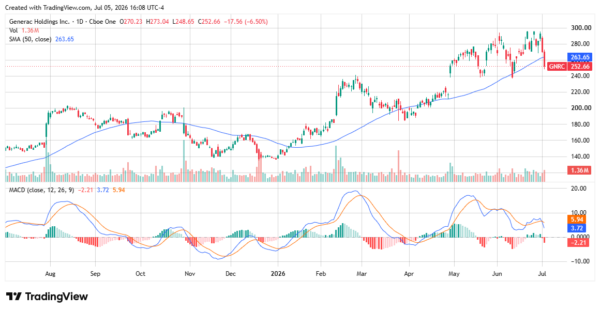
Generac (GNRC)
One of the most uncomfortable parts of stormy weather is having to deal with a power outage. If it’s only for a few hours, it’s manageable. But when it stretches into days or weeks, issues such as food spoilage come into play. Plus, in the hyperconnected world in which we operate, not having an internet connection can literally mean a loss of power will quickly mean a loss of income.
Generac Holdings (NYSE: GNRC) has been the go-to backup power solution for millions of customers. In 2026, the company is also seeing increased revenue from data center demand. In its Q1 2026 earnings report, Generac reported a current backlog of over $700 million, which was more than double the amount from its Q4 2025 earnings report.
GNRC is up 85% in 2026 and, in June, UBS Group raised its price target to $335 from $305, which is 17% above analysts’ consensus price target. And at 28x forward earnings, GNRC is valued attractively to the S&P 500. It’s not a forever stock, but it’s a solid momentum play for the second half of 2026.
Carrier (CARR)
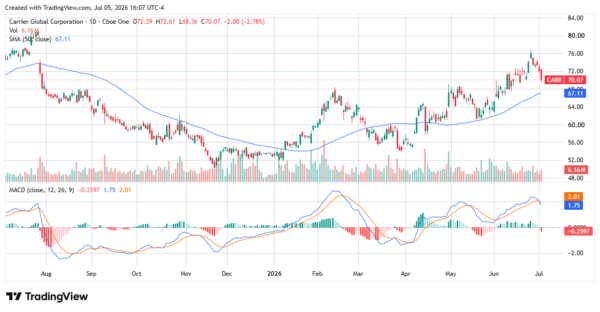
Carrier Global (NYSE: CARR) is one of the global leaders in commercial and residential HVAC solutions. The company’s core business has been impacted by a constricted housing market in the United States. That accounts for CARR stock being down 7.7% in the last 12 months.
Normally, it’s helpful for investors to take a long-term view. In this case, momentum suggests narrowing your focus. That’s because in the company’s Q1 2026 earnings report, the company noted that strong demand was coming from data centers. Global orders were up over 500%, and the current backlog covers the company’s targeted $1.5 billion of data center sales in 2026.
CARR stock is within 5% of its consensus price target of $73.25. However, it does pay a dividend of 96 cents per share that has increased for the last four consecutive years and is well supported by next year’s earnings and cash flow estimates.
Dover (DOV)
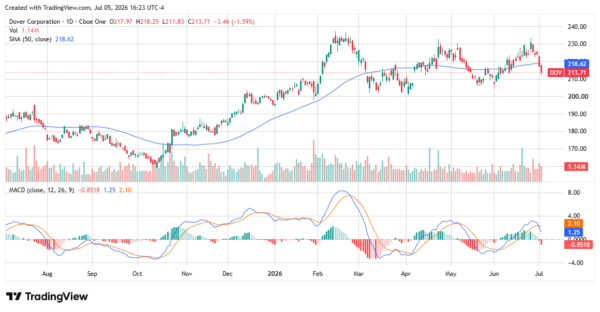
Dover Corp. (NYSE: DOV) is an alternative to Carrier with two important distinctions. First, the company operates exclusively in the commercial and industrial sectors. That’s translated into year-over-year revenue and earnings growth that’s expected to continue.
Second, the company not only has a higher per share dividend payout, but Dover is a dividend king that has increased its payout for the last 70 consecutive years.
At 20x forward earnings, valuation may be a small concern for a stock, known for income first and growth second. However, analysts give DOV stock a consensus price target of $239.85, which is an increase of over 12% from its closing price on July 2.
First Solar (FSLR)
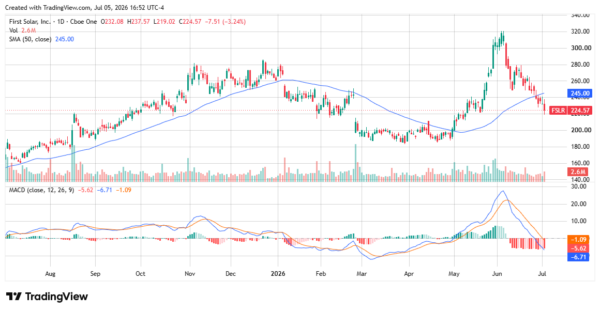
Solar energy can shine brightly during heat waves that are punctuated by intense sunlight. First Solar (NYSE: FSLR) is the largest U.S.-headquartered solar panel maker. The company’s advanced thin-film modules have the benefit of performing better in high-temperature conditions. They also perform better in low-light conditions (e.g., during a storm).
FSLR has been volatile. As of July 2, it’s down 14.02% in 2026, but it was up 14.8% in the last three months and 21.1% in the last 12 months. However, the consensus analyst price target of around $250 leaves about 11% upside. Plus, several analysts have price targets of $300 or higher, which suggests the stock may be just starting to heat up. If you can handle that volatility, First Solar may have a place in a long-term growth portfolio.
Home Depot (HD)
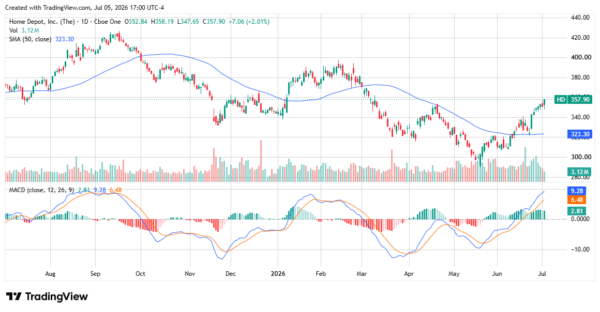
Home Depot (NYSE: HD) is a weather-adjacent stock that could offer both growth and value in 2026 and beyond. To begin with, at $357.72 as of the close of trading on July 2, Home Depot is trading significantly below its all-time high of around $425. That’s largely been due to the slowdown in the housing market, which is ongoing.
But all it takes is one named storm in hurricane season to remind investors why Home Depot is an all-season stock to own. The company’s revenue and earnings have remained resilient due to the strength in its Pro business.
Growth investors may balk at HD stock’s performance in the last five years. But over a longer period, it’s been a tremendous performer for both growth and income investors. The current dividend yield is 2.61%, and the stock pays $9.32 per share on an annual basis.
Weathering the Market Heat
The bottom line is that extreme temperatures aren’t the only thing running hot this summer. Many of the companies positioned to benefit from weather-driven demand, infrastructure strain, and long-term energy transitions are showing real momentum heading into the second half of 2026. From backup power to HVAC demand, industrial strength, solar performance, and home-improvement resilience, each of these stocks reflects a different angle of how climate and infrastructure pressures shape economic opportunity.
Investors don’t need to chase every heat-related trend, but they can recognize when weather patterns highlight structural needs—backup power reliability, cooling efficiency, renewable generation, and storm-driven home repair. These aren’t passing fads; they’re durable themes that tend to intensify as climate volatility increases.
As temperatures rise, so does the importance of owning companies built to perform in all conditions. The market’s weather may shift day to day, but businesses solving real-world problems tend to stay hot even after the forecast cools.