In a surprising move, NVIDIA (NASDAQ: NVDA) just reinstated Jensen Huang as CEO. Less than a week after NVIDIA told investors that Jensen Huang would not return, the board brought him back. The chipmaker just announced that its co-founder would immediately resume his roles as chief executive, president, and board director.
The reversal gives NVIDIA’s customers and shareholders some clarity about who will lead the company through its next generation of AI chips. It also raises questions about how the board reached two very different decisions in such a short time and what it will do once an independent investigation wraps up.
NVIDIA’s Board Reverses Course
On the company’s Nov. 17 earnings call, board chair Harvey Jones said Huang had resigned voluntarily, and the board had no plans to reinstate him. By Monday, the directors had voted unanimously to bring him back. Colette Kress, who stepped in as interim CEO, will continue as chief financial officer. Jones will remain board chair.
The company said its directors met with Huang several times and came away satisfied that he had been forthcoming and could lead the company. The board also said it received input from senior U.S. government officials and concluded that Huang’s return posed no national security risk. The announcement gave few details about what those officials told the board.
Meanwhile, a committee of independent NVIDIA directors will continue investigating reports that Huang was the target of a foreign intelligence effort. The committee has hired outside counsel, and the company says Huang supports the investigation and will cooperate. His first days back at work will therefore come while the company is still examining the circumstances surrounding his departure.
Why Huang’s Return Matters to NVDA Investors
Huang helped turn a company best known for making video games look better into the leading supplier of chips used to build and run AI models. Along the way, he helped shape which products NVIDIA developed, how it worked with major customers, and how it dealt with Washington. Those roles matter when the company is asking customers to commit billions of dollars to systems they’ll use for years
Consider what happens when a cloud provider orders a new generation of NVIDIA systems. That purchase comes with decisions about how much space and power to set aside, when to bring new capacity online and what services it can sell once the equipment is running. Customers planning those investments have reason to care about who sets the company’s product schedule and whether the company can stick to it.
The timing matters because NVIDIA has already started shipping its Vera Rubin platform, the company’s latest generation of AI computing systems. As shipments increase, investors will get a better read on how quickly customers can put those systems to work. NVIDIA’s ability to deliver at scale will help determine how much of that demand shows up in sales over the coming quarters.
What Wall Street Will Watch Next
The latest earnings report shows how much is riding on that rollout. NVIDIA’s fiscal third-quarter revenue reached $115.8 billion, up 103% from a year earlier. Its data center business generated $107.6 billion, up 110%. That put data centers at roughly 93% of quarterly sales, giving investors a clear sense of how much Nvidia now depends on companies continuing to build out their AI infrastructure.
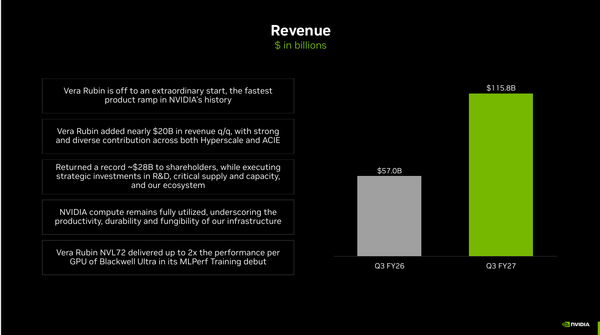
That concentration cuts both ways. Strong orders can move revenue quickly at NVIDIA’s scale. A delay in getting data centers ready, or a decision by large customers to spread purchases over a longer period, can also affect when the company records sales. In the next earnings update, shipment progress and management’s outlook should help investors judge whether the new platform is gaining traction as quickly as they expect.
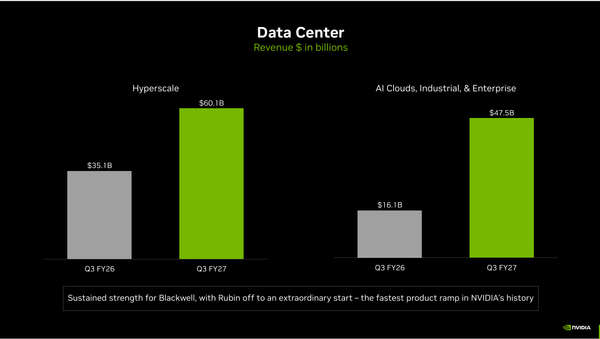
The next tests are more concrete. Can NVIDIA turn Vera Rubin’s early shipments into sustained sales growth, and what will the independent committee disclose when its work is complete? The first answer will help investors gauge the company’s earnings prospects. The second will help them assess how the company’s board handled one of the most consequential decisions in the chipmaker’s history.