We’re sitting ducks. After all these years, we’re still not prepared for cyberattacks. Cities, hospitals, schools, businesses — and even government agencies — continue to face cyber threats that can disrupt critical services, expose sensitive information and cost billions of dollars.
Just this week, Boston Scientific (NYSE: BSX), the roughly $72 billion medical device maker, disclosed that it had been hit by a cyberattack that is disrupting its operations. The company said the attack has affected access to information systems and applications, including shipment-related services. Boston Scientific’s disclosure sent its shares lower.
In a filing with the U.S. Securities and Exchange Commission, the company said it is working to restore affected functions and systems but warned that the timeline for a full restoration is not yet known. It’s another reminder that cybersecurity isn’t just an IT issue. A successful cyberattack can quickly become an operational and financial problem for a company, and a potential investment opportunity for cybersecurity companies.
That makes cybersecurity an increasingly important area for investors to watch.
Companies such as CrowdStrike (NASDAQ: CRWD), Palo Alto Networks (NASDAQ: PANW), and Fortinet (NASDAQ: FTNT) are among the major players developing technologies designed to protect businesses and organizations from cyberattacks.
And while investors can buy individual cybersecurity stocks, exchange-traded funds can provide broader exposure to the sector while reducing the risk associated with betting on a single company.
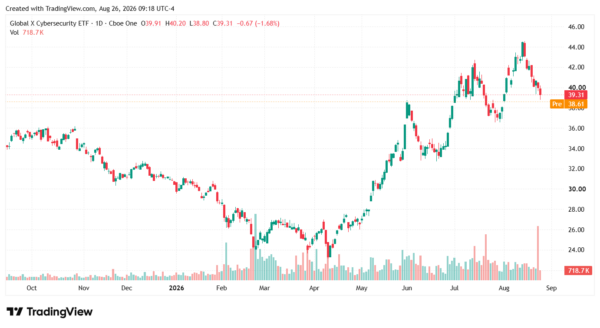
Global X Cybersecurity ETF (BUG)
With an expense ratio of 0.51%, the Global X Cybersecurity ETF (BUG) invests in companies that stand to potentially benefit from the increased adoption of cybersecurity technology. The fund focuses on businesses involved in developing and managing security protocols designed to prevent intrusion and attacks on systems, networks, applications, computers and mobile devices.
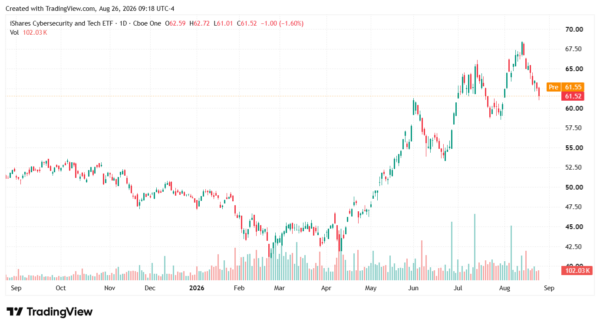
iShares Cybersecurity and Tech ETF (IHAK)
With an expense ratio of 0.47%, the iShares Cybersecurity and Tech ETF (IHAK) tracks an index of developed and emerging-market companies involved in cybersecurity and technology.
Its holdings span cybersecurity hardware, software, products and services. Some of its top holdings include Clear Secure, Akamai Technologies, CACI International, SentinelOne, Fortinet and Okta, among its 38 holdings.
For investors who believe cyberattacks will remain a growing threat — and that companies will continue increasing spending to defend against them — cybersecurity ETFs offer one way to gain diversified exposure to the industry.
Cyberattacks Could Keep Cybersecurity Spending High
The Boston Scientific attack is another reminder that cyberattacks are no longer just a problem for governments or large tech companies. They can disrupt the operations of almost any business and potentially hurt its stock, customers and bottom line.
And the threat isn’t going away. As companies rely more on technology and connected systems, they will need to spend more to protect themselves. That doesn’t mean every cybersecurity stock or ETF will be a winner. But the long-term opportunity is hard to ignore.
We may still be sitting ducks when it comes to cyberattacks. But investors don’t have to be.
As businesses continue to spend billions defending themselves, the companies providing the tools to keep them safe could stand to benefit.