September has arrived, and most investors are already looking past earnings season toward the holidays and year-end tax planning. But three major names have yet to report. Each carries outsized influence over consumer confidence and investor sentiment heading into the final quarter.
September and October have earned a reputation among investors. September is historically the weakest month for the S&P 500, and October has delivered some of the market’s most memorable crashes, including 1929 and 1987. Yet October has also marked the start of major rallies, which is why traders call it a “bear killer.” That mix of fear and opportunity makes the next few weeks worth watching closely.
Against that backdrop, Costco Wholesale Corp. (NASDAQ: COST), Casey’s General Store (NASDAQ: CASY), and AutoZone (NYSE: AZO) are set to report. None of these stocks is a traditional bellwether, but together they offer a window into how consumers are spending, driving, and maintaining what they already own. Their results could set the tone for how investors read the broader economy through year-end.
Costco Delivers Value Investors Can Bank On
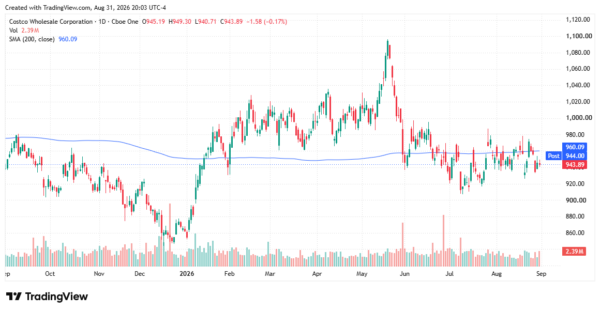
Costco reports earnings on Sept. 24, and expectations are high. The company posted a slight adjusted EPS miss last quarter, even as it logged a solid year-over-year gain. Tough comparisons remain a headwind, and with shares near $1,000, investors are demanding consistency.
Bulls point to a business model that essentially pays for itself. Membership fee revenue flows directly to earnings. That structure gives shoppers a reason to stay loyal, since bulk pricing offers real relief from inflation.
Even at 48 times forward earnings, COST stock looks reasonably valued. The analyst consensus price target suggests roughly 12% upside from here. Add in a dividend that has risen for 22 consecutive years, including several special payouts, and the case for holding through earnings season gets stronger.
For investors who want steady exposure to consumer spending, Costco offers a rare combination: pricing power, loyalty, and income.
Casey’s Offers a Different Read on the Consumer
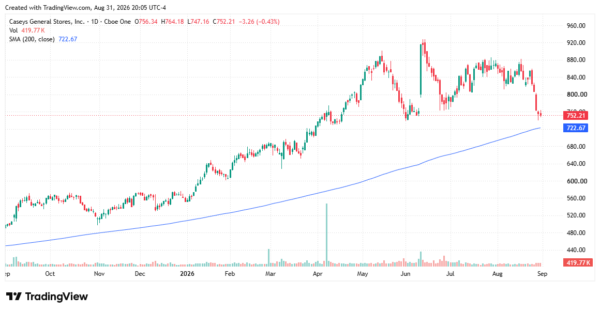
Casey’s General Store reports earnings soon after, giving investors a different lens on consumer health. The company operates travel stores and gas stations nationwide. It isn’t a “travel stock” in the traditional sense, but it can reveal how willing Americans are to drive despite elevated gas prices.
The valuation picture here is more mixed. Analyst sentiment remains bullish overall, yet valuation models don’t all agree on how much upside remains. That split creates a genuine data point for earnings season, rather than a foregone conclusion.
Income investors still have a reason to pay attention. Casey’s has increased its dividend for 22 consecutive years, matching Costco’s streak. The current yield of 0.24% won’t turn heads on its own. But the company has grown that dividend by more than 10% annually over the last three years.
That combination of growth and consistency provides shareholders with benefits beyond the stock price alone.
AutoZone Bets on Consumers Keeping Cars Longer
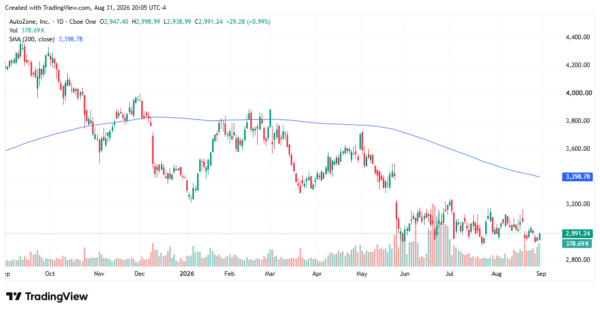
AutoZone rounds out the list, and it plays a different angle on consumer behavior entirely. Shares trade above $2,000, a price point many investors consider out of reach. That headline number can obscure the underlying value.
Despite the sticker price, AZO trades at roughly 19.9 times forward earnings. That’s an attractive multiple for a company benefiting from a durable trend: drivers holding onto vehicles longer and paying to maintain them rather than replace them.
That dynamic tends to hold up even when broader consumer spending softens, since car repairs are rarely optional. For investors screening for earnings season resilience, that durability is the benefit worth weighing against the high share price.
AutoZone’s aggressive share buyback program has also significantly reduced its float over the years, a factor that has helped support per-share earnings growth even in slower-sales environments.
What a Stock Split Could Mean for Shareholders
All three stocks share one more thing in common: each is a candidate for a stock split. Costco and AutoZone trade well above typical retail-friendly price points, and Casey’s isn’t far behind, having seen years of steady appreciation.
That said, none of these companies has announced split plans. Management at each has stayed quiet on the topic. Still, high share prices can suppress trading volume over time, and that could eventually prompt a second look from company leadership.
For now, investors get a clearer benefit from watching earnings than from speculating on splits. Costco offers income and loyalty. Casey’s offers a read on driving habits. AutoZone offers durability tied to aging vehicles. Together, they provide a broader picture of consumer behavior just as earnings season closes and the historically volatile September-October stretch begins in earnest.