ajax loader

Loading...


Ride-the-Wave Strategy – Best for Stock Traders

Ride-the-Wave targets multi-day price momentum following a company’s earnings announcement (EA). With this strategy:

  1. Buy a stock one day post-EA if a stock reacts positively post-earnings:
    1. Near the close of trading the EA-day for a pre-market-EA
    2. Near the close of the following day for a post-market-EA
  2. Sell-to-close after 7-10 days, or possibly earlier if a desired price target is reached

Similarly,

  1. short a stock one day post-EA if a stock reacts negatively post-earnings:
    1. near the close of trading the EA-day for a premarket-EA
    2. near the close of the following day for a post-market-EA
  2. then buy-to-close after 7-10 days, or possibly earlier if a desired price target is reached

Important: Ride-the-Wave is predicated on significant price momentum triggered by an EA. The 7-10 day scenario is the maximum trade hold-time. If you see post EA-momentum is halted or reversed by a significant opposite move, re-evaluate your presence in the trade.

This popular StockEarnings screen below will give you a list of stocks that historically exhibit significant price momentum following an EA for the next seven days:

  1. Stocks exhibiting positive post-EA price moves are buy-candidates
  2. Stocks exhibiting negative post-EA price moves are sell/short-candidates

The screen includes those stocks whose Earnings just came out in last two days.

Screen criteria:

  1. Earnings Date Start Date : Current Date + -1 Day
  2. Earnings Date End Date : Current Date + -2 Days
  3. Predicted Move (Next Day) Max : 7%
  4. Predicted Move (On 7th Day) Min : 7%

Strategy Guideline:

  1. Buy the stock if stock has reacted positively. Short the stock if stock has reacted negatively (see above).
  2. Close the position in 7-10 days, or possibly earlier based on price move.

Volatility Crush Strategy - Best for Options Traders

The Volatility Crush strategy is used with stocks that typically experience relatively low-to-moderate price moves (≤4%) following their Earnings Announcements (EA). The basic trade idea is to sell put or call options right before the EA, collecting a credit when options premium is very high due to elevated implied volatility (IV). You then close the position right after the EA by buying the option back much cheaper due to the significant drop in IV that occurs after the mystery of the EA disappears. In assessing this trade, you need to do your homework to ensure you collect sufficient premium to make the trade worthwhile.

This trade is practical due to the low-to-moderate price-move after the EA, which generally won’t significantly affect the options price, unlike an “action” stock, which experience great price moves post-EA. With these symbols, if you’re on the right side of the price move, that’s a great thing. But if you’re on the wrong side of the move, not so great. Consequently, by minimizing the effect of the post-EA price move, you have a much better chance to profit from the reduction in IV without it being ruined by a violent price move.

For this trade, open the position either (1) the night before the EA when the company announces earnings or (2) during the EA day when it announces post-market, generally capturing IV at or close to its peak.

For this trade, open the position either (1) the night before the EA when the company announces earnings or (2) during the EA day when it announces post-market, generally capturing IV at or close to its peak.

This popular stockearnings screen will give you a list of stocks which do not react more than 4% fpost-EA. It includes only those stocks whose earnings are releasing next day.

Screen criteria:

  1. Earnings Date Start Date : Current Date + 1
  2. Earnings Date End Date : Current Date + 1
  3. Predicted Move (Next Day) Max : 4%
  4. Options Type: Weekly

Strategy Guideline:

  1. Options Strategy: Sell Call and Put
  2. Options Strike Price: Current Stock Price – (% Predicated Move x 2)
  3. Expiration Date: It should generally be the closest expiry immediately after the EA.
  4. Buy Insurance: Buying back Call and Put at Strike price which 10% lower than Sell Strike Price is optional but recommended.

Watch Video for More Detail

Volatility Rush Strategy - Best for Options Traders

The Volatility Rush takes advantage of increasing options premiums into earnings announcements (EA) caused by an anticipated rise in Implied Volatility (IV). With this strategy, Buy a Call and Put at-the-money (a long straddle) 2-3 weeks before the EA when IV is lower. Sell the position either (1) the night before the EA when the company announces earnings pre-market, or (2) during the EA day when it announces post-market, generally capturing IV at or close to its peak.

This popular screen will give you a list of stocks whose Options premiums tend to rise into Earnings. It includes only those stocks whose Earnings are at least two weeks away from today.

Screen criteria:

  1. Earnings Date Start Date : Current Date + 15 Days
  2. Earnings Date End Date : Current Date + 30 Days
  3. Predicted Move (Next Day) Min : 5%
  4. Options Type: Weekly or Monthly if that lines up with the two to three-week lead-time for entering the trade

Strategy Guideline:

  1. Buy a Straddle at or close to the money two to three weeks pre-EA.
  2. Sell the position either the night before the EA when the company announces earnings pre-market, or during the EA day when it announces post-market.
  3. Expiration date should generally be the closest expiry immediately after the EA.
  4. Straddle price should not be more 60% of predicted move.

Predicted Move (Volatility)

Similar to Implied Volatility in Options. Expected volatility % based on our Proprietary Volatility Predication Model. We are expecting that stock price will likely to reach % in either direction by the end of next trading session after Earnings are released and not necessarily the closing volatility %.

Why is it important?

    This indicator helps

  1. Knowing expected volatility in stocks after Earnings helps to decide trading stocks before Earnings Announcement.
  2. Taking Advantage of volatility collapse following Earnings Results by using Advance Options strategies such as Spread and Straddles.

Since Last Earnings

Change in share price since last Earnings release.

Why is it Important?

When share has gained more than 10% since it's last Earning release, it tends to over react to minor bad news and give up some gains if not all. So, it contains more downside volatility than upside When share has dropped more than 10% since it's last Earning release, it tends to over react to minor good news and recover some drops if not all. So, it contains more upside volatility than downside.

EPS Surprise (%)

Occurs when a company's reported quarterly or annual profits are above or below analysts' expectations. Here is the formula to derive % EPS Surprice:

Actual EPS - Estimated EPS
------------------------------------- x 100
Estimated EPS

Why is it Important?

Earnings surprises can have a huge impact on a company's stock price. Several studies suggest that positive earnings surprises not only lead to an immediate hike in a stock's price, but also to a gradual increase over time. Hence, it's not surprising that some companies are known for routinely beating earning projections. A negative earnings surprise will usually result in a decline in share price.

Next Day Price Change (%)

Next Regular trading session Closing price following Earnings result.

For After Market Close Earnings, It is a next trading day closing price. For Before Market Open Earnings, It is the same trading day closing price.

Why is it Important?

Next Day price change is a reaction of Earnings result.

Washington Just Started Competing With AI for Your Money

Posted on Aug 28, 2026 by Grayson Cavern

Washington Just Started Competing With AI for Your Money

Two major capital machines just collided, and the last time investors watched a new technology compete this aggressively for funding, many people owned the right idea but still lost money.

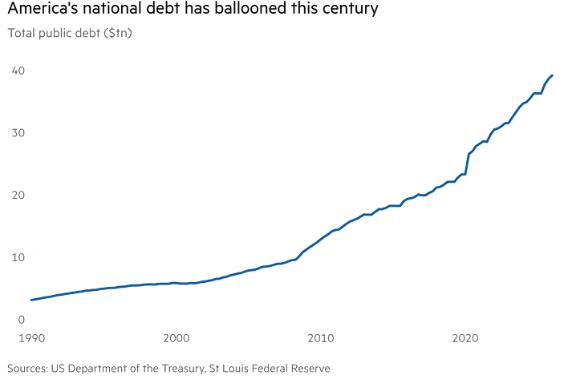
You may think America’s $40 trillion debt pile and the AI spending boom belong in separate conversations. One sits in Washington and the bond market. The other sits in Silicon Valley and your portfolio.

Put them together, though, and the picture changes.

The U.S. government has crossed $40 trillion in total debt, while NVIDIA (NASDAQ: NVDA) and major financial institutions are building financing platforms designed to mobilize more than $500 billion for AI infrastructure.

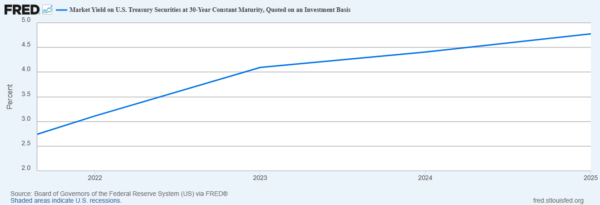
That gives us two enormous capital demands hitting the same global market. Washington needs investors to keep lending it money. AI needs investors to finance chips, data centers, power and computing infrastructure. Both want more capital while U.S. 30-year Treasury yields recently hit their highest level since 2007, with borrowing costs also jumping in major markets including Japan and Germany.

So if you own expensive technology stocks, AI names, REITs or highly indebted companies, this stops being someone else’s bond-market problem. Your portfolio is already sitting near the blast zone.
AI-StockEarnings

The Bond Market Can Slash Your Stock’s Price


The first blow does not require an earnings miss, a recession or bad news from the company you own. Look at the 10-year and 30-year Treasury charts. The 10-year yield climbed from roughly 1.5% in 2021 to above 4% by 2024, while the 30-year moved from around 2% to well above 4% over the same period.

That changes the comparison every investor makes. Why should I pay 40X earnings for a stock when the government suddenly pays me much more to lend it money?

This is where high-multiple technology stocks can get hit even while their businesses continue growing. The company may beat earnings and raise revenue, yet investors can still decide that 30 times earnings makes more sense than 40.

The most exposed names sit where investors have pushed the payoff far into the future, Microsoft (NASDAQ: MSFT), Alphabet (NASDAQ: GOOGL), Amazon (NASDAQ: AMZN), Meta Platforms (NASDAQ: META), and the smaller AI names in the AI infrastructure

The higher the price of money, the less investors may pay today for money they expect years from now.

30 year treasury yield
AI-StockEarnings

10 year treasury yield

AI-StockEarnings

Then Higher Cost of Money Reaches Earnings

The second blow can arrive later, which makes it easier to miss while the market focuses on falling stock prices. Watch highly leveraged REITs, utilities carrying enormous capital programs, cash-burning technology companies, capital-intensive manufacturers and businesses with major refinancing needs.

A company that locked in cheap debt years ago can sit comfortably for some time. Another company that must refinance billions next year walks straight into the new rate environment.

Higher government yields also work through the economy. Mortgage rates rise. Auto loans become more expensive. Corporate borrowing costs increase. Consumers eventually have less room to spend. And then we get to AI.

AI Is Joining the Same Fight for Capital

The AI trade started as a revenue story, but the next stage increasingly looks like a financing story. NVIDIA recently partnered with major financial institutions to create financing platforms aimed at mobilizing more than $500 billion for AI infrastructure.

Since the early boom rewarded companies for selling chips. The next phase requires somebody to fund the data centers, power infrastructure and computing capacity that keep those chips running…which has already become a point of tension.

Reuters reported that NVIDIA paused parts of a financing initiative that offered credit support to AI cloud companies in exchange for a share of their revenue after concerns emerged around the structure. Investors now need to watch who pays for the buildout, who carries the financing risk and whether the return justifies the capital going in.

The Telecom Boom Shows How This Story Can Go Wrong

The late-1990s telecom boom offers the part of this story that AI investors should find most uncomfortable. You see, the internet really did change the world. Fiber-optic infrastructure became essential. Yet companies still spent enormous sums building capacity faster than the economics could support. So yeah, the technology won, but many investors did not.

Research on technology investment cycles shows how a genuine breakthrough can still attract too much capital before the expected returns arrive. Now look back at the current AI buildout. Companies can keep selling chips, building data centers and spending billions. Investors can still overpay for that infrastructure if financing costs rise while the expected returns arrive later than promised. 

Check Your Portfolio Before the Bill Arrives

Right now, Washington and the AI industry are reaching into the same pool of capital, and somebody will eventually pay more to get it.

Economists call that “crowding out”, which sounds academic until you put real names and real money behind it. The U.S. government needs investors to absorb trillions in debt. Meanwhile, NVIDIA ?and its financial partners are talking about mobilizing more than $500 billion for AI infrastructure. The Federal Reserve Bank of Minneapolis? laid out the basic problem decades ago: when government borrowing and private investment compete for available capital, one side can push the cost of funding higher for the other.

Now bring it back to your holdings. If you own a heavily indebted REIT, a cash-burning software stock or a company that needs constant outside funding, you are not watching this collision from the sidelines. Your company may need to borrow in the same market where Washington already demands enormous amounts of money and AI infrastructure keeps pulling in more.

That is the squeeze. The business with strong cash flow can keep writing its own cheque. The business drowning in debt has to ask somebody else for one.

And when everybody suddenly wants more money from the same lenders, the company you own had better have a damn good reason for getting it first.


Join over 1.2M+ investors/traders who receive daily and weekly notable earnings alerts with predicted move