The narrative driving stocks over the past nine months has centered on oil. When oil prices increase, stocks outside the energy sector drift lower. But when oil stocks move lower, those same stocks stage a recovery.
It’s been a good environment for traders, but it can be frustrating for buy-and-hold investors. However, this has been the way the trade has gone, and it’s likely to remain that way for longer than investors may think.
Of course, the ongoing conflict between the United States and Iran is creating a major supply shock. There’s a conventional line of reasoning that believes that once the conflict winds down, the price of oil will move sharply lower.
The problem with that line of thinking is that nobody can say when that will be. The goalposts have moved so far; they’re no longer in the same stadium. Recent statements by U.S. President Donald Trump suggest the conflict is likely to continue until after the midterm elections in the United States.
But there’s a phenomenon known as the Lindy effect. This refers to the observation that, for certain things, future life expectancy is proportional to current age. That means the longer things, like the U.S.-Iran conflict, go on, the more, not less, likely they are to continue.
In other words, we have no clue when the conflict will end. That’s bullish for oil stocks.
But it’s not the only reason to believe that $100 may be closer to a floor than a ceiling for oil. That means oil stocks are one of the best investment ideas for the remainder of 2026 and beyond.
Oil Drives the Economy – That’s the Tell
The current energy price shock was predictable. It’s also a reminder to investors that oil drives the economy. As crude oil prices rise, the price of gasoline goes up. Nowhere has this been more noticeable than in the rising price of diesel fuel, which breached $5 per gallon on average as summer wound down.
That’s not how it’s supposed to be. Typically, oil prices and, therefore, fuel costs go down after Labor Day, as consumer demand drops off. But this isn’t a normal year and the ongoing conflict with Iran is only one reason.
Another key driver of oil prices is the current push to build out infrastructure for artificial intelligence (AI). As noisy as the critics of data centers are becoming, there was no evidence in the recent round of corporate earnings to suggest that projects were being delayed or canceled on a meaningful scale.
Anyone who’s spent time driving this summer knows there’s an infrastructure story that goes beyond AI. Basic things like roads, bridges, and projects related to the onshoring of business to America are ongoing.
And don’t be so quick to presume that this spending is tied to a specific occupant of Pennsylvania Avenue. Many members of Congress on both sides of the aisle are seeing their districts and states benefit from this historic gravy train.
One final thought: investors shouldn’t forget about the weather. So far, it’s been a quiet hurricane season in the Atlantic and Gulf of America, but it only takes one storm to cause supply disruptions in one of the few areas that is actively meeting demand.
Oil Stocks Strategy #1: Keep it Ridiculously Simple
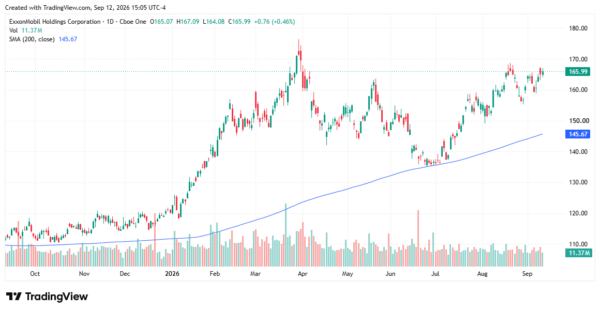
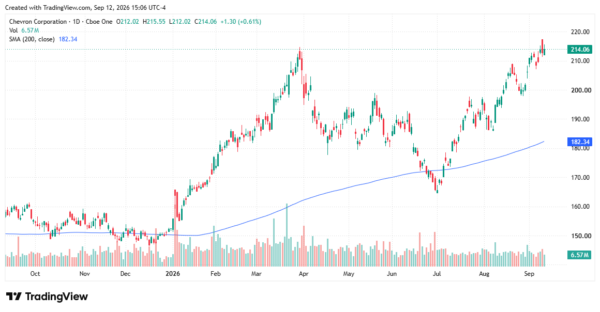
One of the best ways to profit from higher oil prices is to invest in one or more of the integrated oil companies. This list includes blue-chip names like ExxonMobil (NYSE: XOM) and Chevron (NYSE: XOM).
These companies have operations that take oil from the ground to the gas pump and at every point in between. That makes the investment thesis very simple. These companies make money at every link of the supply chain, and so do investors.
I could break down each stock, but really, choosing between these two stocks is like deciding between chocolate and vanilla. For most investors, XOM or CVX will be an attractive solution for any portfolio. And, truth be told, some higher-net-worth investors own both.
Oil Stocks Strategy #2: Go to the Crucial Link
If oil producers are the front of the supply chain, refiners are the crucial middle link. And right now, that link is where the real money is being made. Refiners like Valero (NYSE: VLO), Marathon Petroleum (NYSE: MPC), Phillips 66 (NYSE: PSX), and HF Sinclair (NYSE: DINO) have each gained more than 80% in 2026, far outpacing an 11% gain for the S&P 500.
Here’s the perception gap most investors are missing. Producers benefit when crude prices rise. Refiners benefit from something different entirely: wide margins on turning crude into finished fuels, even when crude prices themselves stay relatively subdued.
That crack spread, not the price of oil, is the number driving these stocks. As long as that spread stays above historical norms, refiners should keep generating strong cash flow.
Marathon offers a wrinkle worth noting. Beyond its own refining network, it holds a large stake in MPLX, its midstream partnership, giving investors a second stream of cash flow layered on top of the refining story.
Oil Stocks Strategy #3: Consider Master Limited Partnerships
Master limited partnerships (MLPs) offer a third way into this thesis, and one that pays you to wait. Names like Enterprise Products Partners (NYSE: EPD), Energy Transfer (NYSE: ET), and MPLX (NYSE: MPLX) move oil and gas rather than drilling for it or refining it, collecting toll-like fees along the way.
The dividend yields are the primary attraction:
- Enterprise Products currently yields around 6.8%, backed by 27 consecutive years of distribution growth.
- Energy Transfer yields roughly 8.1%, a byproduct of the scar tissue left by its 2020 distribution cut, which still commands a risk premium.
- MPLX, majority-owned by Marathon Petroleum, yields near 8.4% and benefits from a captive customer relationship with its parent’s refineries.
The catch is the K-1 tax form. It involves more paperwork than a typical dividend stock, which scares off some retail investors. That’s precisely why the yields stay elevated. For investors willing to do the extra tax legwork, the income more than compensates for the hassle.
The Pros and Cons of an ETF
Exchange-traded funds (ETFs) are an attractive way for some investors to get broad exposure to a sector without any single-stock risk. For example, if you invested in the Energy Select SPDR Fund (NYSEARCA: XLE), you’d have a year-to-date gain of around 46% as of the market close on Sept. 11. That’s better than the gain you could have received from any single stock.
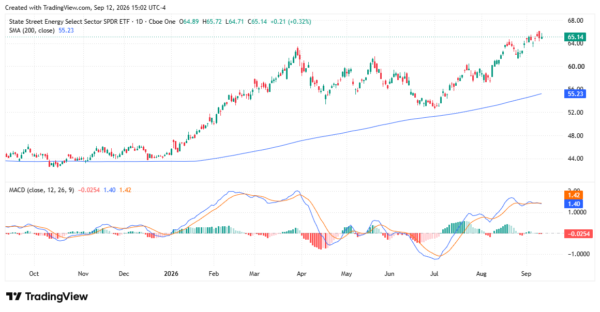
The tradeoff with a fund like XLE is precision. It’s market-cap-weighted, meaning Exxon and Chevron alone account for a large share of the fund. That gives you broad energy exposure but dilutes the sharper theses above. You get almost none of the outsized refiner momentum, and none of the high MLP distributions, since XLE holds neither in meaningful weight. If you believe crack spreads or pipeline yields are the real story, the ETF won’t give you the exposure to the oil stocks you want.
Profit From Your Pain at the Pump
Oil prices are going to remain higher throughout the fall. That’s going to cost you more at the pump, and everywhere else. It’s simple math at this point.
I don’t mean to be cavalier. Higher prices are a pain point for many consumers at increasingly higher income levels. But if you have the means and an appropriate risk tolerance, this is an ideal time to invest in oil stocks. You not only have the opportunity to get stock price appreciation, but all of these oil stocks pay an attractive dividend that will allow you to compound those gains or provide you with some needed income.