ajax loader

Loading...


Ride-the-Wave Strategy – Best for Stock Traders

Ride-the-Wave targets multi-day price momentum following a company’s earnings announcement (EA). With this strategy:

  1. Buy a stock one day post-EA if a stock reacts positively post-earnings:
    1. Near the close of trading the EA-day for a pre-market-EA
    2. Near the close of the following day for a post-market-EA
  2. Sell-to-close after 7-10 days, or possibly earlier if a desired price target is reached

Similarly,

  1. short a stock one day post-EA if a stock reacts negatively post-earnings:
    1. near the close of trading the EA-day for a premarket-EA
    2. near the close of the following day for a post-market-EA
  2. then buy-to-close after 7-10 days, or possibly earlier if a desired price target is reached

Important: Ride-the-Wave is predicated on significant price momentum triggered by an EA. The 7-10 day scenario is the maximum trade hold-time. If you see post EA-momentum is halted or reversed by a significant opposite move, re-evaluate your presence in the trade.

This popular StockEarnings screen below will give you a list of stocks that historically exhibit significant price momentum following an EA for the next seven days:

  1. Stocks exhibiting positive post-EA price moves are buy-candidates
  2. Stocks exhibiting negative post-EA price moves are sell/short-candidates

The screen includes those stocks whose Earnings just came out in last two days.

Screen criteria:

  1. Earnings Date Start Date : Current Date + -1 Day
  2. Earnings Date End Date : Current Date + -2 Days
  3. Predicted Move (Next Day) Max : 7%
  4. Predicted Move (On 7th Day) Min : 7%

Strategy Guideline:

  1. Buy the stock if stock has reacted positively. Short the stock if stock has reacted negatively (see above).
  2. Close the position in 7-10 days, or possibly earlier based on price move.

Volatility Crush Strategy - Best for Options Traders

The Volatility Crush strategy is used with stocks that typically experience relatively low-to-moderate price moves (≤4%) following their Earnings Announcements (EA). The basic trade idea is to sell put or call options right before the EA, collecting a credit when options premium is very high due to elevated implied volatility (IV). You then close the position right after the EA by buying the option back much cheaper due to the significant drop in IV that occurs after the mystery of the EA disappears. In assessing this trade, you need to do your homework to ensure you collect sufficient premium to make the trade worthwhile.

This trade is practical due to the low-to-moderate price-move after the EA, which generally won’t significantly affect the options price, unlike an “action” stock, which experience great price moves post-EA. With these symbols, if you’re on the right side of the price move, that’s a great thing. But if you’re on the wrong side of the move, not so great. Consequently, by minimizing the effect of the post-EA price move, you have a much better chance to profit from the reduction in IV without it being ruined by a violent price move.

For this trade, open the position either (1) the night before the EA when the company announces earnings or (2) during the EA day when it announces post-market, generally capturing IV at or close to its peak.

For this trade, open the position either (1) the night before the EA when the company announces earnings or (2) during the EA day when it announces post-market, generally capturing IV at or close to its peak.

This popular stockearnings screen will give you a list of stocks which do not react more than 4% fpost-EA. It includes only those stocks whose earnings are releasing next day.

Screen criteria:

  1. Earnings Date Start Date : Current Date + 1
  2. Earnings Date End Date : Current Date + 1
  3. Predicted Move (Next Day) Max : 4%
  4. Options Type: Weekly

Strategy Guideline:

  1. Options Strategy: Sell Call and Put
  2. Options Strike Price: Current Stock Price – (% Predicated Move x 2)
  3. Expiration Date: It should generally be the closest expiry immediately after the EA.
  4. Buy Insurance: Buying back Call and Put at Strike price which 10% lower than Sell Strike Price is optional but recommended.

Watch Video for More Detail

Volatility Rush Strategy - Best for Options Traders

The Volatility Rush takes advantage of increasing options premiums into earnings announcements (EA) caused by an anticipated rise in Implied Volatility (IV). With this strategy, Buy a Call and Put at-the-money (a long straddle) 2-3 weeks before the EA when IV is lower. Sell the position either (1) the night before the EA when the company announces earnings pre-market, or (2) during the EA day when it announces post-market, generally capturing IV at or close to its peak.

This popular screen will give you a list of stocks whose Options premiums tend to rise into Earnings. It includes only those stocks whose Earnings are at least two weeks away from today.

Screen criteria:

  1. Earnings Date Start Date : Current Date + 15 Days
  2. Earnings Date End Date : Current Date + 30 Days
  3. Predicted Move (Next Day) Min : 5%
  4. Options Type: Weekly or Monthly if that lines up with the two to three-week lead-time for entering the trade

Strategy Guideline:

  1. Buy a Straddle at or close to the money two to three weeks pre-EA.
  2. Sell the position either the night before the EA when the company announces earnings pre-market, or during the EA day when it announces post-market.
  3. Expiration date should generally be the closest expiry immediately after the EA.
  4. Straddle price should not be more 60% of predicted move.

Predicted Move (Volatility)

Similar to Implied Volatility in Options. Expected volatility % based on our Proprietary Volatility Predication Model. We are expecting that stock price will likely to reach % in either direction by the end of next trading session after Earnings are released and not necessarily the closing volatility %.

Why is it important?

    This indicator helps

  1. Knowing expected volatility in stocks after Earnings helps to decide trading stocks before Earnings Announcement.
  2. Taking Advantage of volatility collapse following Earnings Results by using Advance Options strategies such as Spread and Straddles.

Since Last Earnings

Change in share price since last Earnings release.

Why is it Important?

When share has gained more than 10% since it's last Earning release, it tends to over react to minor bad news and give up some gains if not all. So, it contains more downside volatility than upside When share has dropped more than 10% since it's last Earning release, it tends to over react to minor good news and recover some drops if not all. So, it contains more upside volatility than downside.

EPS Surprise (%)

Occurs when a company's reported quarterly or annual profits are above or below analysts' expectations. Here is the formula to derive % EPS Surprice:

Actual EPS - Estimated EPS
------------------------------------- x 100
Estimated EPS

Why is it Important?

Earnings surprises can have a huge impact on a company's stock price. Several studies suggest that positive earnings surprises not only lead to an immediate hike in a stock's price, but also to a gradual increase over time. Hence, it's not surprising that some companies are known for routinely beating earning projections. A negative earnings surprise will usually result in a decline in share price.

Next Day Price Change (%)

Next Regular trading session Closing price following Earnings result.

For After Market Close Earnings, It is a next trading day closing price. For Before Market Open Earnings, It is the same trading day closing price.

Why is it Important?

Next Day price change is a reaction of Earnings result.

3 Dividend Stocks You Can Buy and Hold for Years

Posted on Nov 27, 2026 by Ian Cooper

3 Dividend Stocks You Can Buy and Hold for Years

One of the best ways to build wealth in the stock market is to own companies that keep paying you more every year. Businesses that consistently raise their dividends often have strong brands, reliable profits, and the financial strength to perform through both good and bad economic cycles.

The best dividend stocks don’t just provide income today; they reward patient investors with growing payouts that can compound into significant wealth over time. That’s what makes quality dividend stocks attractive to investors with a long-term investment horizon.

Instead of chasing the highest yields, many investors focus on companies that steadily increase their payouts over time. Those rising dividends can create a powerful compounding effect, especially when they’re reinvested. For investors building a portfolio of dividend stocks, consistency can be just as important as the initial yield.

Three companies still fit that description, including McDonald’s, Procter & Gamble, and Visa. Each offers something a little different, but all have long histories of rewarding shareholders.

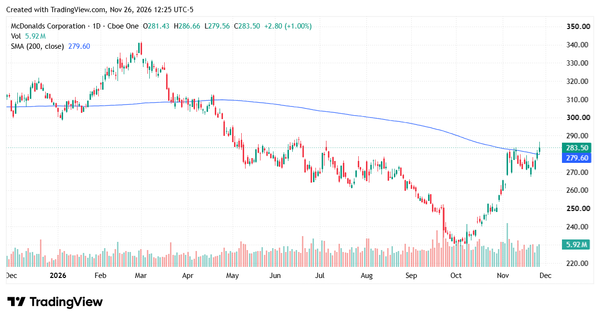
McDonald’s: A Global Brand With a Growing Dividend


McDonald’s (NYSE: MCD) has been a favorite among long-term investors for years, and it’s easy to see why. The company’s global brand, franchise business model, and steady cash flow have driven dividend increases for more than 25 straight years. Its latest increase raised the quarterly payout to $1.93 per share, which is payable on Dec. 15 to shareholders of record as of Dec. 1, 2026.

The business is still performing well. In the third quarter, MCD posted EPS of $3.57, which beat by 19 cents. Revenue of $7.16 billion, up 1.1% year over year, beat by $120 million. “In the third quarter, McDonald’s delivered global comparable sales of 1.5% and system sales growth of 4% in constant currency, reflecting the growing contribution from new restaurant openings,” said Chairman, President, & CEO Christopher Kempczinski on the company’s quarterly earnings call. That combination of brand strength and recurring cash flow helps explain why McDonald’s remains one of the more established dividend stocks for long-term investors.
dividend stocks - StockEarnings

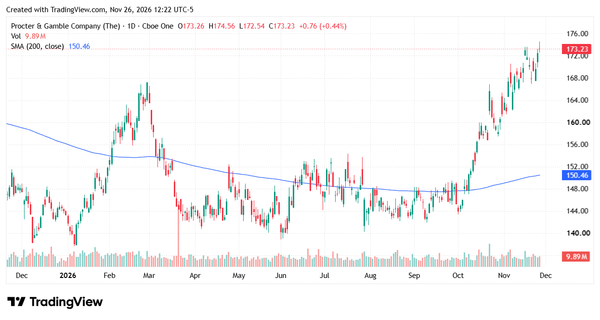
Procter & Gamble: 70 Years of Consecutive Dividend Increases

Procter & Gamble (NYSE: PG), a consumer products giant, recently announced its 70th consecutive annual dividend increase and has paid shareholders without interruption for more than a century. Its newest quarterly dividend of $1.008 per share was paid on Nov. 16 to shareholders of record as of Oct. 23.

What makes P&G so dependable is its business. Consumers continue buying products like Tide detergent, Pampers diapers, Gillette razors, and Bounty paper towels whether the economy is booming or slowing down. That defensive business model makes PG particularly appealing among dividend stocks for investors who prioritize reliability and income growth.

That stability showed up again in the company’s latest results. EPS of $2 beat by 11 cents. Revenue of $23.28 billion, up 4% year over year, beat by $460 million. 

“Our solid sales, earnings and cash results in the first quarter reflect sharpened execution of our integrated strategy,” said Shailesh Jejurikar, Chairman of the Board, President and Chief Executive Officer. “While we expect there will continue to be geopolitical and economic challenges, this strong start keeps us on track to deliver within our guidance ranges for organic sales growth, core EPS growth and free cash flow productivity for the fiscal year. 
dividend stocks - StockEarnings

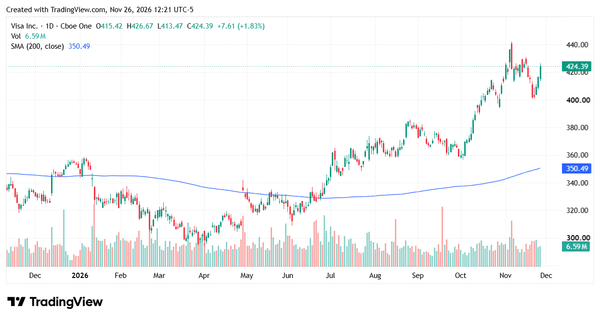
Visa: Faster Dividend Growth With a Lower Starting Yield

Visa (NYSE: V) has a dividend yield of about 0.74%, making it less appealing for investors who are looking for immediate income. But Visa has been raising its dividend at a much faster pace than many traditional dividend stocks. The company increased its quarterly payout by 14% last year, extending a streak of more than 18 consecutive annual dividend hikes.

The reason the yield is relatively low is simple: Visa reinvests much of its cash back into a business that continues to grow. For investors willing to sacrifice some immediate income for faster payout growth, Visa offers a different approach to owning dividend stocks.
dividend stocks - StockEarnings

Why These Three Dividend Stocks Deserve a Long-Term Look

McDonald’s, Procter & Gamble, and Visa all offer investors a different path to long-term dividend growth. McDonald’s combines a globally recognized brand with dependable cash flow. Procter & Gamble provides the kind of stability that has helped investors through decades of market ups and downs. Visa delivers faster dividend growth backed by one of the world’s largest payment networks.

Although their yields and business models differ, these three dividend stocks share an important quality: a demonstrated commitment to returning cash to shareholders. For investors looking to build wealth over time, these three remain worth keeping on the watchlist.


Over the last 26 years, he’s taught thousands of investors how to trade news flow and herd mentality using a unique blend of technical and fundamental analysis. Cooper was among the few analysts to spot the financial crisis of 2008, the top of subprime and Alt-A, the death of Lehman Brothers, Bear Stearns, and New Century Financial, and even the Dow’s collapse to 6,500, as well as its recovery. He even called for gold to rally well above $1.500 when it traded under $600. At the moment, Cooper makes use of technical, fundamental and news analysis, to help individual investors grow their wealth. He’s a firm believer that hard work and thorough research will lead to investment success.

Join over 1.2M+ investors/traders who receive daily and weekly notable earnings alerts with predicted move